
Next Republican Assembly leader extols bipartisanship as a path forward
Good morning and welcome to the A.M. Alert!
BIPARTISAN REPUBLICAN
California Problem Solvers Caucus has been extolling its bipartisan approach in recent weeks. The group meets every two weeks to discuss “unglamorous” issues members want to learn more about: infrastructure, homelessness and, most recently, immigration. Since starting up during the pandemic, membership has swelled to 26 lawmakers, 13 from each side of the aisle.
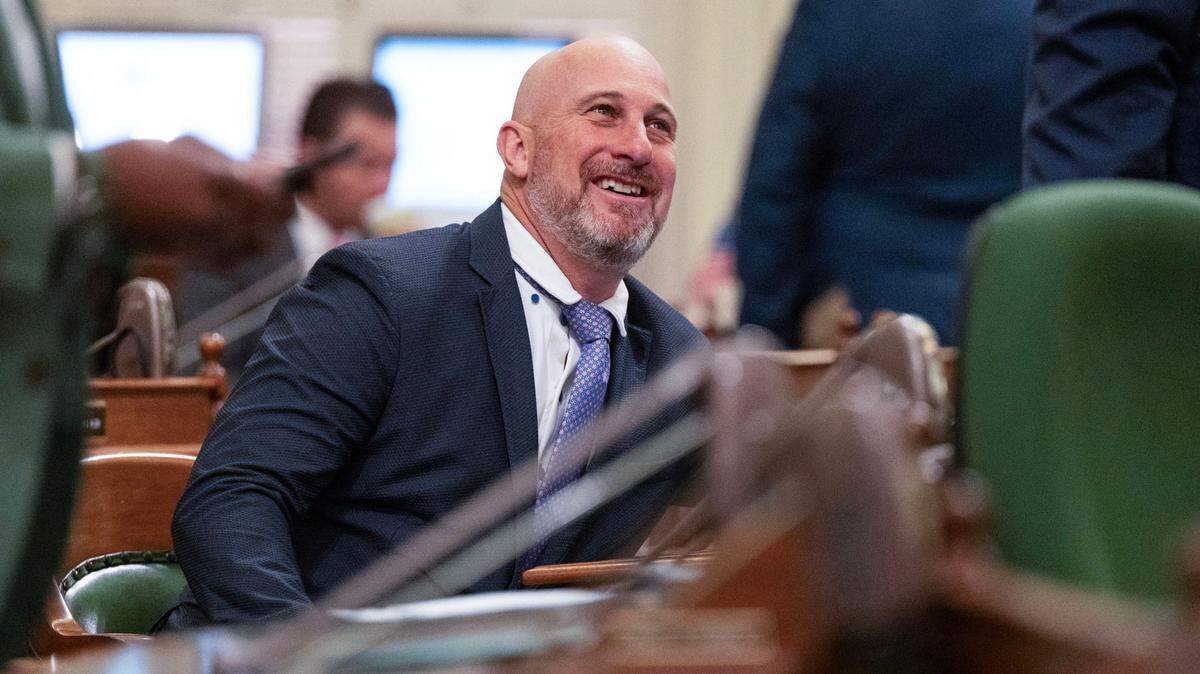
The group counts among its members a powerful figure in Asm. Heath Flora, R-Ripon. Flora was unanimously elected on Monday to be the next leader of the state’s Assembly Republican Caucus.
His statements at a Sacramento Press Club panel Wednesday about bipartisanship give us some clues as to how he will steer the party.
Flora spoke about:
▪ Why the Problem Solvers’ Caucus began in the first place: “COVID did an absolutely horrendous job, really messing up Sacramento politics and how we work together.”
▪ On working with Democrats to get stuff done: “It’s hard to ask someone for their support when you’ve been punching them in the face all day.”
▪ On addressing thorny topics like trans athletes and Prop. 36: “We’re going to focus on problems that we can actually solve.”
The Central Valley lawmaker will take the helm from current leader Asm. James Gallagher, R-Yuba City, in September, and said he’ll stay on the same track.
He plans to “really focus on cost of living, public safety, those things that really move the needle and really make people’s lives safer and better.”
Asked whether he plans to opine on culture war issues like Gallagher has, Flora said he said he’ll do what he’s required to do, but he doesn’t want to alienate people.
“I think we’re not afraid to engage on those issues,” he said. “As long as there’s a purpose.”
MAPPING THE IMPACT OF SNAP CUTS
Via David Lightman
The cuts to food assistance programs in California will hit the Latino community particularly hard, a new study by the UCLA Latino Policy and Politics Institute said Wednesday.
The Supplemental Food Assistance Program, or CalFresh in California, helps more than 5.5 million people in the state. The program, which had been known as food stamps, is in for some changes because of the Big Beautiful Bill that President Donald Trump signed into law last week.
Qualifying for the program will become tougher, and states will probably wind up paying for some of the benefits, which have been funded by the federal government.
The study described the changes: “Key provisions include instituting work requirements for able-bodied working-age adults, even those who are parents or caretakers of young children; stripping out current exemptions for vulnerable populations including veterans, people experiencing homelessness and young people who have aged out of foster care.”
The UCLA study found that Latinos make up 55% of CalFresh participants statewide, or about 3 million people. Whites account for 20%, Asian and Pacific Islanders, 11% and Blacks, 9%.
Children 17 and under make up 40% of Latino CalFresh enrollees, above the 33% statewide average.
The program is used extensively in the state’s agricultural areas. In Imperial County, about 92% of CalFresh participants are Latino. About three-fourths of all participants in Central Valley counties such as Fresno, Tulare and Kings are Latino.
In Sacramento County, Latinos make up 28% of recipients. In Placer County, the share is 27%.
GOING TO GREAT LENGTHS
State Sen. Roger Niello, R-Fair Oaks, is trying a new approach to pass his business-friendly “Right to Repair” law. The legislation would allow businesses time to address any accessibility issues before they could be sued for not following the law, and would crack down on “high-frequency litigants” who sue businesses for small things, like faded signs, or unclear pet policies.
This year, as with last year, Niello’s legislation moved quickly through the Senate, but has been dead-on-arrival in the Assembly. Niello said the Assembly Judiciary Committee has declined to schedule the bill, Senate Bill 84, for a hearing.
Niello held a news conference Wednesday, flanked by a host of his Senate colleagues from both sides of the aisle to ensure the measure didn’t die quietly.
“Honor the democratic process and give Assembly members a chance to vote on the bill and be a voice for their constituents,” he implored the committee.
The chair of the Assembly Judiciary Committee, Asm. Ash Kalra, D-San Jose, shot back in a statement saying that SB 84 doesn’t address concerns of disability and civil rights organizations. He said Asm. Josh Lowenthal’s, D-Long Beach, similar legislation, Assembly Bill 649, is a more appropriate option. That bill would give small businesses time to address complaints but only if they’d been proactive about getting assessed for deficiencies. It also wouldn’t put up barriers for high-frequency litigants.
Kalra said attempts to fold AB 649 language into SB 84 were rebuffed.
“They have suggested, essentially, current law,” said Niello.
The bill must be scheduled Thursday for a hearing on July 15th, otherwise it becomes a two-year bill.
QUOTE OF THE DAY
“I’m fighting my whole county. I took them all on, every last one of them, and I knew it would be that kind of fight.” - State Sen. Angelique Ashby, D-Sacramento, discussing her controversial bill to create a new regional housing and homelessness agency in Sacramento.
BEST OF THE BEE
▪ Trump sues California over decade-old sports law that lets trans athletes compete via Lia Russell
▪ California Senator Alex Padilla’s bill seeks to unmask ICE agents, require visible ID via David Lightman
▪ Why Donald Trump’s legal strategies are working — some of the time via Sharon Bernstein