
California’s cannabis packaging rules are failing. Kids are paying the price
AI-generated summary reviewed by our newsroom.
- State audit found 23 of 40 cannabis packages appealed visually to children.
- Child cannabis poisonings surged 469% from 2016 to 2023, driven by edibles.
- Proposals to cut cannabis excise tax risk $180M in key child and youth programs.
When California legalized recreational cannabis in 2016, voters were promised a safe, regulated market that would prioritize child safety.
Nearly a decade later, a lack of clear state regulations and insufficient enforcement from the Department of Cannabis Control created a system that critics say is failing to protect the state’s most vulnerable.
Public health experts are saying the problem starts with packaging. Brands mimicking candy is just the start of a broader trend where a business can market an increasingly potent substance unchecked.
“Cannabis is not strawberries,” said Lynn Silver, senior advisor at the Public Health Institute. “It’s a product that has some additional uses, but it also has significant health harms and generates dependency. It’s the most frequent cause of people needing substance abuse support.”
The lack of state enforcement, combined with an increasing THC potency is at the heart of a growing public health crisis that has seen child cannabis poisonings surge by 469% since legalization.
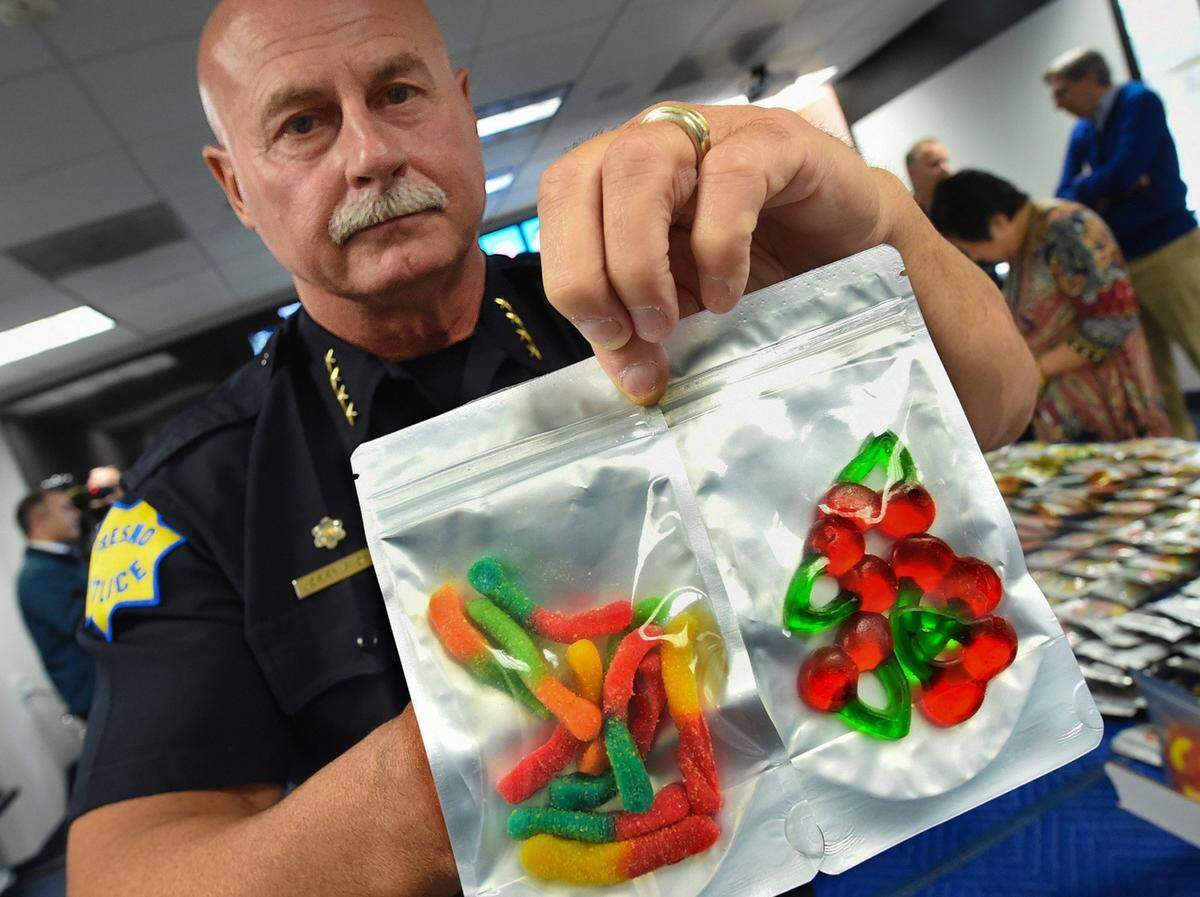
UCSF researcher Laura Schmidt said cannabis product packaging that looks similar to candy brands is in part to blame for the increase in accidental child cannabis consumption. She and a team of UCSF researchers found that almost 17% of California’s pediatric cannabis exposures reported to poison control required critical care.
The study published in June also revealed that the poisonings were primarily linked to particular brands of cannabis-infused products: “Nerd Ropes” and “Molly Ranchers,” both having a name and branding similar to candy counterparts.
“It looks just like Jolly Ranchers, same packaging — only it’s got cannabis in it,” Schmidt said. “The warning label is about the size of your pinky fingernail.”
Accidental consumption is on the rise
Schmidt explained that researchers are observing an increase in accidental cannabis consumption across all age groups, from infants to teenagers. She said this suggests that children are increasingly encountering cannabis at home, rather than in external environments like schools.
“Parents, if you want to protect your child from a regulated substance, put your cannabis in a pharmaceutical lock at home,” Schmidt said. “Treat it like you would treat a gun. You lock it up.”
Schmidt said the responsibility for cannabis regulation can’t rest on parents or advocates for education and prevention. Instead, she argues, the cannabis industry and state are responsible for getting to the “real fix.”
Amy Jenkins, executive director of the California Cannabis Operators Association, noted the crucial distinction between licensed and unregulated cannabis markets. The DCC released an August report that the department seized over $62 million in illegal cannabis during the second quarter of 2025.
“California’s licensed cannabis industry takes child-resistant packaging and labelling laws very seriously,” Jenkins wrote in an email to the Bee. “The real problem lies in the illicit cannabis and unregulated hemp markets, where most youth-attractive packaging violations occur.”
Schmidt and others in the public health community recommend a solution called plain packaging, which strips labels to the brand name, product information and health warnings prominently displayed. The tobacco industry follows plain packaging, and a few states require it for cannabis businesses.
Oregon’s Liquor and Cannabis Commission follows plain packaging regulations, reviewing packaging before licensees can start retail sales.
New California audit reveals risk to children
Meanwhile, the California Department of Cannabis Control’s current system relies on routine checks and public complaints to find violations. Internal documents reveal that the department inspects fewer than half licensees each year.
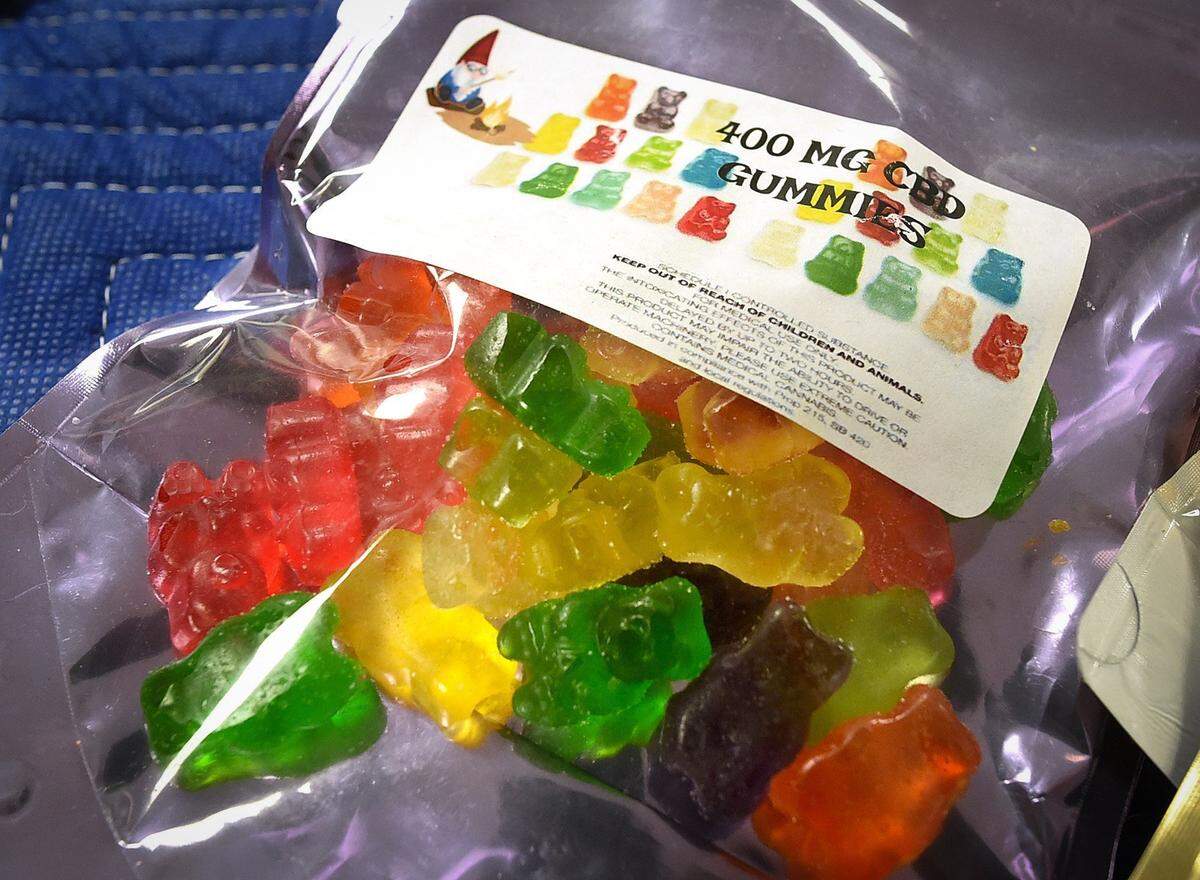
A state audit released in August examined 40 cannabis product packages in California and determined that 23 were appealing to children due to their use of bright colors, specific fonts, and imagery featuring food or cartoon characters.
The California Cannabis Industry Association wrote in an email to the Bee that the organization supports packaging that is not misleading or intentionally targets minors.
However, it opposes plain packaging and said the regulation is not suitable for cannabis, citing differences in the product being sold in adult-only retail environments. The CCIA emphasized that most licensed operators prioritize creating distinct branding while adhering to legal guidelines.
“Overly restrictive ‘plain packaging’ would make it harder for consumers to spot legal products, reduce incentives to buy from licensed businesses, and could unintentionally push more sales to the illicit market,” CCIA wrote.
Previous legislative attempts to regulate cannabis products, such as the Cannabis Candy Child Safety Act in 2023, aimed to prevent cannabis products from being sold to children. However, the governor ultimately vetoed the bill.
Authored by Assemblymember Jacqui Irwin, D-Thousand Oaks, the bill drew concerns from Gov. Gavin Newsom, who specifically highlighted the “overly broad” definition of “attractive to children.” He also suggested that the proposed additional limits might not offer protection beyond what was already in place under existing law.
Current cannabis products pack a punch
Products today are more potent, according to the state audit. A 2024 study by the Cannabis Control Commission revealed that California retailers’ products contain 20% THC or more, which is 5 to 10 times higher than levels found in products from the 1970s and 1980s.
“When people voted to legalize cannabis, they were kind of thinking of the old school mom-and-pop cannabis, not corporate America taking on cannabis and developing vaping and all these new products that are more addictive,” executive director at Youth Forward Jim Keddy said.
The addictive factor Keddy is referring to is THC, or tetrahydrocannabinol, the compound in cannabis responsible for the “high” feeling. The American Academy of Pediatrics stated that as little as 1.7 mg of THC can be toxic to a child under the age of 6.
Currently, the DCC is not required to monitor the increase in THC concentration in cannabis products, the department stated. There’s additionally no federal guidance on THC concentration.
An end to excise tax takes away funding for key programs
A major source of funding is endangered for nonprofits dedicated to youth substance abuse support. The scheduled reduction of the cannabis excise tax, which generated more than $200 million in the first quarter of 2025, is the last of two taxes established in Proposition 64. In 2022, California eliminated one of those taxes — the cannabis cultivation tax.
Two bills, AB 564 and AB 8, would mean cuts of $180 million in annual funding for 275 programs working in child care, youth services and environmental restoration, according to a bill analysis. The bills have been sent to the Assembly Appropriations Committee to review the estimated cost.
“Prevention really does change not only the trajectory of young people but impacts communities,” said Albert Melena, executive director of the San Fernando Valley Partnership.
Melena’s organization is one of 100 that sent a letter to Newsom opposing the reduction of the cannabis excise tax.
On the other hand, ending the tax would bring some relief to smaller cannabis farmers, said Ross Gordon, policy director at Origins Council. The organization represents small and independent cannabis businesses.
“I think there’s a lot of good programs that are funded out of the cannabis tax revenue, but I don’t think it should be a zero-sum problem,” Gordon said. “I think we should be able to come together and say the aspects of the current legal market that aren’t working and if we don’t have a functional legal market that consumers want to burden, we’re not going to have stable tax revenue.”
This story was originally published August 25, 2025 at 5:00 AM.