What’s in a district? Rural Californians react to Democratic gerrymandering play
Darek Velez, a civilian strength and conditioning coach for the Air Force and self-identified centrist, moved to Redding nine months ago because he was drawn to its small town feel and because it’s where he and his wife want to welcome their first child.
“Redding is its own area,” Velez said, sitting at a picnic table outside the entrance to Turtle Bay Exploration Park. “It’s been fought for. People have a lot of pride in calling it the North State up here.”
Redding, the seat of MAGA-red Shasta County represented in Congress by Republican Rep. Doug LaMalfa, is one of many towns and cities poised to be affected by a redrawn congressional map. Democratic state lawmakers will pass the redrawn map this week in an effort to give the national party a five-seat congressional advantage in the 2026 midterms.
The new map – which state lawmakers passed Thursday and which will go before voters in a Nov. 4 special election – carves up districts held by LaMalfa and Republicans Kevin Kiley and Ken Calvert to include bluer parts of the state and hurt the incumbents’ chances at reelection.
LaMalfa’s 1st Congressional District, which spans most of the North State, would shrink by nearly half, with some of it going to the 2nd District currently represented by Rep. Jared Huffman, D-San Rafael.
Redding, which often serves as a stopping point for visitors on their way to Mount Shasta and Lassen National Park, would be included in the new second district — a cockeyed gerrymander that would bring conservative corners of the North State together with northern parts of Marin and Sonoma counties, one of the wealthiest and most liberal areas in the state.
For rural residents like Velez, the new maps feel like they’re taking away rural voters’ “freedom of speech.”
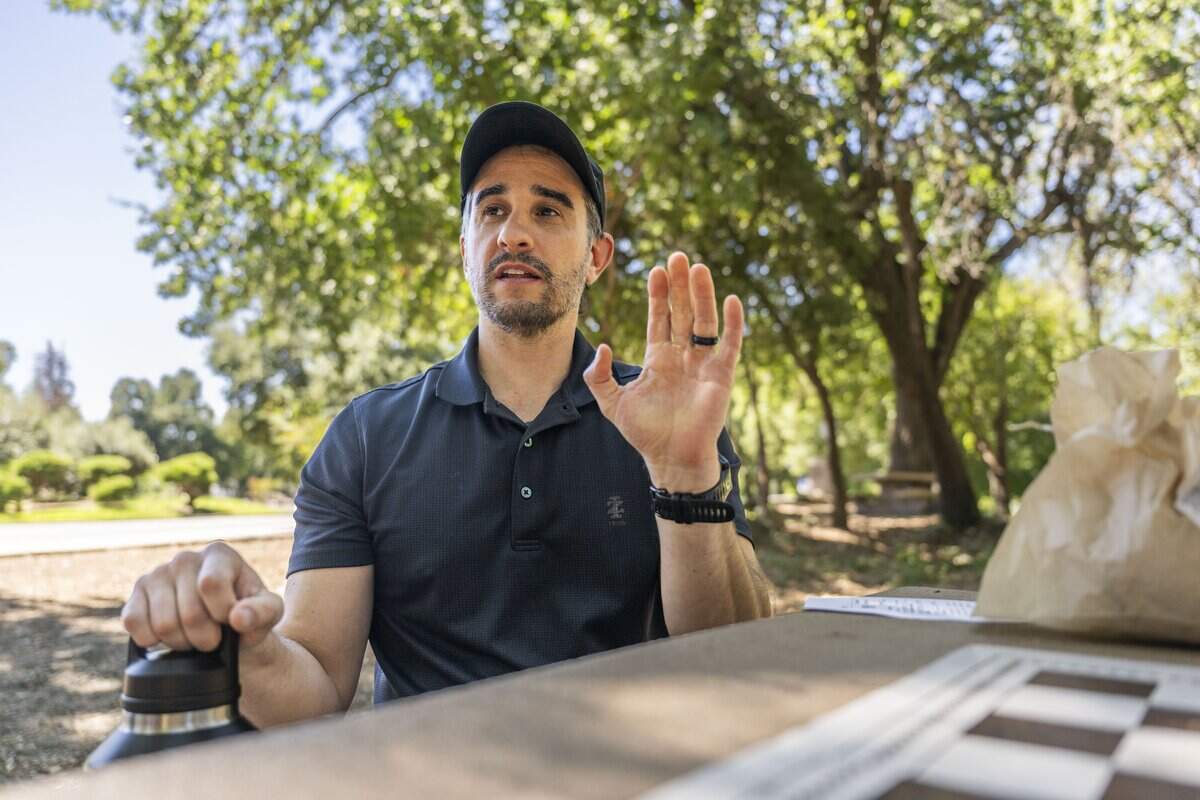
“To change our minds and call (the North State) the mid-state just doesn’t really reflect what everybody wants,” he said. “And I think people come up to Redding too from all over the state that like the solitude and what it represents up here. Going to Marin County, like being part of San Francisco, doesn’t make sense.”
His congressman feels the same, and rural Californians, particularly conservative voters, expressed deep concern that they will lose representation.
“So now, as a Bay Area representative, are you going to care that much that the wolves are devastating the wildlife and the livestock in Modoc and Sierra and Lassen County?” LaMalfa, who has represented California’s 1st district since 2013, said in an interview. “Are they going to care that much? Or are they going to listen to Marin constituents and say, ‘Well, wolves are great. They’re wonderful.’”
The new map is part of a nationwide redistricting war, which set off in June after President Donald Trump began pressuring Texas lawmakers to draw a new congressional map that would help Republicans pick up five seats and hold on to their razor-thin control of the House during next year’s midterm elections.
Gov. Gavin Newsom responded by saying if Texas moved forward with political gerrymandering, California would, too. The effort has now spread to other blue and red states such as Maryland, Indiana, Missouri, Illinois and Florida.
On Wednesday, Texas state House lawmakers approved new maps favoring Republicans, who are expected to pick up five new seats in Congress.
“It’s on, Texas,” Newsom responded on X.
Eye for an eye
Since 2020, Redding has been the center of a pitched battle between conservatives and liberals over the direction of local governance, set against the backdrop of disagreements over COVID restrictions and election conspiracies.
Some moderate and Democratic voters see the new map as an opportunity to escape the staunch Republican stronghold where messy politics, colored by far-right activists and militia groups, have become the norm.
Benjamin Nowain, a lifelong Redding resident who runs The North State Breakdown, a local news outlet, said during an interview outside a Shasta County Board of Supervisors meeting Tuesday that as a Democrat, he supports redistricting.
“Historically, I think the Democrat Party has said, ‘well, OK, we’re gonna try to play by these rules that our opposition isn’t playing by, to show that we are somehow above this.’ That’s getting thrown out the window at this point,” Nowain said.
“What I liked about Governor Newsom’s position, is that he was like, ‘Hey, we’ll let the state vote for it, and if they don’t vote for it, then it won’t happen.’ At the same time, I understand why people would think it was cheating. But I can’t see what’s happening in Texas as any other thing. So to me, it’s an eye for an eye.”
Adele, another meeting attendee who declined to share her last name, sported a red ‘Recall Kevin Crye’ shirt. She has voted for Democrats all her life but now says she’s “just pissed at everyone,” and thinks redistricting is a good idea if it means LaMalfa loses his seat.
“He doesn’t go to any town (halls), because he feels bullied by his constituents,” she said. “They (Congress) have all negated their jobs to Trump.”
Crye, the Republican Shasta County board chair who narrowly survived a recall attempt last year, called Newsom’s plan a “poorly executed 1st grade art project.”
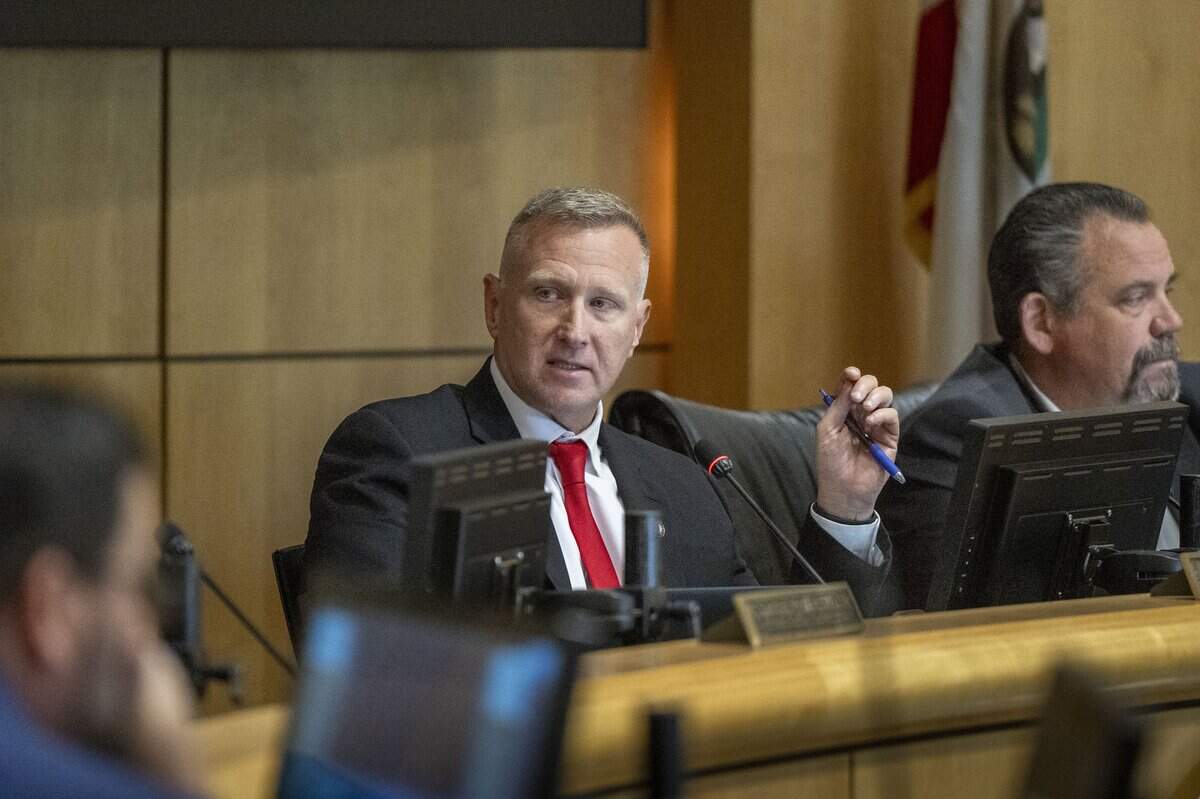
“Shasta County has very little in common, politically or economically, with our neighbors down in the Bay Area. I do recognize they secretly love to come and explore Shasta County for some much needed grounding and R&R. They are of course welcome to come and visit,” he said in a statement.
“That said, we should never be represented as two very different groups/lifestyles, economic drivers etc., by the same Congressperson. Lastly, and most importantly, the public voted on how we wanted this process to go, and now legislators and the Governor may be taking that away. Sad.”
Shasta County Democratic committee leaders Cheryl McKinley and Rose Penelope Yee said they were “thrilled” at the prospect of being represented by a Democrat for the first time in over a decade.
“At first I was appalled (by redistricting) because we’re Democrats. We believe in doing things right, we believe in being fair, we believe in being kind, we believe in giving,” McKinley said. “And we’ve been really proud of California for having a non-political redistricting committee commission.”
But she was convinced after Newsom said the process would only apply to elections through 2030, when redistricting power would transfer back to the independent commission.
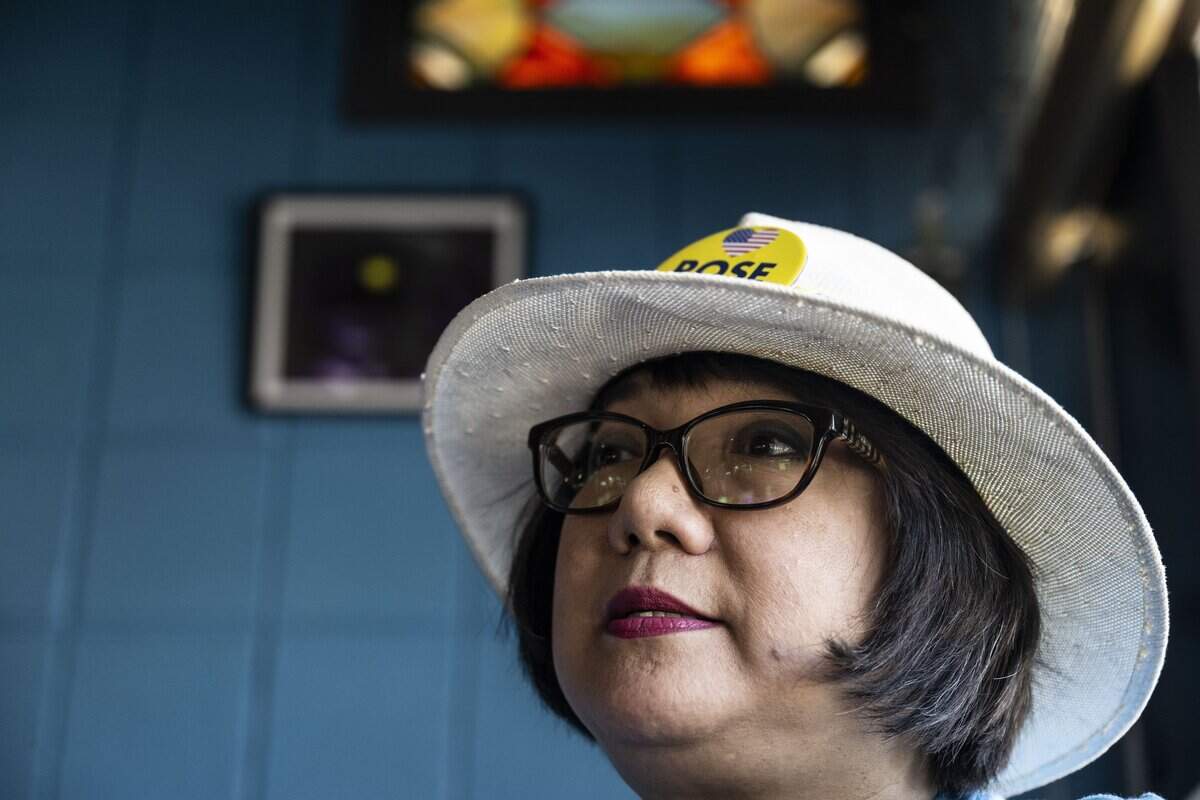
Yee, who is currently challenging LaMalfa in her third long-shot congressional bid, said she would prefer any leader other than LaMalfa, whom she called a “no-show representative,” citing what she called a lack of public contact with constituents. He held a town hall in Chico last week, his first in the liberal-leaning college town since 2017.
“His office here in Redding, you have to have an appointment just to see his staff,” Yee said. “If you don’t show up as a representative, and you don’t talk to the people to hear what their concerns are, then what are you in Washington for?”
LaMalfa pushed back and said it was a “false narrative” that he doesn’t hold any public events. He doubled down on comments he made after a Chico town hall last week opposing redistricting and calling Newsom’s plan “pathetic.”
He reiterated that he opposed redistricting in Texas, too, saying it would “set off a prairie fire of a whole bunch more states jumping in.”
The urban-rural divide
To help Democrats win, the proposed congressional map would carve up rural Northern California areas — which are heavily represented by Republicans — and put them in bluer urban and suburban districts.
State Sen. Megan Dahle, R-Bieber, called the proposed map “a straightforward attempt to disenfranchise rural voters.”
Dahle represents the North State, with many of the same constituents as LaMalfa. The proposed map creates more compact congressional districts by breaking up large rural ones to include voters in more urban areas. In particular, it would carve up two sweeping districts in Northern California into four new ones, each with an arm stretching to the coast or into Sacramento-area cities, to include higher concentrations of Democratic voters.
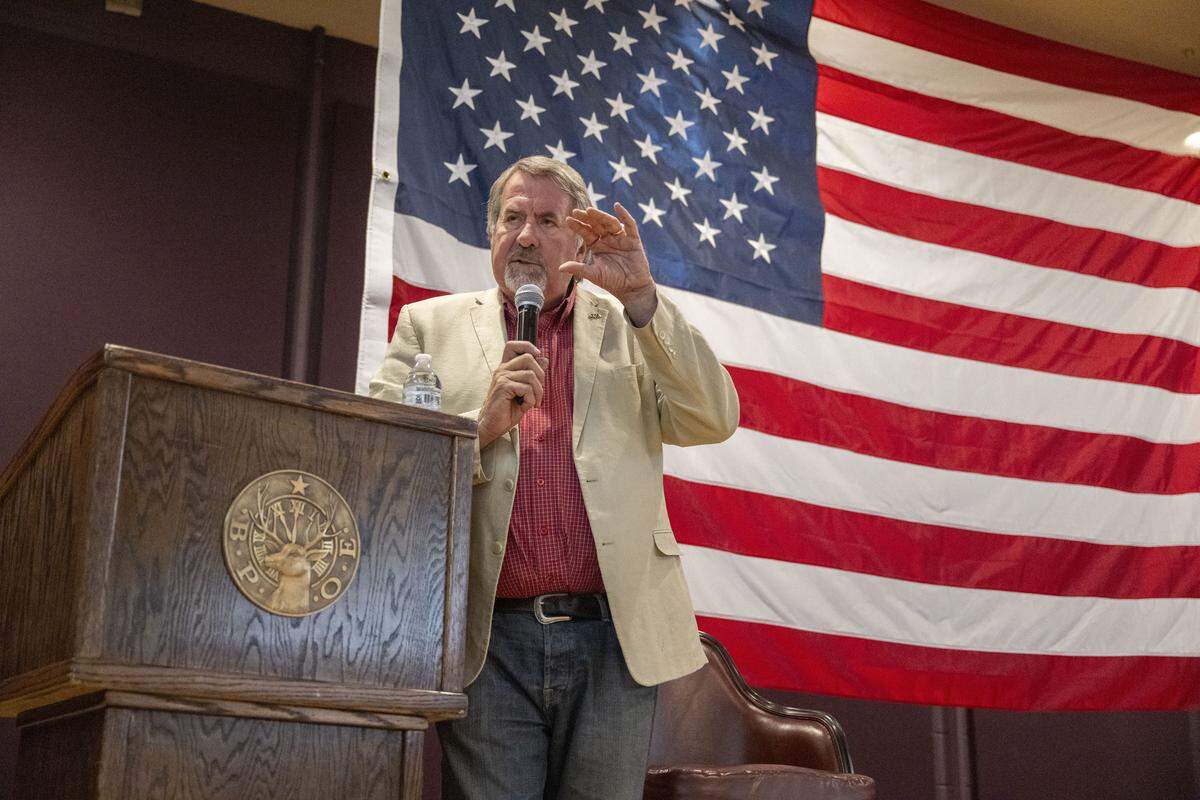
“Nobody who claims to represent rural California can support this,” Dahle said.
Newsom’s office declined to comment on the consequences for rural Californians and directed questions to members of the Legislature.
Republican Shasta County supervisor Matt Plummer said he could be convinced by arguments that the district needed to be redrawn sooner to accommodate for population increases, but called the timing of Newsom’s plan “politically motivated.”
“What we find in talking with our state legislators, is that there’s often a knowledge gap between more of the rural parts of California and the urban parts,” he said. Redrawing to elect someone who would also represent places like Sonoma and Marin would put the North State at a disadvantage.
“(Candidates) wouldn’t necessarily have the incentive to (come to the North State) and that’s the problem,” Plummer said.
“If they feel they can win the election without getting any votes of the people in Northern California … then that would be problematic, because then there is no incentive for them to spend time here, to really understand and learn what they don’t know about the North State and then to vote in ways that represent the interests of the people.”
Nowain, the local news blogger, said he was excited by former congressional candidates such as Audrey Denney announcing campaigns to unseat incumbents after the new redistricting map was released.
“I feel like we’re going to have a more diverse set of voices,” he said. “I think it’s important, because I think one of the issues that the right has had in Northern California is that they haven’t had to cross the aisle for anything because they’ve had a supermajority for so long, and the 10-point advantage actually levels the playing field.”
The valley and the foothills
Hundreds of miles away, conservative enclaves in the Sierra Nevada foothills also face the prospect of being gerrymandered into more liberal districts.
That includes the 7th Congressional District, which will include downtown Sacramento and Elk Grove, sweeping eastward to the more conservative Placerville area currently represented by Rep. Tom McClintock.
Voters in western El Dorado County, like those in Shasta, expressed mixed feelings about the change, mostly along partisan lines.
“It’s really nuts,” said Maggie Boling.
Boling, 42, is a stay-at-home mom in Shingle Springs. With a population under 5,000, Shingle Springs sits just off of Highway 50 in California’s Gold Country — a drive-by census-designated place en route to South Lake Tahoe via Placerville and the orchards and farmlands of Apple Hill. But for its residents like Boling, it’s more than a pitstop on the way out of Sacramento — it’s an ideal place to raise a family and live a quieter life.
Here, she also cares for two dairy cows and two new calves. She’s a registered Republican who became more politically engaged during the pandemic.
“People obviously choose to live differently. I feel like here, we have a different lifestyle,” said Boling.
Though she wasn’t familiar with the ins and outs of the redistricting process, she did know political lines are typically only redrawn once every 10 years.
“We just had it done in 2021,” she said. “Why are we changing things all of a sudden?”
Boling isn’t comforted by voters having the final say on whether the maps are adopted. Like many other California Republicans, she’s distrustful of the state’s voting system, particularly mail-in voting.
She also doesn’t trust how quickly the redistricting plans have unfolded.
“We’re all busy,” she said at a Cameron Park brewery during a break from running her teenage kids between school and sports practice. “We’re just living our lives and these things just sneak by us all the time.”
Foothills Democrats, like the Democrats in LaMalfa’s district, are excited by the prospect of being represented by a member of their own party.
“As far as we’re concerned, that’s a very positive change,” said Joel Ellinwood, a retired attorney and a leader with the anti-Trump group Indivisible El Dorado.
Though he said he’s concerned with the “gerontocracy currently in the Democratic Party,” he believes longtime Sacramento Rep. Doris Matsui, a Democrat, would be more responsive on community issues like health care, food assistance and public lands.
Ellinwood criticized McClintock for only meeting with constituents in smaller, tightly-controlled meetings.
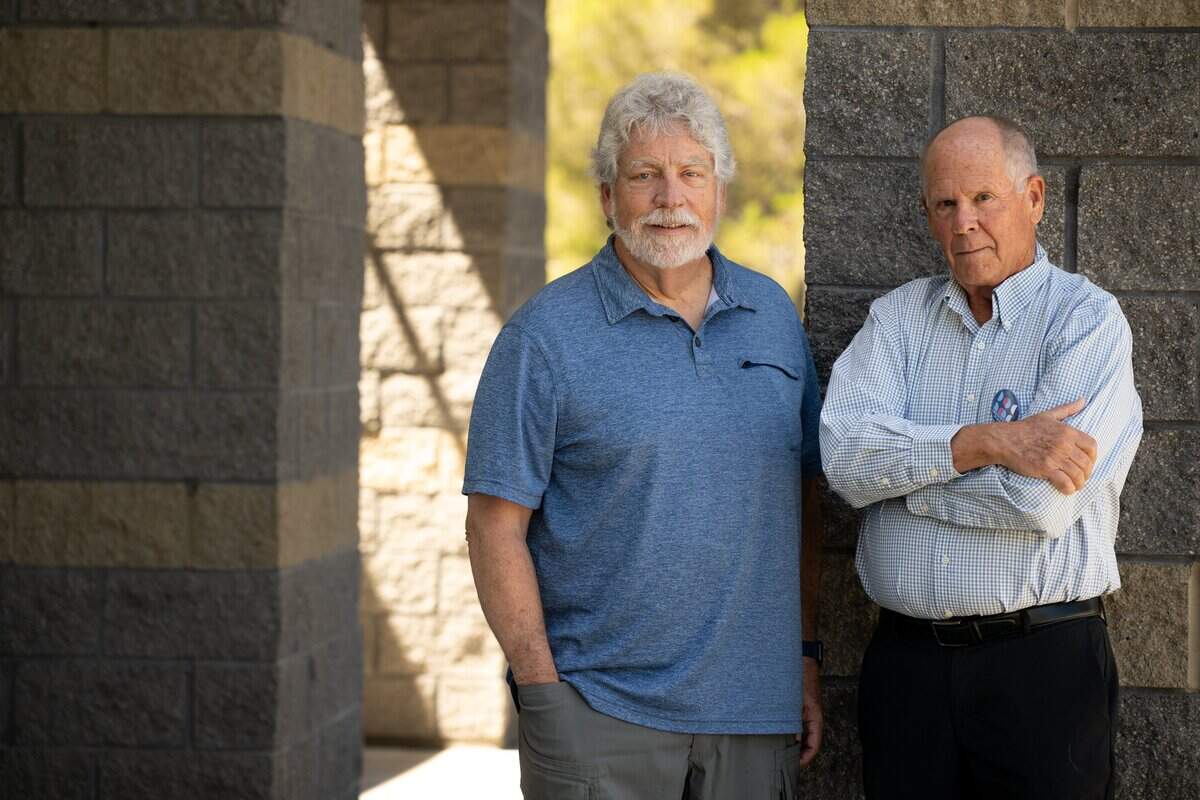
“The Democratic representatives are not afraid to hold town halls and to hear from their constituents,” he said. “Whereas McClintock simply refuses to consider any dissenting voices.”
McClintock’s office did not respond to requests for comment about redistricting or the proposed map.
“I have no qualms about being in the same district as Sacramento. I’m very happy that Tom would no longer be representing me,” added Greg Bergantz of Placerville, also with Indivisible El Dorado.
Still, Bergantz, a Democrat and retired music teacher, hopes it would be “a temporary fix and that we can actually do something nationwide to prevent this kind of partisan gerrymandering completely. But that’s kind of a pipe dream right now.”
Texas, California and a redistricting civil war
Newsom and Legislative Democrats say their plan is a direct response to Texas, where Republican lawmakers — pressured by Trump — are considering a new map to favor their party in the 2026 midterms.
The governor has vowed repeatedly to “fight” and “meet” fire with fire, and he took that fight to the national stage on Wednesday, picking up an endorsement from former President Barack Obama. He also rose to the top of a Politico poll that put him ahead of Kamala Harris in a survey of potential 2028 presidential candidates.
Some Republicans, like Newsom rival Rep. Kiley, argue that all mid-decade redistricting – whether in Texas, California or some other state – is wrong. Others simply brush off how it all began.
“Texas is Texas. This is California,” said Todd White, chair of the El Dorado County Republican Party. “They have their process and we have ours.”
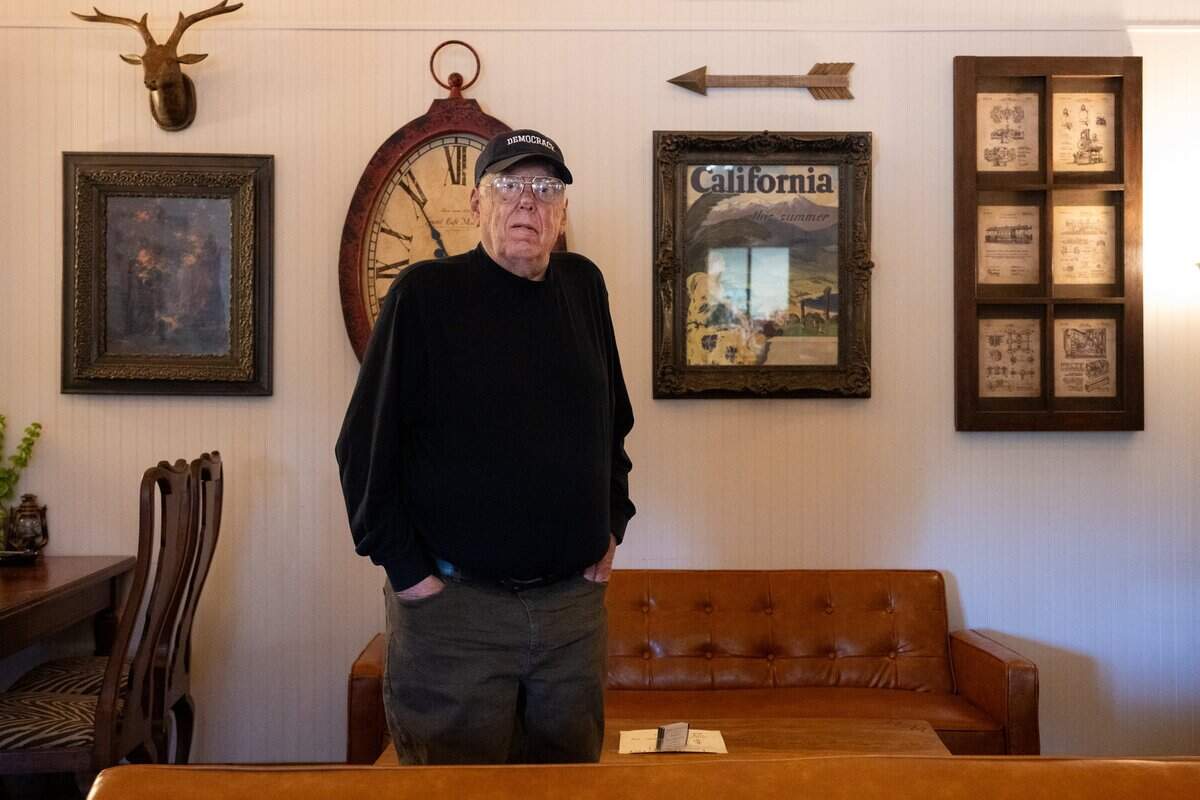
“Hogwash,” said Les Francis, 82.
Francis lives in El Dorado County and founded Sierra Forward, a group that works to elect Democrats and moderate Republicans in 24 counties that cover the Sierra Nevada. “We would not be here were it not for what Texas has done, period,” Francis said.
Francis was an aide in the Jimmy Carter White House and also served in leadership positions at the DNC and DCCC. He said redistricting “is not a place where you’re going to find consistency.”
“A good number of us have been on both sides of this issue at different times,” he said. “In those positions, I always argued in favor of a proposal that would give my party an advantage.”
Bergantz, the Placerville Democrat, said one thing missing from the entire redistricting discourse is that, political gerrymandering or not, voters will have the final say over their representatives.
“It could be that Texas thinks they’re going to get five seats but they may get eight, they may get two. We don’t know, “ he said. “If California’s going to offset that by five, we may get eight or we may get two.”
“It’s all up in the air. It depends on the voters.”
This story was originally published August 22, 2025 at 5:00 AM.