Developers tout California affordable housing aid amid high demand, uncertainty
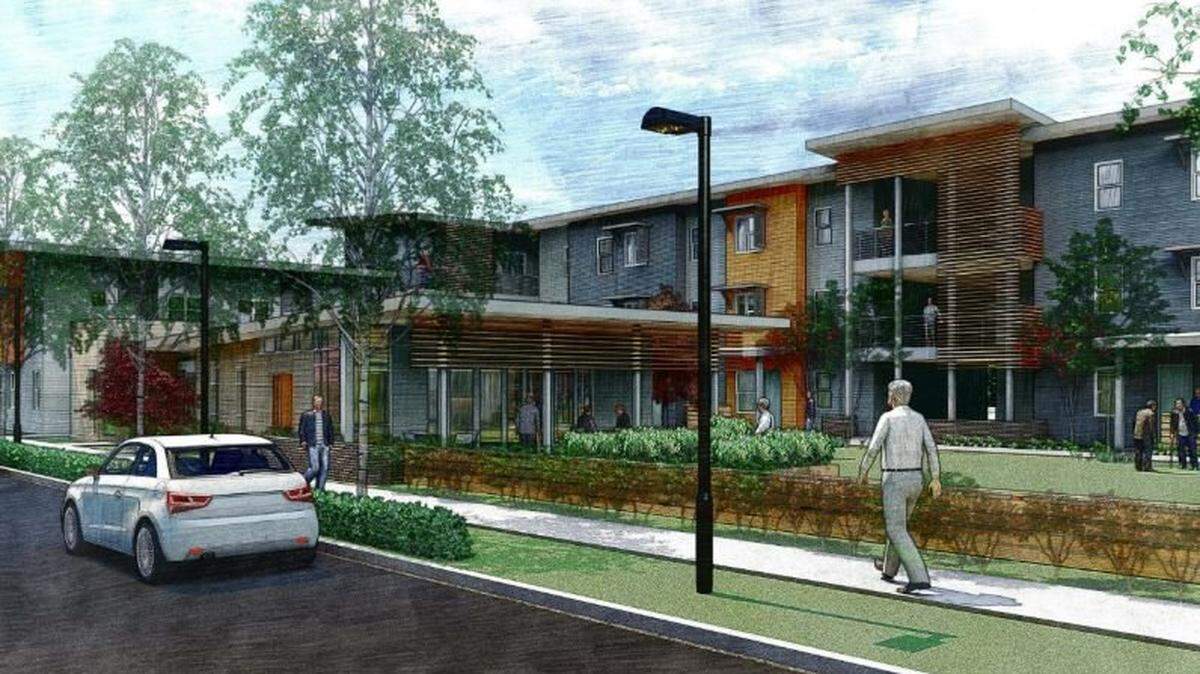
It had been several days since a California housing agency announced it was funding housing developments across the state, but Linda Mandolini was still excited. Her organization, Eden Housing, received tens of millions of dollars for five projects.
One was for a 67-unit complex in Sacramento’s Central Oak Park for people who are at least 55 years old and have lower incomes. A quarter of the apartments will be used to support people who are experiencing homelessness or at risk of it. Construction is set to begin in the coming months and the goal is to open around April 2027.
The other projects are planned for San Diego and Marin counties.
At the same time, Mandolini, Eden Housing’s CEO, is worried about the future of affordable housing funding in California.
Gov. Gavin Newsom and legislative leaders approved $120 million in the current fiscal year to continue to support the multifamily housing program, which provides low-interest and long-term loans for construction and rehabilitation of units for Californians with lower incomes. But money for that key program is not guaranteed, and she said more certainty is needed to help future affordable housing projects get built.
“We just need consistency — it helps all of us,” Mandolini said.
Newsom and legislators have for years tried to make it easier to build housing in the state. But funding for new projects remains a key impediment to reducing the state’s housing shortage and high prices.
The recent awards from the California Department of Housing and Community Development totaled more than $414 million for 30 projects. Overall, there were more than 160 proposals submitted for consideration, a sign of the high demand for state dollars.
“There is a robust pipeline ready to get funded and built,” said Chione Flegal, executive director of Housing California, an organization that advocates for reducing homelessness and increasing affordable housing. It is a lead supporter of placing a $10 billion state housing bond in front of voters next year.
The proposal, which stalled in the Legislature for a second year in a row, would set aside billions of dollars for the state’s multifamily housing program.
“We think it’s a really important tool for helping to solve homelessness,” Flegal said.
‘Basic need’
Carol Ornelas, the CEO of Visionary Home Builders of California, said uncertainty about funding in the latest budget made her especially grateful that one of her organization’s projects also received an award.
Its development will be in Delhi, a community of about 10,500 people southeast of Turlock. The state granted almost $12.7 million to help build the 48-unit project, which is meant to serve farmworkers in the area.
“Every dollar that we get is a blessing,” Ornelas said. “But we can’t forget the first basic need is shelter.”
For developers, the recently-granted state money can be used as leverage to acquire more money from federal and private sources, Matt Schwartz, CEO of the California Housing Partnership, said in an email. The organization focuses on affordable housing policy and financing. If the Delhi project receives credits, Ornelas hopes construction will begin about a year from now and that people can start living there in 2028.
Fresno Housing is also hopeful it will receive tax credits after the state funding award, said Michael Duarte, its chief real estate officer and incoming deputy executive director.
It received more than $9.5 million for a project in Firebaugh, about 35 miles northwest of Fresno, which Duarte said will help support many of the community’s year-round farmworkers who have families.
“This is really an opportunity to provide stable housing that is affordable to them.”
The latest round of funding is for 28 units, many of which are two, three or four bedrooms, Duarte said. If tax credits come through, Fresno Housing’s goal is to start construction before the end of next year and be ready in 2028 for people to move in.
But for all the money the state spent in the latest round of funding, the nearly 2,100 units it supports is only a small fraction of what is needed to house all of California’s residents and do so in a more affordable way.
Gustavo Velasquez, the director of the California Department of Housing and Community Development, agreed that the amount of money needed to build enough housing in the state is “enormous.”
But, he added, the recent funding award is just one part of a larger state effort to address homelessness and housing affordability. Beyond that, he said the average cost of just under $200,000 per unit financed in the latest award was money well spent to get the state to where it needs to be.
“People need to just account for all of that to see what the true dividend is in investing in affordable housing,” he said. “It’s about infrastructure, it’s about economic development, it’s about the public benefit of keeping people housed.”
This story was originally published October 1, 2025 at 3:03 PM.