Gaps remain in CA methane leak oversight as air agency updates landfill rules
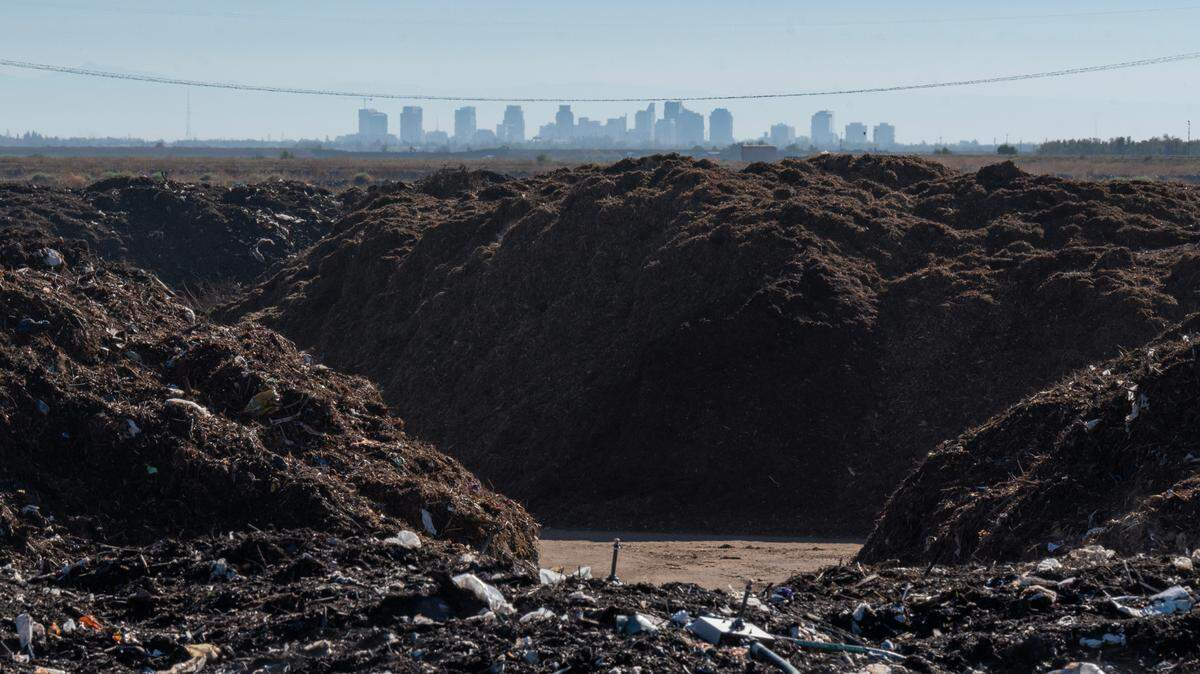
When the California Air Resources Board approved updates to its Landfill Methane Regulation for the first time in more than 15 years last week, CARB Chair Lauren Sanchez framed the move as a critical action to combat climate change.
“The science is clear. Acting now to reduce emissions of methane and other short-lived climate pollutants, so-called super pollutants, is the best way to immediately slow the pace of climate change,” Sanchez said, during the board meeting on Nov. 20.
But while California officials celebrated new efforts to curb methane pollution from landfills, the update reflects gaps that still exist for the oil and gas sector which accounts for a substantial share of California’s methane emissions.
Gaps remain in oversight of methane leaks
Under CARB’s current Oil and Gas Methane Regulation, operators with equipment that CARB regulates are only required to repair leaks when readings exceed 1,000 parts per million by volume — about 0.1% methane in the air — even though leaks below that threshold are still be detected, allowing gas to continue escaping.
CARB estimated baseline methane leak emissions from regulated oil and gas equipment in 2022 at about 8,700 metric tons. Of that total, roughly 7,000 metric tons came from parts not flagged as leaking under the agency’s detection threshold, meaning nearly 80% of baseline leak emissions didn’t count as “leaks” under the regulation.
Those methane leaks, when converted to CO2, roughly equal the annual emissions of more than 41,000 typical cars. But since CARB doesn’t require operators to act on what it labels “non-leaking” equipment, these smaller leaks can continue until the next inspection.
“Under CARB’s current regulation, if the operator or CARB detect a leak less than 1,000 ppmv, we do not require any action,” Dave Clegern, a CARB spokesperson said in an email, adding that some air districts, including the South Coast Air Quality Management District and the San Joaquin Valley Air Pollution Control District, require action for any leak of 500 ppmv or more.
CARB also does not require operators to quantify emissions not only for oil and gas facilities but for landfills as well, even after the amendment approved Thursday.
“With the new amendments, operators will be required to find and repair leaks in response to remotely detected methane plumes, which is currently happening on a voluntary basis,” Clegern said. “Operators do not need to quantify those emissions. Doing so would be a complex requirement for operators, so the regulation remains focused on methane mitigation through leak detection and repair, as it always has been.”
As of Wednesday, CARB has notified operators about 26 methane leak events at oil and gas facilities that were detected by satellite since May. Five of those cases remain listed as “open,” and all are associated with facilities operated by Chevron U.S.A. Inc. at the Midway-Sunset Field in Kern County. Notes state that CARB has “notified’ the operator, who is “coordinating with CARB on source of emissions.”
An important, imperfect step forward
On Nov. 20, CARB voted unanimously to update the state’s Landfill Methane Regulation, adding stronger monitoring requirements and new measures intended to cut methane emissions from landfills. The update includes tougher monitoring standards, quicker repair requirements, and expanded satellite detection.
Environmental advocates welcomed the move, with Gavin Bruce, project manager at Valley Improvement Projects calling it “an important step forward and long overdue,” while noting that it is “not perfect.”
“Today CARB took necessary action to address the dire need for improved monitoring needed to reduce methane emissions from landfills and to enable frontline communities to protect themselves from landfill emissions,” Bruce added.
The newly approved landfill methane requirements will take effect on Jan. 1, 2027.
This story was originally published November 28, 2025 at 2:10 PM.