Central Valley’s Kaweah groundwater basin avoids probation after plan improvements
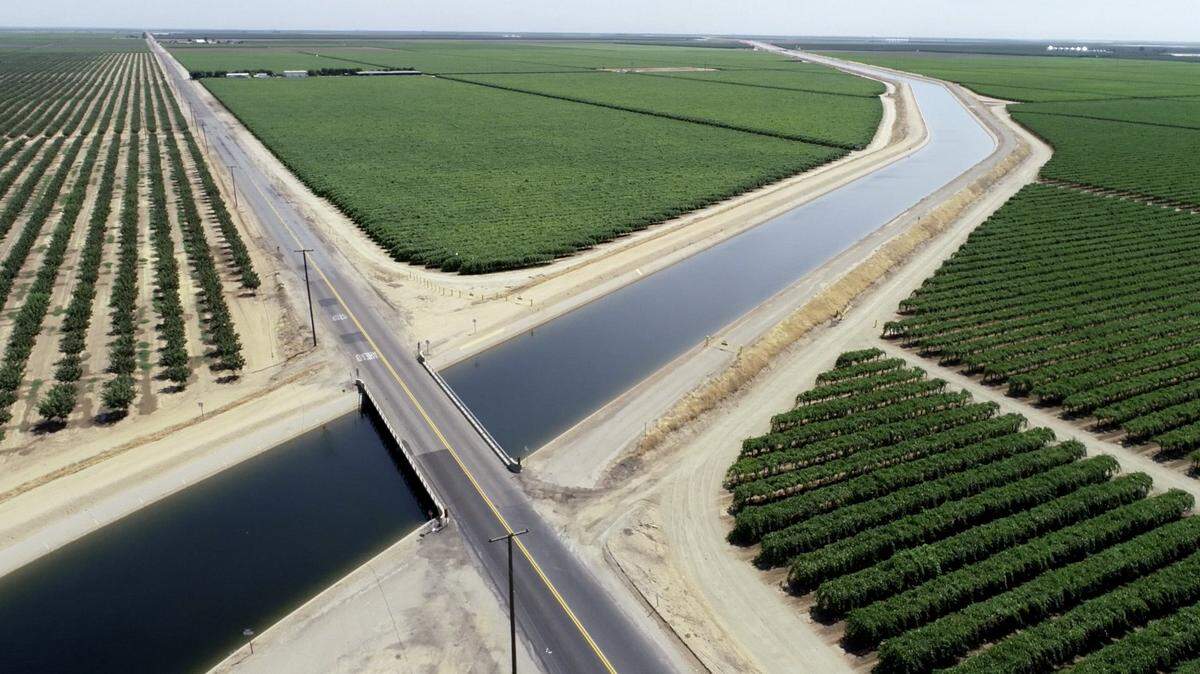
The State Water Resources Control Board on Tuesday voted to return the oversight of the Kaweah subbasin to the Department of Water Resources after local agencies improved their groundwater plan, ending nearly two years’ threat of probation.
The development followed the state’s review process triggered in March 2023 under the Sustainable Groundwater Management Act, when DWR had determined that the subbasin’s original groundwater plan was “inadequate,” citing concerns like declining groundwater levels, land subsidence, and potential impacts to drinking-water wells and infrastructure.
Kaweah is one of California’s most stressed groundwater basins, sitting in the southern San Joaquin Valley where decades of heavy pumping have caused chronic overdraft. The region lies at the edge of one of the valley’s major subsidence zones, where sinking land has damaged the Friant-Kern Canal — a critical piece of water infrastructure in the Central Valley that runs directly through the subbasin.
Kaweah also serves several under-resourced communities that rely on shallow domestic wells that have repeatedly gone dry, which was one of the key reasons state reviewers initially found the basin’s groundwater plans inadequate. The probation could have shifted control of the basin’s groundwater management from the local Groundwater Sustainability Agencies to the State Water Board, requiring groundwater users, from agricultural irrigators to water districts, to report their pumping, install meters and pay state fees.
“It’s quite an accomplishment to see that only two of those critically overdrafted basins are on probation,” Caitlin Peterson, associate center director at the Public Policy Institute of California’s Water Policy Center, noting that Kaweah and several neighboring basins that received inadequate determinations in 2023 ultimately reworked their plans and were returned to DWR oversight.
Kern County and Chowchilla subbasins, for example, were returned to DWR in September and June, respectively, after revising their plans. Tule and Tulare Lake subbasins, meanwhile, were put on probation.
“There are degrees of severity of how much overdraft each of these basins is dealing with, and ‘critically overdrafted’ is the highest degree of severity,” Peterson said.
“Meaning, historically, (they) have been using a lot more groundwater than can be replenished in any given year…they’re on the front lines of (the Sustainable Groundwater Management Act) and implementation in a lot of ways.”
Revised plan clears path back to local control
In the resolution passed on Tuesday, the board stated that it finds the local agencies have “addressed the deficiencies identified in the Department of Water Resources’ Inadequate Determination and additional issues raised by State Water Board staff.”
The resolution echoed the conclusions in the State Water Board’s staff assessment released in October, which found that the revised plan strengthened sustainable management criteria, expanded monitoring, and improved protections for water quality. It noted the groundwater sustainability agencies, or GSAs, that oversee the subbasin had made “substantial progress” and probation was no longer necessary.
“This is a landmark milestone for the subbasin after being under threat of probation for nearly two years,” East Kaweah, one of the Kaweah subbasin GSAs, said in an October statement following the staff assessment.
“Remaining under DWR means that the subbasin can locally control its groundwater management, addressing groundwater overdraft by implementing the GSPs (Groundwater Sustainability Plans). The three GSAs continue to work in coordination to achieve sustainability by 2040.”
DWR reported in March that groundwater supplies roughly 41% of California’s water in an average year and as much as 60% during droughts, while noting that about 85% of Californians depend on groundwater for at least part of their water supply.
Under the Sustainable Groundwater Management Act, California basins that are classified as “critically over-drafted,” or those facing the most severe levels of groundwater decline, are required to reach sustainability by 2040.
The 2023 determination, Peter said, wasn’t a surprise, but simply the point in the bill’s timeline when the state was expected to review local plans and call out those that weren’t strong enough.
“What wasn’t really known was what it would mean for the state to take over control — that had never happened before prior to this SGMA process,” Peterson said. “And we’re still not certain what that’s going to look like for the basins that are on probation.”
This story was originally published December 3, 2025 at 5:36 PM.