New federal plan for Delta water pumping conflicts with California requirements
AI-generated summary reviewed by our newsroom.
- Federal Bureau updates CVP plan to raise Delta exports, conflicting with California rules.
- Officials warn increased pumping threatens salmon, water quality, prompts state pushback.
- California officials warn federal plan conflicts state rules and risks Delta species.
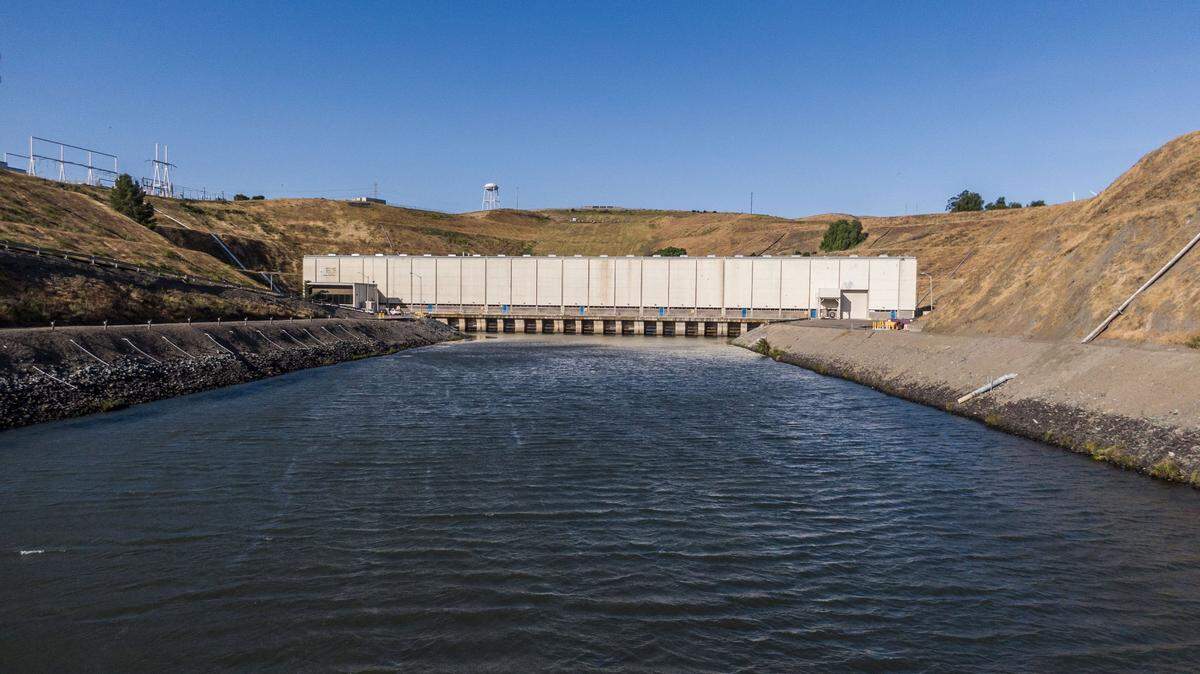
The Bureau of Reclamation on Thursday updated the long-term operations plan for the Central Valley Project to allow increased exports from the Sacramento-San Joaquin Delta, a move that conflicts with California’s own requirements, potentially shifts more of the water burden onto the state and threatens the Delta’s ecosystem and water quality.
The decision follows a January executive order from President Donald Trump directing agencies to boost water deliveries and echoes earlier efforts during his first term to loosen pumping restrictions in the Delta.
“The Trump administration is putting politics over people — catering to big donors instead of doing what’s right for Californians,” Tara Gallegos, a spokesperson for Gov. Gavin Newsom’s office told The Sacramento Bee.
“As per usual, the emperor is left with no clothes, pushing for an outcome that disregards science and undermines our ability to protect the water supply for people, farms and the environment.”
The Reclamation Bureau stated that under the updated plan, the federal-managed CVP could gain an additional 130,000 to 180,000 acre-feet of water a year — roughly 40 billion to 60 billion gallons — while the State Water Project could see an increase of 120,000 to 220,000 acre-feet, or about 39 billion to 70 billion gallons.
Jeff Mount, a senior fellow at the Public Policy Institute of California Water Policy Center, questioned whether the state would see any real benefit, noting that the State Water Project is still bound by California’s flow and water quality requirements and therefore cannot operate in the way the federal plan assumes.
“This is one of the bigger fears about having the federal government go their own way and without doing it in cooperation with the state,” Mount said.
A long-running conflict
The Trump administration has shown interest in expanding Delta exports since his first term, with federal agencies repeatedly pushing for greater “operational flexibility” and weakened pumping restrictions under updated biological opinions.
In 2020, in response to the Trump administration’s attempt to loosen pumping restrictions in the Delta, then California Attorney General Xavier Becerra, along with the California Natural Resources Agency and the California Environmental Protection Agency, filed a lawsuit against it and argued the move would illegally increase exports and cause “imminent and irreparable harm” to endangered species. The state won a partial early victory when a federal judge temporarily blocked parts of Trump’s pumping rules, and the federal government later revised its Delta operations under new biological opinions issued during the Biden administration.
In an email to The Bee, California Department of Fish and Wildlife Director Charlton H. Bonham said measures outlined in the federal plan, known as “Action 5,” are “vague, unclear, impossible to implement, or not based in best-available science.”
“The measures in Action 5 run counter to the state’s efforts to bolster commercial and recreational fishing by supporting healthy populations of Chinook salmon — harming the California communities that rely on salmon for their livelihood,” Bonham added.
Department of Water Resources Director Karla Nemeth, meanwhile, emphasized the importance of “close coordination” between the State Water Project and the Central Valley Project, in “protecting water supply, fish and wildlife, and water quality.”
“As Reclamation changes Central Valley Project operations, DWR will do its best to make sure both projects are operating in concert to the benefit of all of California,” Nemeth said in an email.
Although the federal plan predicts additional supplies for the State Water Project, Mount said that outcome is unlikely as the SWP must still follow California’s own flow, water quality, and endangered species rules in the Delta.
“Three to four million acre-feet of water — that’s three to four Folsom reservoirs worth of water per year — has to flow out of the Delta and into San Francisco Bay in order to keep the Delta fresh enough to use it and to meet the state’s flow and water quality and Endangered Species Act standards,” Mount said. “If the federal government decides not to do as much, the state has to make up the difference.”
Pointing to California’s closure of the commercial salmon fishery for the last three years, Mount also noted that because the proposal would allow more pumping during periods when restrictions are normally in place to protect fish, including salmon and steelhead, it would not improve conditions for species that are already in “really bad shape.”
“It doesn’t improve conditions. Its premise is only that it doesn’t make bad conditions worse,” Mount added.
This story was originally published December 5, 2025 at 4:42 PM.