
CalFresh committee hears from worried food banks, considers new revenue streams
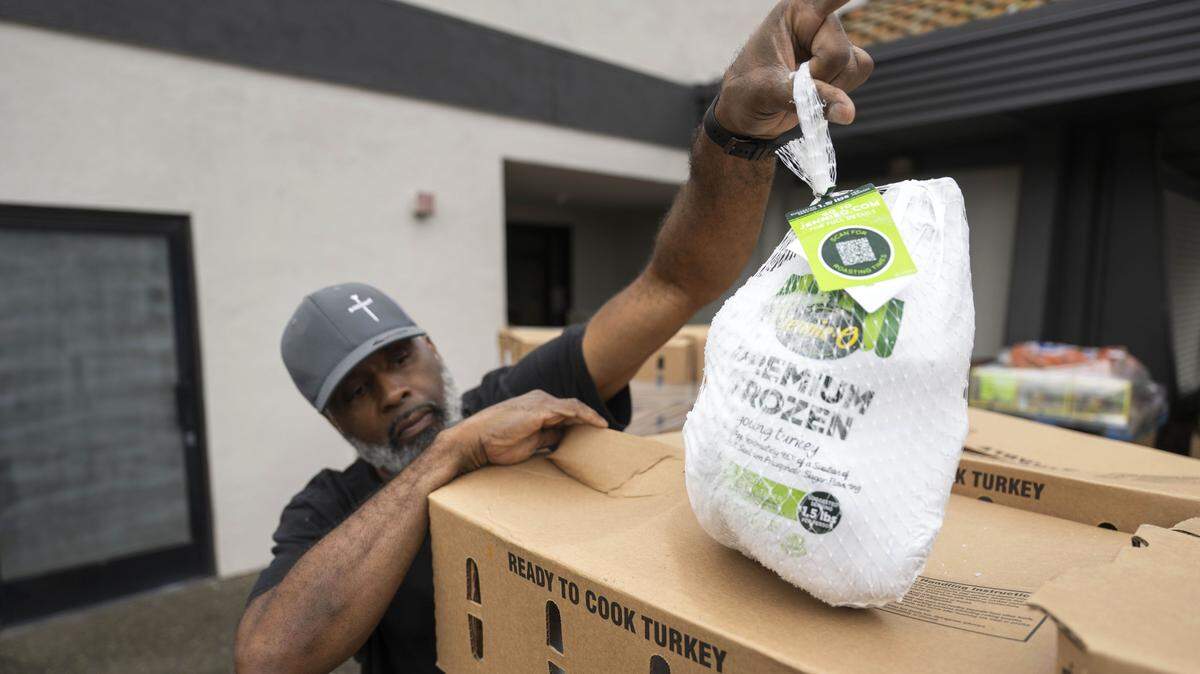
California food banks are seeing increases in demand following the federal shutdown and as Republicans nationally restrict who is eligible for government aid — increasing the pressure on state lawmakers to find ways to counter those cuts despite the deficit in their own budget.
A state legislative committee heard Wednesday from representatives of food banks who said they’re seeing growing numbers of people at their doors, amid rising economic uncertainty and even before some of the more drastic cuts to social programs by the federal government go into effect next year.
Though lawmakers didn’t float specific policy proposals yet, they heard from food security advocates who urged them to lower barriers to assistance in state statute and also consider new revenue sources to replace federal dollars. Several lawmakers on the Select Committee on CalFresh Enrollment and Nutrition said they would need to push their colleagues to consider revenue-raising.
“We face a really uphill struggle with balancing the budget,” Assemblymember Alex Lee, D-San Jose, said, “but also to be responsible for everyone’s livelihoods, and I think it is going to be a big case for us to continue to push for stronger revenue solutions to fulfill all our responsibilities fiscally and socially.”
Food bank representatives raise alarm
Lee’s comments came after the committee took two hours of testimony from food bank representatives, researchers and officials from county and state social services agencies who all described mounting strain on safety nets as a result of rising costs, rising unemployment and Republicans’ signature federal budget proposal, the One Big Beautiful Bill Act.
Charities associated with the California Association of Food Banks, which represents 42 food banks around the state, today are serving around 1.5 million more people a month than they were during the height of the 2020 pandemic, Josh Wright, the group’s government relations director, said. And 92% of those food banks have seen an increase in this quarter when compared to the last one.
“We worry these rates will continue to rise if action is not taken,” Wright said.
The charities are already bracing for a sharper increase in demand next year, as the Republicans’ budget bill starts to narrow the numbers of people eligible for food assistance.
“Food banks can’t make up the gap,” from federal budget cuts, Wright said. CalFresh, the state’s program to deliver federal dollars under the Supplemental Nutrition Assistance Program, can provide five meals to families for every one the state’s food bank is capable of serving, he said.
California projected to lose billions in federal food aid
But CalFresh is taking big hits from the federal government, both in the money available for redistribution and the number of people it can serve. The state’s nonpartisan Legislative Analyst’s Office estimates that California will lose billions of dollars in federal food aid it redistributes. At Wednesday’s hearing, Monica Saucedo, a policy analyst at the California Budget & Policy Center, said hundreds of thousands of CalFresh recipients risk losing access to the benefits entirely because of changes to work requirements under the One Big Beautiful Bill Act. And nearly every family benefitting from CalFresh stands to take a cut to their assistance, she said.
“We urge legislators to explore all bold solutions including raising revenue to make sure that everyone can access food in the fourth-largest economy in the world,” Saucedo said.
“And that we are doing, no doubt,” Assemblymember Patrick Ahrens, D-Sunnyvale, replied.
Other hearing attendees noted that California has lagged behind the national average in enrolling eligible people into food assistance programs. As such, today’s federal blows come as bureaucratic hurdles over the years have meant large numbers of people eligible for assistance already don’t receive it, lawmakers and a CalFresh recipient and university student said.
Zoee Tanner, a UC Berkeley graduate student who is both a CalFresh recipient and an advocate for increased access to the program on her campus, told lawmakers she waited on the phone over three hours to start an interview necessary to register for food assistance. It was a wait, she said, many working people or busy parents couldn’t sit through, and just one of many hurdles she has jumped through to prove her and other people’s eligibility for assistance.
“CalFresh is not a hand out,” Tanner said. “It’s endless work.”
Officials from the California Department of Social Services testified that the agency raised the registration of eligible people in CalFresh by 20% over just a few years through a targeted outreach campaign. Increasing that rate even further, and perhaps striking down some of the state level hurdles to people signing on, is a target for lawmakers on the subcommittee, several said.
“It’s much easier for people to be already on the boat,” Lee, the San Jose assemblymember, said. “It’s harder for people to be shaken off then (for the federal government) to keep them off the boat entirely.”
This story was originally published December 18, 2025 at 5:00 AM.