Top legislator says state ‘must do better’ on housing after Newsom budget plan
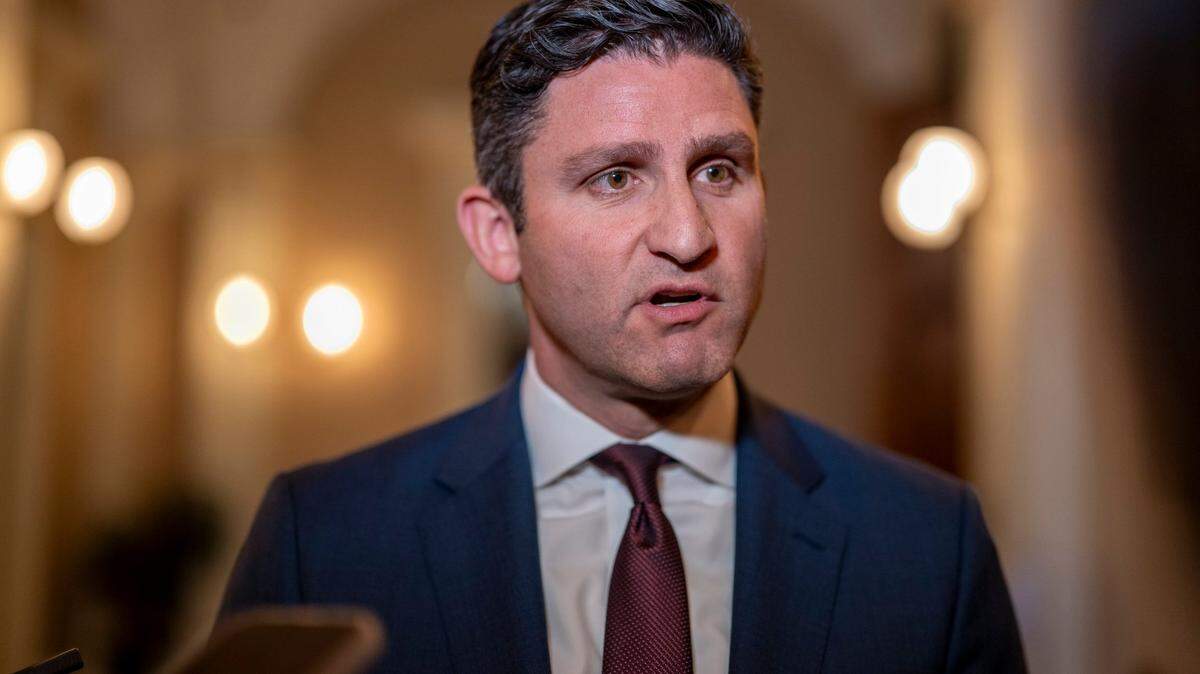
The chair of the California Assembly’s budget committee said Tuesday that Gov. Gavin Newsom’s current spending plan for the upcoming fiscal year does not go far enough on housing and homelessness.
“The lack of resources for housing in the governor’s budget is impossible to ignore and it does not reflect our prior commitments or our values,” Assemblymember Jesse Gabriel, D-Encino, said during the committee’s first hearing of the year. “We can and must do better regardless of our budget situation.”
Newsom released his budget proposal earlier this month as governors are required to do. This year, the administration’s $348.9 billion plan largely kept with the status quo, without including major new investments or large cuts.
The plan frustrated legislators and advocates who want Newsom to commit more money to fund an array of programs, including medical and food assistance for undocumented immigrants in light of changes in state and federal policies.
Gabriel did not give specific examples of what housing and homelessness programs he wanted to see funded and at what levels. Newsom’s administration has, in the past, excluded funding for initiatives in January budget proposals that it has supported in previous years, leading legislators and advocates to heavily lobby for them to be in the final budget.
One such example is the state’s Homeless Housing, Assistance and Prevention grant program. The program helps fund homeless response efforts at the local level. Advocates are calling for the state to increase the amount of available grant money.
Sharon Quirk-Silva, D-Fullerton, said she was confused by the need for legislators to have to “haggle for housing dollars,” especially in light of the governor’s claim that there has been a drop in unsheltered homelessness across the state.
Quirk-Silva said she was already “grovelling” and “begging” for the administration to support more tax credits for low income housing in the upcoming fiscal year as it has in the past.
The Legislature is required to pass a budget by June 15. But in practice legislators can approve a first version by that deadline before signing off on additional versions after the fact. Newsom is expected to provide an updated proposal in May.
Legislators during the committee hearing urged the administration o do more to help people with food and medical assistance.
Last year, the state budget approved a freeze on new enrollments onto Medi-Cal, the state’s form of Medicaid, for residents who are undocumented immigrants. It also imposed a $30 premium starting next year for many immigrant adults.
Beyond that, the federal government has made changes with Medicaid, as well as with food assistance, that finance officials estimate will cost the state $1.4 billion in the upcoming fiscal year. Many Californians are also expected to lose support.
Erika Li, a top budget official at the Department of Finance, told the committee the state “cannot physically backfill for every lost federal dollar,” but it was important for the administration to work with the Legislature to determine what the budget can bear.
The department is predicting that the state faces a roughly $2.9 billion shortfall in the upcoming fiscal year and continue to see deficits in future years.
Assemblymember Corey Jackson, D-Perris, said he understood those concerns but wanted the upcoming budget to go farther than the January proposal.
“You cannot get anymore basic, in terms of health and welfare, than food and housing,” he said. “We can’t be everything to everybody, there’s no doubt and we have some tough decisions to make, but what we should not be doing this traditional game we play: we propose something, we have to go and ask for more, things like that.”
Hanging over Tuesday’s committee hearing is a warning from the Legislative Analyst’s Office, which advises the Legislature on fiscal and policy matters. In November, it pegged the state’s upcoming fiscal year deficit at closer to $18 billion due, in large part, to a more cautious view of the future direction of the stock market.
The state is heavily reliant on people with higher incomes, and its revenues can rise and fall strongly based on the ups and downs of Wall Street.
Gabriel Petek, the top official at the analyst’s office, told the committee he believes it is important for legislators to begin shrinking future deficits in the upcoming fiscal year.
Dozens of more budget hearings are expected before legislators make a final decision on that Petek’s advice.