Fees add costs to California housing. Are they ‘too high’ or a ‘rounding error?’
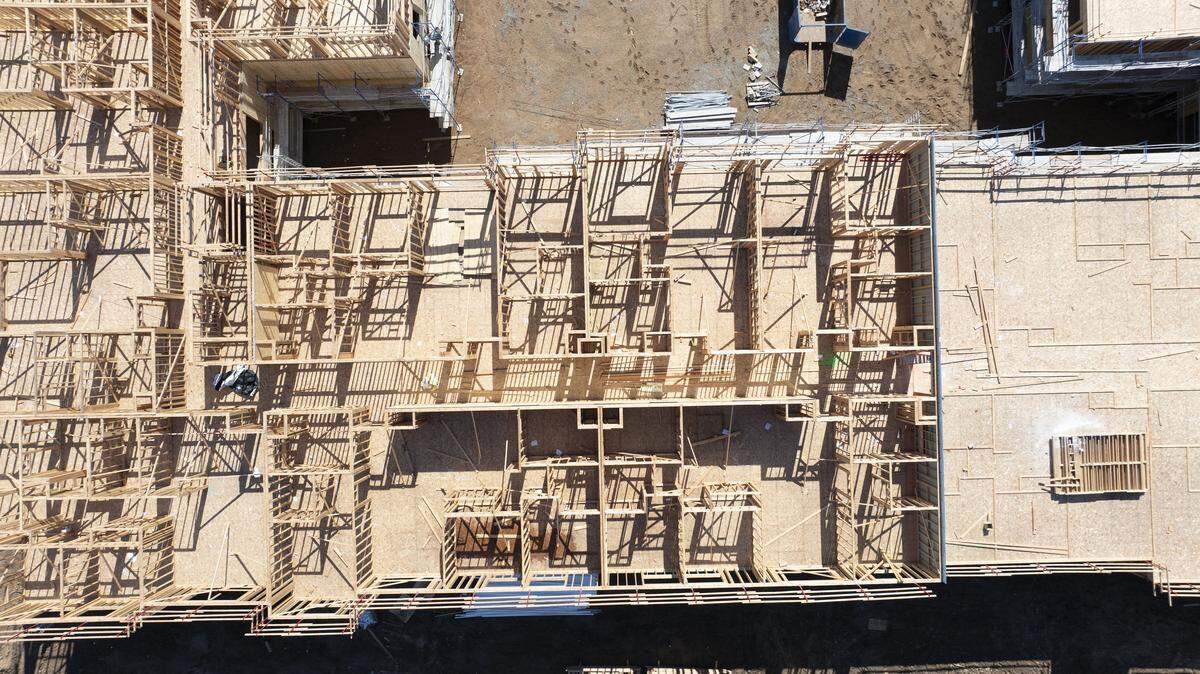
When Eden Housing wanted to start building an apartment complex in Sacramento’s Oak Park neighborhood it would have been on the hook for about $700,000 in specific development-related fees.
But the final bill was nowhere near that number.
In all, the fees were reduced by about $620,000 through automatic waivers and other savings, said Andrea Osgood, Eden Housing’s chief of real estate development.
The Donner Field apartments project was eligible for those reductions because it is an affordable housing development and is also specifically for seniors. Construction on the roughly $36 million project began in October.
“It may seem small,” Osgood said, “but every penny really matters in the end.”
A new report from UC Berkeley’s Terner Center for Housing Innovation shows that not all developers are getting the same break in other areas of the state.
Researchers analyzed applications for almost 700 new subsidized housing projects that were recently awarded state tax credits set aside for affordable developments. The vast majority included what are known as “impact fees,” charges that local governments or other public entities put on projects to offset costs related to water and sewer lines, roads and schools. They are also used to invest in parks and by utility companies to connect developments to electricity and gas.
Over a four-year period, developers paid more than $1.2 billion in combined impact fees on those projects reviewed by the UC Berkeley researchers. On average, the charges added up to more than $19,800 per unit.
A report by Rand Corporation, the international research group, last year found the cost of such fees averaged $29,000 per apartment unit in California. It was $1,000 per unit in Texas and $12,000 per unit in Colorado.
“Impact fees for housing in California are way too high,” said Milo Terzich, a vice president of development for USA Properties Fund, a Roseville-based builder.
The costs that developers have to pay can vary widely based on location. The Sacramento City Council has reduced the fees it charges on affordable developments, which helped out Eden Housing. Currently, the city will reduce impact fees up to a maximum of $10,000 per housing unit for affordable projects.
As California legislators search for ways to bring down the cost of building homes in the state, one of the areas they have looked to target is impact fees. Many outside the Capitol support the Legislature’s placing limits on how high the fees can go.
“We think this makes the case that for the local governments to meet their housing goals, that waiving the fees is a small price to pay,” Matt Schwartz, CEO of the California Housing Partnership, said of the report. Staff at his organization helped with the analysis.
The UC Berkeley researchers found that the charges amounted to only about 1.1% of total revenue in cities with projects they reviewed.
The California Housing Partnership also supported Assembly Bill 874, which would require local governments to either not charge impact fees or offer that they be deferred as a loan for projects with 100% of the units for low-income residents. But the measure has yet to receive a hearing and appears unlikely to meet a deadline needed to move forward this year.
‘Political scapegoat’
The bill likely stalled due to strong opposition by local governments who view the development charges as critical sources of money.
“When a city is imposing an impact fee it is going to support streets, sewers, water infrastructure and utilities, a whole host of essential services,” said Jason Rhine, a lobbyist for the League of California Cities. “In many cases there’s no other funding source.”
Proposition 13, the 1978 ballot measure that capped how much local governments can raise property taxes, has limited revenue, he said, along with other voter-approved efforts.
Rhine and other backers of the fees latched onto another line in the report that said the charges contribute to less than 5% of total development costs.
“To us, it’s really clear to us that impact fees are not driving California’s housing costs,” said Kyle Packham, an external affairs officer for the California Special Districts Association.
“I understand that impact fees are a convenient political scapegoat, but in reality they are a rounding error in the California housing market,” Matthew Duarte, the executive director of the California Association of Recreation and Park Districts, said in an email.
But the report also has another number that opponents of the fees can use in their favor.
If impact fees weren’t charged on the projects reviewed, researchers said, the savings could have paid for the development of roughly 5,000 more homes during the four-year period.
“Given California’s housing crisis, reforming local development fees could help bring down the costs of development and expand the supply of much-needed affordable housing,” the authors of the report wrote.
The fight over those fees is likely to continue in the Legislature.