Sac State delays return-to-office directive amid staff push-back
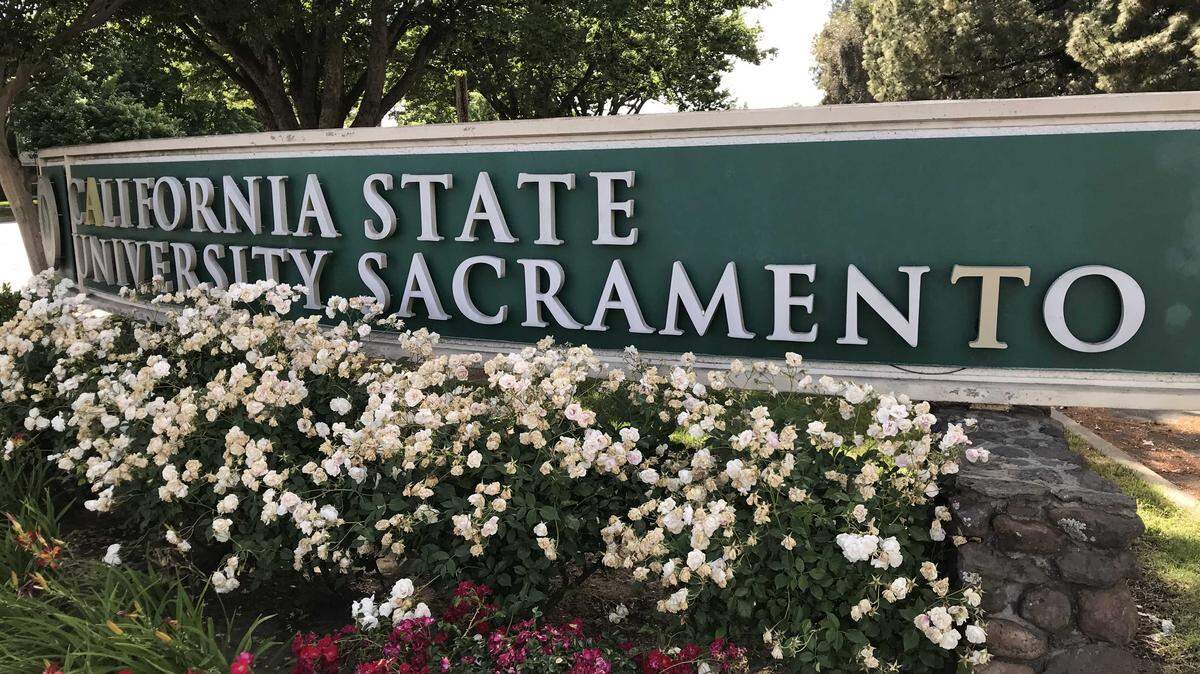
Sacramento State will require some employees to return to academic offices later this year to bolster staff’s on-campus presence and improve student and faculty services.
The measure drew criticism from university workers and their labor representatives, who said the change was misguided and had damaged staff morale.
Earlier this month, the Office of the Provost sent a message to Division of Academic Affairs employees informing them that the university was discontinuing all telework agreements with workers, except those with accommodations. Provost Erika Cameron informed workers that they would be expected to be working in person five days a week by Feb. 2.
Last week, Cameron held a town hall to discuss the policy during which she faced push back from staff, according to people who were present at the meeting.
After the meeting, the provost pushed back the schedule for rolling out the policy, a decision Cameron said was made to foster a smoother transition back to in-person work. The new policy will require Academic Affairs staff to be in offices four days a week beginning March 15 and fully in person by July 1.
Cameron also said that she appreciated the feedback from staff but “felt that the tone of the meeting at times veered away from being respectful.”
Sacramento State’s communications team did not respond to a list of questions about the policy and who would be impacted.
The reasoning for the policy change that Cameron cited in her memo was that staff needed to be physically present on campus to be more responsive to student needs and to help support faculty.
The announcement took Academic Affairs staff by surprise, said Manuel Lopez, the chief steward at Sacramento State for the Academic Professionals of California, which represents employees impacted by the policy change.
“Staff were floored that now we’re being told we’re not providing the services needed for students or faculty,” he said.
Lopez said that staff was upset because the announcement seemed to come out of nowhere and “there was no collaboration or contact with us to let us know that we weren’t providing a high level of service.”
While the policy change currently only impacts employees in the Academic Affairs division, Lopez said he had concerns that it would be expanded to the campus more broadly in the coming months.
Much like their civil service colleagues who have opposed Gov. Gavin Newsom’s efforts to bring state employees back to government offices four days a week, CSU Sacramento workers said that ending telework put financial pressures on staff and could lead to an increase in the number of employees who leave the university to seek jobs with more favorable remote work policies.
“For all of us who support our students and who’ve been successfully supporting them and our programs remotely … it’s a huge blow for us,” said Krystle Peay, an administrative support coordinator with the university.
Peay, who was speaking as a member of the California State University Employees Union, said that telework has enabled her family to keep her mother, who suffers from memory issues, at home. The end of telework will create obstacles for her family, Peay said.
Additionally, Peay said the policy change made her question her future with the university. “I know from other staff members within Academic Affairs that I’m not alone in feeling that way,” she said.
A CSUEU official said that the union represents roughly 1,000 staff members on Sacramento State’s campus, about half of which would be impacted by the revocation of telework.
“Our Union strongly disagrees with the Provost’s claim that telecommuting restrictions represent a forward-looking or sustainable approach for the CSU,” CSUEU President Catherine Hutchinson said in a statement. “Experience across multiple campuses demonstrates the opposite: campuses that have embraced telecommuting have realized significant cost savings, including reduced demand for physical office space, lower utility and operational costs, and more efficient use of existing facilities.”