
1 woman sues 47 Sacramento businesses in 3 years. Lawmakers reach for solutions
AI-generated summary reviewed by our newsroom.
- Pomponio sued 47 businesses since March 2023 and 263 earlier in federal court.
- Almost all defendants settled, with fixes, fees and at least $4,000 damages.
- Lawmakers are considering bills to stop immediate damage payments amid debate.
At the start of this year, a Fairfield woman named Meryl Pomponio filed suit against a handful of small eateries in midtown and East Sacramento.
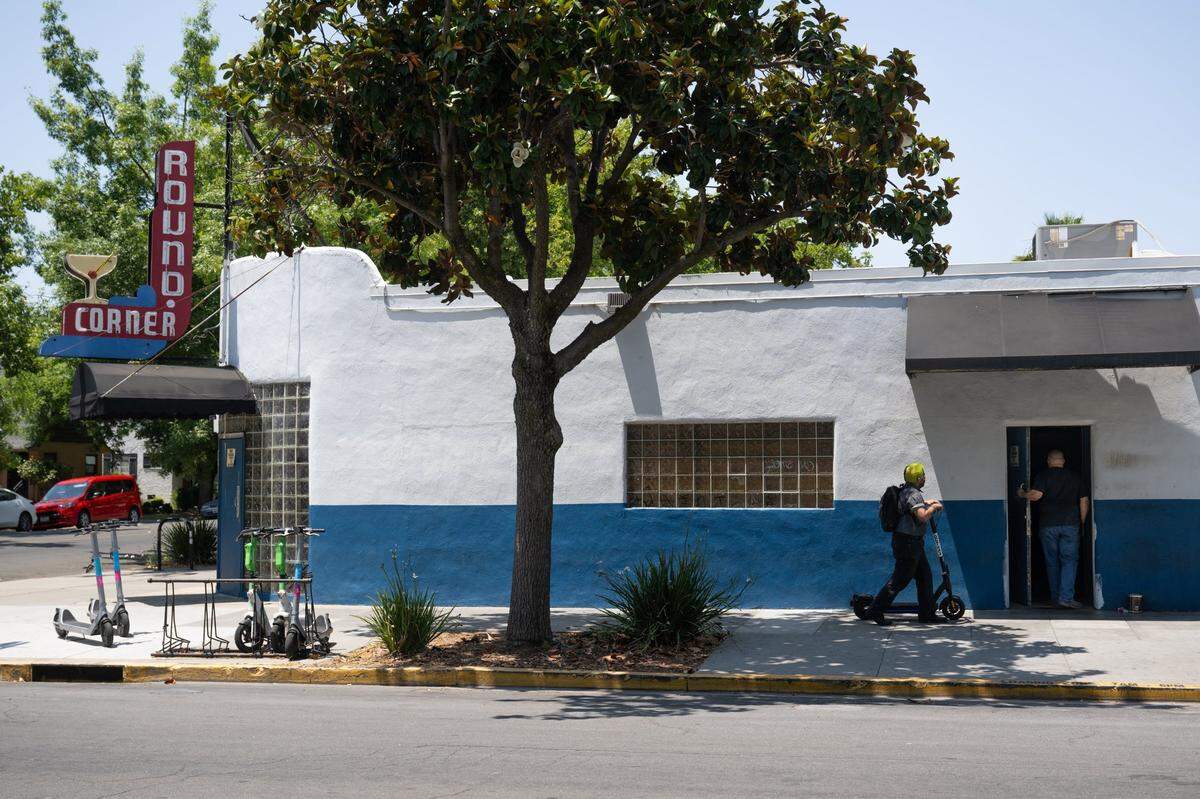
The businesses were varied: HeavenLy’s Yogurt, Centro Cocina Mexicana, OBO’ Italian Table & Bar and the Round Corner Tavern. But the story was the same. Pomponio, a 70-year-old woman who uses a wheelchair, had not had full access to all the restaurant’s amenities. She alleged violations of the Americans with Disabilities Act, a 1990 civil rights law that prohibits discrimination against people with disabilities.
The issues Pomponio pointed out ranged from easily solvable, like not enough accessible tables or seating, to more difficult to address, like a too-small bathroom.
Since March 2023, Pomponio has sued 47 businesses in Sacramento, 26 in Solano County and nine in Yolo County. In the five years before that, she sued 263 businesses in federal court. Her lawyer, Daniel Malakauskas, files the suits using the same script, with the business name and specific violations swapped out. Almost all the businesses have settled, according to court records — an arrangement that requires fixing the property, plus paying attorneys’ fees and statutory damages of at least $4,000 to Pomponio. Experts estimate settling a suit can cost a business $5,000 to $15,000 plus defense fees.
On his website, Malakauskas claims to have collected millions on behalf of his clients.
Critics say lawyers like Malakauskas are taking advantage of a well-intentioned law and that California’s legal landscape has made it a hotbed for “predatory” ADA lawsuits. Disability rights advocates say there’s no excuse for not following the federal mandate 35 years after its passage and that these lawsuits identify real harms. Two competing efforts in the Legislature are aiming to inoculate businesses against having to immediately pay damages, but both face a steep road to passage.

Two familiar faces
Pomponio and her attorney, Daniel Malakauskas, are well known in California for filing ADA lawsuits. Both have been in the press before, with Pomponio behind a rash of lawsuits in Contra Costa County, and Malakauskas having represented two other serial litigants that were featured in a 2014 Modesto Bee investigation.
When reached by phone, Pomponio’s husband, Gary Pomponio, declined to comment for himself and his wife, and directed inquiries to Malakauskas.
“Although the laws that protect the disabled may seem predatory or mere technicalities to able-bodied individuals, these very laws are necessities to disabled individuals,” Malakauskas said in an emailed statement. “The same individuals who criticize the ADA in their youth, will be grateful for it when they are senior citizens.”
On one of his websites, americans-with-disabilities-act-attorney.com, Malakauskas said he’s litigated over 600 cases on behalf of disabled clients in state and federal court.
“In the process,” the website claims, “he has collected millions on behalf of his clients and made numerous businesses accessible to the disabled.”
Stuart Tubis, who has represented several businesses sued by Pomponio, said there are so many ADA specifications that even dealing with the law every day, he must regularly look them up.
“It’s actually quite difficult to make a business 100% ADA compliant,” he said. “You can’t really take me anywhere, because I’ll point out some kind of ADA violation.”
Tubis said law firms like Malakauskas’ have taken advantage of a well-intentioned law and have led to the closure of several businesses he’s worked with.
“These laws were written in a way that allows exploitation, and it allowed plaintiffs to go out looking for these lawsuits,” he said.
Data presented last year to the Legislature found that just 10 law firms took over 95% of the legal action against businesses for noncompliance in 2024. Malakauskas’ firm was not on that list.
In all, the California Commission on Disability Access found there were 4,319 complaints and prelitigation letters filed alleging ADA noncompliance in the state in 2024. Data from that same report found the number of alleged construction-related physical violations have continued to increase, while alleged website violations — like the absence of “alternate text,” or insufficient color contrast for sight-impaired people — have also increased.
Eric Harris, with Disability Rights California, said he understands that people are frustrated with the lawsuits, but that he gets frustrated when he encounters an ADA violation.
“There have been so many times where, as a wheelchair user, I have to go through the kitchen in order to get to a restaurant, or I have to go through the kitchen in order to get to the accessible restroom,” he said. “That is, for a lot of people, a humiliating experience.”
It’s reminiscent, he said, of Black people having to enter establishments through the back entrance during the Jim Crow era.
Harris said landlords have had decades to make adjustments to their buildings, and it’s not right to vilify serial litigants, or their lawyers.
“I think it’s important that we don’t villainize any potential business model, especially when, at least for the disability community space, there is no other option for enforcing the ADA.”
Legislators seek solutions other than lawsuits
For more than a decade, lawmakers have been chipping away at the ADA accessibility quagmire — working to incentivize businesses to comply with the law and to dissuade high-frequency litigants from suing so often.
The issue persists, said Sen. Roger Niello, R-Fair Oaks, a co-owner of his family’s ubiquitous Sacramento car dealership group.
Niello said he first became aware of the issue 15 years ago, while he was serving in the Assembly, and a disabled plaintiff-attorney named Scott Johnson was filing hundreds of suits in the area.
The lawmaker said legislative attempts to curb the practice at that time were killed by trial lawyers. In the intervening years, he said, more Democrats have joined his side.
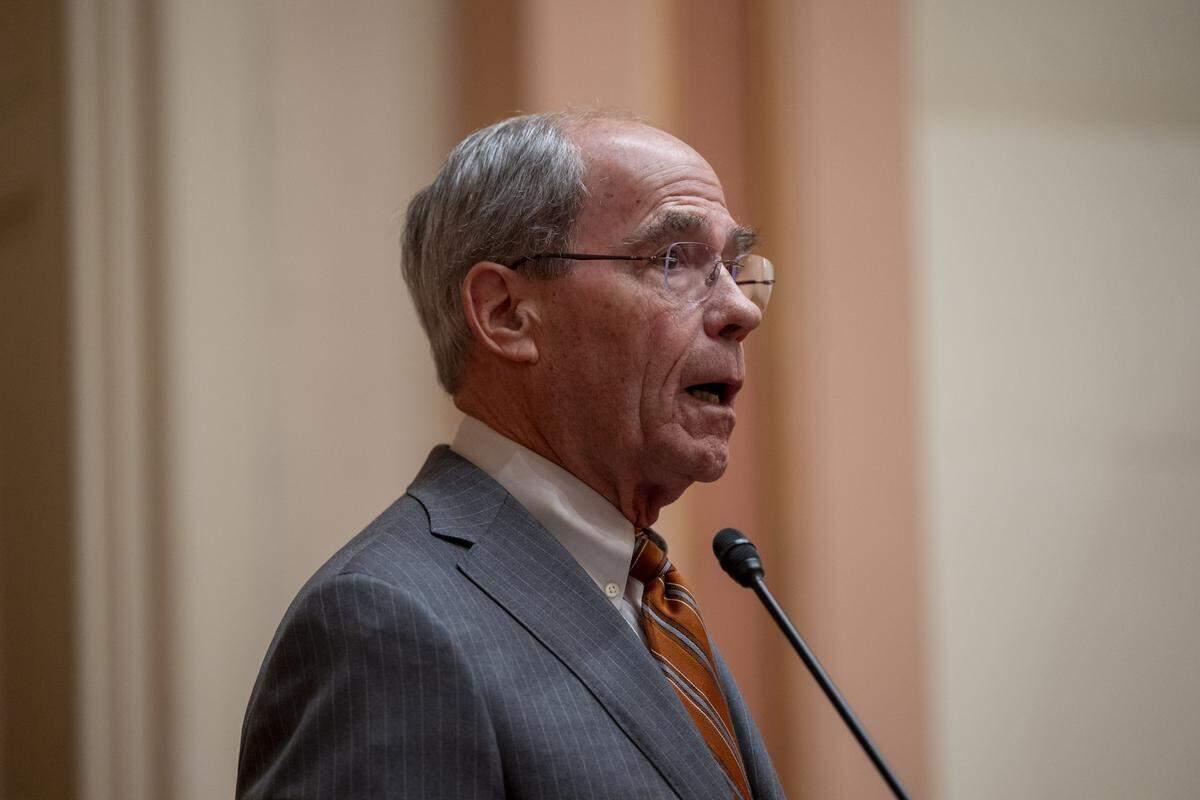
“What’s happened is, this has affected businesses, particularly small businesses in disadvantaged areas, and especially those that do not have English as a first language,” he said. Niello’s office said his perspective comes from conversations he’s had with various business groups throughout the state.
In 2023, he decided to try again, with SB 585. The bill would have required complainants to send a letter outlining any construction-related accessibility issues and would have given business owners 120 days to fix the issues before a complainant could sue. The Assembly Judiciary Committee declined to hear the bill, so it died. But Niello didn’t give up – bringing a very similar bill forward in 2025, as SB 84.
A majority of the Senate has signed on to SB 84 as an author or co-author, including 21 Democrats. However, once again, the Assembly Judiciary Committee will not schedule it for a hearing.
“The consultant asked me to amend my bill,” said Niello. “In my opinion, the approach is just unworkable.”
Niello said the committee wants his bill to look a lot more like that of Assemblymember Josh Lowenthal, D-Long Beach.
A different approach
Lowenthal is also connected to the business community, as a partner in three restaurants. He said he has been sued before.
“The last time the litigants didn’t even enter the premise,” he said. “They used a Google Earth photo, and they said that the handicap striping in the rear parking spot wasn’t painted bright enough.”
Lowenthal’s bill, AB 649, would incentivize the use of Certified Access Specialist inspections, known as CASp inspections, whereby an inspector appraises a business for ADA compliance. If a business were to get a CASp inspection, and remedy any issues, it would have six years of inoculation against an ADA lawsuit. If any business that is CASp-certified is sued, it would have 120 days to fix identified issues.
Both Niello and Lowenthal agree that the CASp inspection program, created by law in 2008 to help businesses identify and solve ADA issues before someone files suit, is underutilized. Inspections can cost a small business up to $2,000.
“There is no benefit for having a CASp inspection right now, as far as indemnifying you against frivolous lawsuits in the future,” Lowenthal said.
The lawmaker said his bill would provide that benefit, and appropriately toes the line between protecting the rights of the disability community as well as the rights of small business owners, unlike Niello’s bill.
“If you have the right to cure, then why fix anything? You’re just going to wait until that lawsuit comes in, and then you’ll fix it because you have the right to cure,” said Lowenthal.
Niello said his main issue with Lowenthal’s bill is that there are only 900 CASp inspectors in the state. He worries that inspection prices would increase.
“If there were enough CASp inspectors, I would agree to that. On the surface, it makes sense, but when you look at the numbers, it really doesn’t,” he said.
Disability rights groups are against both bills. They say no other protected group has to send a warning letter before they can sue for a civil rights violation and that the existing law already makes allowances for business owners.
An uncertain future
Though the bills were introduced last year, neither got much public debate due to behind-the-scenes discussions. Both currently sit in the opposite chamber’s judiciary committee.
Sen. Thomas Umberg, D-Santa Ana, himself a co-author on Niello’s bill, is the chair of the Senate Judiciary Committee, and has said he expects Lowenthal’s bill will be heard by his committee, as per Senate protocol.
The courtesy is not extended to bills that go to the Assembly. Niello said he’s doing all he can to get his bill a hearing, including calling every member of the committee to ask them to speak with the committee’s chair, Assemblymember Ash Kalra, D-San Jose, on his behalf.
Kalra said in a statement to The Sacramento Bee last year that he was “deeply disappointed” Niello was unwilling to come to the table to discuss amendments.
“SB 84 and past versions have had continued opposition from disability and civil rights organizations year after year with no efforts to address any of their concerns,” he wrote.
Lowenthal said he will stay in his lane.
“What happens with Mr. Niello’s legislation and what happens on the Assembly Judiciary side is outside of my purview, and I will stay with this legislation until it crosses the finish line.”
Meanwhile, several businesses sued by Pomponio that The Bee approached for comment have declined to speak. Some, like The Round Corner Tavern and Mojo’s Local Tap & Kitchen, are still in litigation, and still others are concerned that the attention might open them up to more lawsuits.
Nash Wyland, who owns several hotels in the Sacramento area, has been sued repeatedly for minor issues and said something must be done.
As lawmakers debate, business owners like him remain worried about getting served with lawsuit papers.
“I think the fear has probably been instilled in everybody now,” he said. “You hear ADA, you just want to settle and just be done with it.”
This story was originally published April 3, 2026 at 5:00 AM.
CORRECTION: An earlier version of this story incorrectly stated that the California Commission on Disability Access does not track data on the types of businesses sued in the state.