A secretive East Sacramento group is waging its latest battle over apartment plan
When a group called Citizens for Positive Growth & Preservation recently asked the Sacramento City Council to reject plans for a six-story apartment project near McKinley Park, it called itself “an unincorporated association whose members reside in or around” the city.
The group does not have a website and is not listed in a directory of city neighborhood associations. Its letter to the council did not mention any leaders or say how many members it has overall. It was sent by a Southern California attorney who has represented Citizens for Positive Growth & Preservation in legal disputes with Sacramento for over a decade.
The mysterious group, though, has at least one known member. Her name is Maria Kelly.
Kelly has earned a reputation from elected leaders and developers as a formidable force willing to try and defeat changes to East Sacramento that she does not like. The 332-unit complex planned for Alhambra Boulevard is her latest battleground.
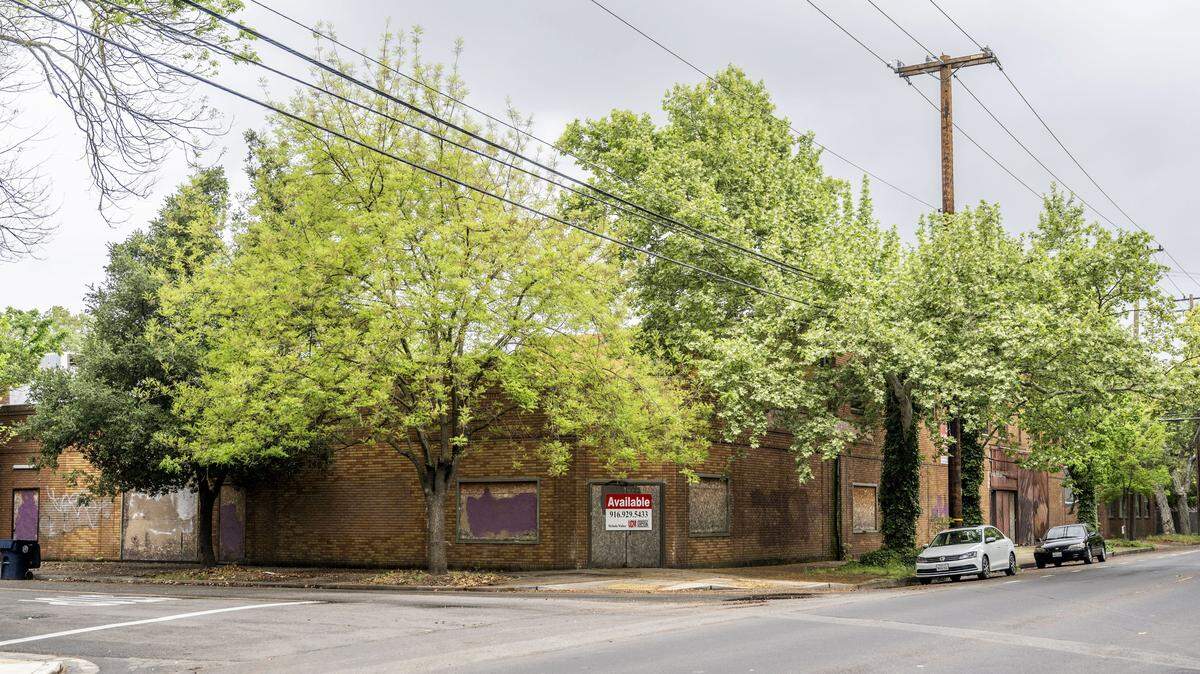
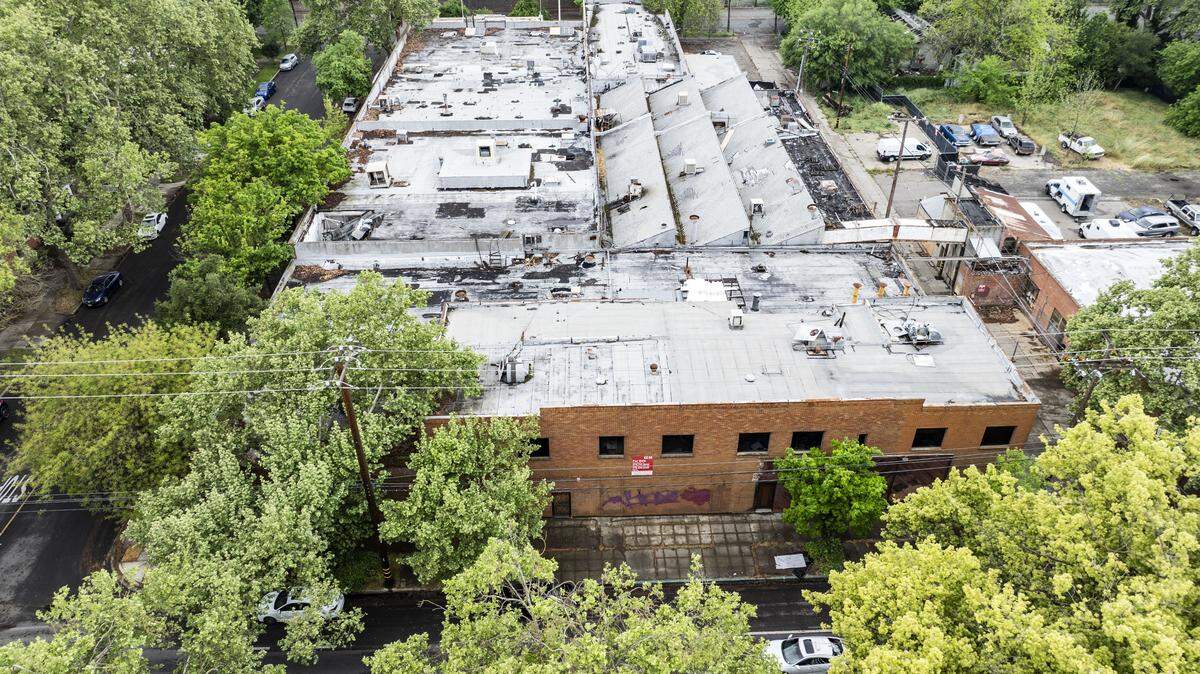
“The project would be fine some other place and a lot of other places, as is,” she said, while standing next to the vacant brick warehouse buildings where the apartments are planned.
To her, the complex is just too tall, would put lives at risk with more “unrelenting traffic” and add too much of a strain on the city’s wastewater system in an area of East Sacramento she loves dearly.
“Maria usually gets involved in anything around McKinley Park,” said former City Councilmember Jeff Harris.

Citizens for Positive Growth & Preservation, which Kelly helped found, has filed three lawsuits against the city since 2015. In each of those cases, the group accused Sacramento officials of violating the California Environmental Quality Act, the landmark law that requires public agencies to evaluate the environmental consequences of development projects, but that critics argue has been used to stifle housing construction.
But the rules have changed.
In response to that criticism, California leaders last year created a carve out that exempts certain projects in urban areas from needing a CEQA review to move forward. The city’s Planning and Design Commission in February voted to use the new law for the first time on the Alhambra Boulevard project.
Citizens for Positive Growth & Preservation argues in its letter appealing that decision that the exemption should not apply, leading to a clash that will test whether the environmental law can remain a tool for residents to challenge projects they do not like.
The City Council has not publicly announced when it will hear the group’s appeal.
‘Not public’
Kelly, 83, spent part of her childhood in a home on H Street that overlooks McKinley Park. It was built in 1915.
She sees preserving the area’s history as a “life assignment from the universe.”
“I’ve grown up here and I’ve grown old here,” she said, “and I want to do what I can to have the benefits go forward to other generations.”
Citizens for Positive Growth & Preservation said in the letter it “was created to advocate for positive growth” in Sacramento and for “the preservation of safe, healthy, and livable residential neighborhoods—including older and historic park-centered neighborhoods—throughout the City.”
Kelly would not say who is in the group with her.
“The membership is not public unless it’s subpoenaed,” she said.
Citizens for Positive Growth & Preservation’s 2015 lawsuit argued that Sacramento officials violated CEQA by failing to “identify, study, and mitigate a wide range of significant” traffic-related issues as part of a general plan. The case made it all the way to the 3rd District Court of Appeal, which ruled in the city’s favor.
The two later cases challenged an effort by the City Council to make it easier to build taller and denser developments by shrinking a special planning zone in parts of East Sacramento near Alhambra Boulevard that has a height limit on buildings.
A Sacramento County judge ruled in the group’s favor in the first case involving the zone. An appeals court sided with Sacramento in the second case, and the planning area was ultimately reduced.
It is not clear how much funding Citizens for Positive Growth & Preservation has, or where its money is coming from. Kelly, through the group’s attorney, did not agree to a follow-up interview and a spokesperson for Citizens for Positive Growth & Preservation declined to say how many members it has, but said that no one provides dues “or have paid to be included.”
But it is clear that Kelly has money to spend.
A trust in her name gave $32,500 in 2025 to Republican gubernatorial candidate Steve Hilton. Kelly herself also contributed $5,500 to the re-election campaign of Assemblymember Josh Hoover, R-Folsom, that same year.
A foundation in her name and that of her late husband Robert Kelly, a former co-owner of KCRA-TV, had more than $1.5 million in cash and investments at the end of 2024, according to a tax filing.
The foundation has contributed to groups that aim to preserve Sacramento history, trees and help maintain McKinley Park, though tax filings since 2012 do not show direct contributions to Citizens for Positive Growth & Preservation. Another foundation in their name also did not make direct payments to the group during that time, according to its tax records.
Citizens for Positive Growth & Preservation has a sophisticated — and apparently expensive — operation.
Stephen Cook, the group’s attorney, is based in the Irvine office of the multinational law firm Brown Rudnick. He helps lead the firm’s white collar defense, investigations and compliance work and was recently part of a team that helped defend businessman Mark Cuban in a class action lawsuit.
Along with Cook, Citizens for Positive Growth & Preservation has a CEQA consultant it has used for years and retains the services of a public affairs company that answers media questions and sends out news releases on its behalf.
“The group has a number of times challenged government overreach,” Cook said. “Just making sure that they play by the same rules that we do, that’s been CPGP’s goal for a while.”
‘Waged many battles’
Kelly’s history of legal fights and speaking out against development projects in East Sacramento started decades before Citizens for Positive Growth & Preservation filed its first lawsuit.
“I’ve known my neighbors for some time, and we’ve waged many battles,” she said. “Some have been successful and others not.”
In the early 1990s, a group called Friends of H Street sued the city to force it to limit vehicle traffic on the road that runs next to McKinley Park and in front of the home Kelly grew up in. Kelly was one of the plaintiffs in the case, which made it to the 3rd District Court of Appeal. It ruled in the city’s favor.
During a 2014 City Council meeting, she identified herself as part of a group called East Sacramento Partnerships for a Livable City while speaking out against the McKinley Village project — a plan to build more than 300 new homes by Sutter’s Landing Regional Park.
The purpose of the group was “to enhance the livability of East Sacramento” and the city “through environmental and historic building stewardship; human-scaled, pedestrian-friendly, safe and beneficial environments; and by revitalizing neighborhoods and parks as a center of community life,” according to a filing with the California Secretary of State.
During the meeting, Kelly said the council should reject the McKinley Village project due to “explosive methane from city landfill” and other health concerns. Just a few months earlier, Kelly had also urged the City Council to reject a three-story housing project that was planned on I Street near McKinley Park.
After she was done, then-City Councilmember Steve Hansen asked her a question:
“You’ve taken a great interest in the character and preservation of East Sacramento and dedicated a significant portion of your personal resources and I’m trying to understand what your vision for East Sacramento is if it doesn’t include senior residences or smart in-fill development?”
Kelly did not respond.
But in the recent interview, Kelly said she sees herself as more just a resident. “I’m really a steward for McKinley Park and the neighborhood because I’ve been able to survive. I’ve been able to survive here for a long time.”
It’s unclear, though, how often Kelly is in the area.
The home she grew up in near McKinley Park is owned by a limited liability company, which is listed in Kelly’s care and has a mailing address for a house in Washington, according to the Sacramento County Assessor’s Office.
The Citizens for Positive Growth & Preservation spokesperson did not answer whether Kelly is primarily based in Sacramento or Washington, but said “Kelly—and her family before her—have lived in the same East Sacramento neighborhood since the 1930s.”
Phil Angelides, a former state treasurer and a developer on the McKinley Village project, sees Kelly’s pursuits differently. East Sacramento Partnerships for a Livable City sued Sacramento after the council approved the McKinley Village project, alleging city officials violated CEQA by failing to disclose and make efforts to address air quality, public health, traffic, and other issues. Going to court cost developers over $1 million, Angelides said.
“The litigation was very much driven by Ms. Kelly,” he said. “She hides behind these phony names. They are not lasting community institutions.”
In a statement, the Citizens for Positive Growth & Preservation spokesperson countered that it was “not surprising that Mr. Angelides — a developer with seemingly limitless resources — would oppose someone seeking to hold him and his colleagues accountable for their projects.”
“Maria Kelly is hiding from no one,” the statement continued, “and has spoken out against environmental violations and the destruction of our historical resources both individually and through neighborhood collaboration and coalitions.”
‘My job to act’
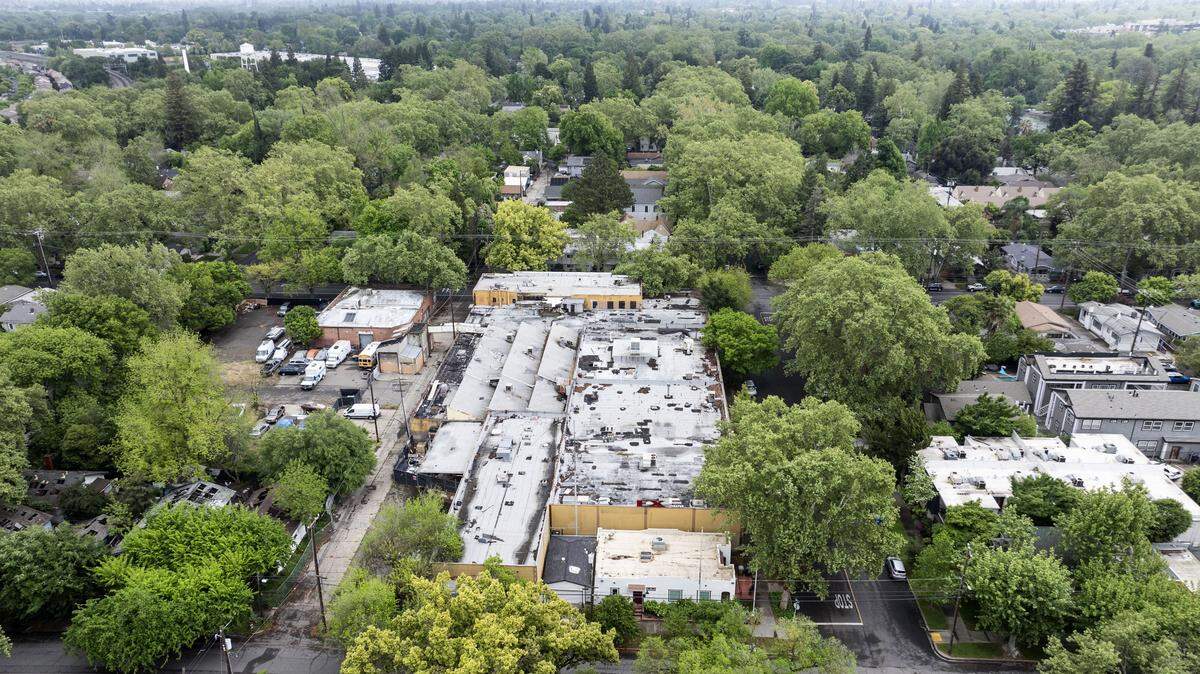
The Alhambra Boulevard apartments would rise well above the mostly single-family homes that occupy a corner of East Sacramento, a few blocks north of McKinley Park.
It’s a project that the new CEQA law appears designed for.
Gov. Gavin Newsom and state legislators pushed the change, called Assembly Bill 130, as a way to speed up home construction in the state’s urban areas and help counteract what they saw as a strategy from local groups to use CEQA lawsuits to delay or defeat housing plans.
The new law expands and simplifies when an infill exemption applies. Developments can avoid CEQA reviews if they meet a series of requirements, including that they are fewer than 20 acres, in cities and on properties where homes or retail structures used to be. Instead of making the case that a city’s environmental review was inadequate, residents will now be more often forced to argue that CEQA even applies at all.
Citizens for Positive Growth & Preservation is searching for an opening. Its letter claims the project goes against the city’s general plan and zoning, in part because it “does not properly consider the existing physical characteristics” of the other buildings nearby. If it can prove it, the CEQA exemption would not apply.
Kelly said the group is part of a coalition opposed to the apartment project called Save East Sac! It sent out fliers ahead of the planning commission’s February meeting to people living in the area, urging them to show up and voice their opposition.
She said its leadership includes her, Carl Seymour, president of the Casa Loma Terrace – East Sacramento Neighborhood Association and Will Green, president emeritus of East Sacramento Preservation.
“We are emphatically not NIMBYs,” Seymour said.
The acronym, which stands for “Not in my backyard,” is used as shorthand for those who are opposed to new housing developments in their neighborhoods.
Seymour said he welcomes “appropriate development” and “higher density” but called the project “just grotesquely out of scale with the neighborhood.”
Even if council members share their concerns, they have a high bar to clear if they want to deny the project or force an environmental review. For years, legislators and Newsom have approved an array of changes not just to CEQA but also state housing rules that leave local officials with fewer lawful reasons to reject developments.
City Councilmember Phil Pluckebaum declined to discuss the specifics of the Alhambra Boulevard complex because it has not yet come before the council, but said the curtailing of local control with those laws “just makes it a lot harder to be a NIMBY now.”
Jack Farrell, a research attorney for YIMBY Law, whose name stands for “Yes in my backyard,” is not optimistic about Citizens for Positive Growth & Preservation’s chances.
“In short, it’s a bad argument that is going to lose,” he said in an email. The organization sues local governments who it believes are violating state housing laws.
“There are many things that could render a section of a general plan inapplicable, and thus not relevant for CEQA purposes,” Farrell said. “This appeal gets itself in a tangle trying to argue against the explicit text of the law.”
The tougher odds have not deterred Kelly. She views the changes to CEQA as part of an effort by politicians to “manipulate the system so that the public’s last chance to have recourse is eliminated” and feels a responsibility to put up a fight.
“If I feel strongly about something,” she said, “it’s my job to act on that behalf.”
This story was originally published April 9, 2026 at 5:00 AM.