A Q&A with the senator behind Dolores Huerta Day following Chavez revelations
Following credible allegations of sexual assault against Cesar Chavez, including by two women who said they were 12 and 13 years old at the time of the abuse, California Legislature leaders announced the body would move quickly to strip the farm labor leader’s name from the March 31 holiday honoring his achievements.
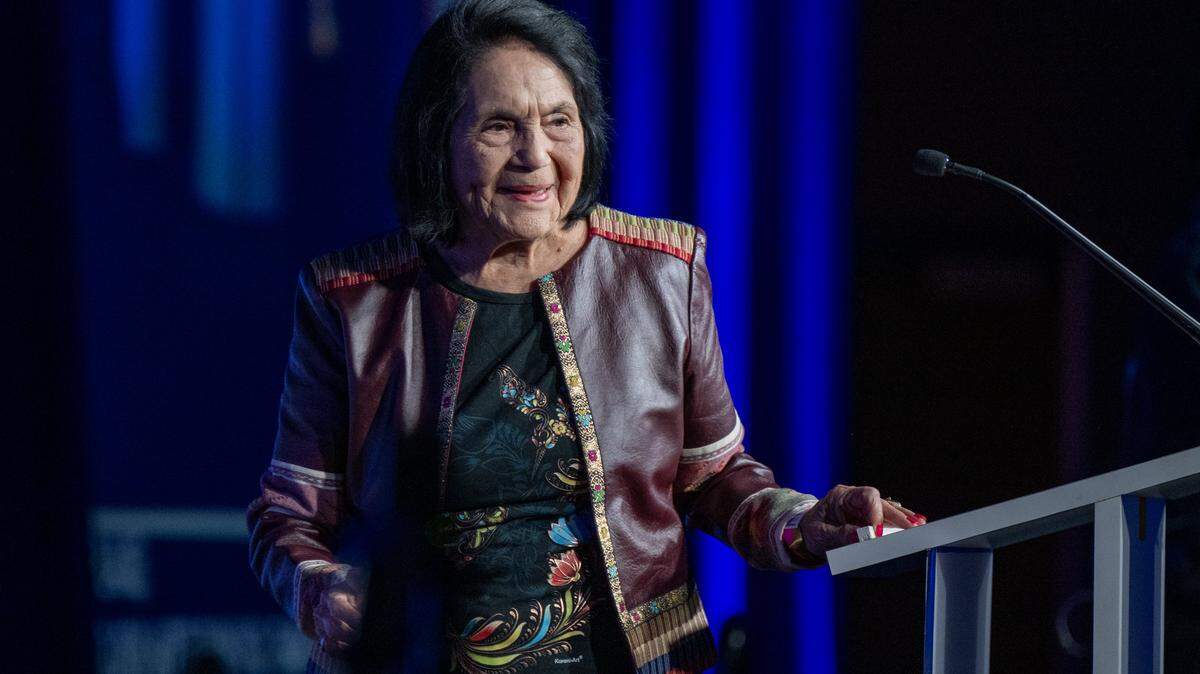
Cesar Chavez Day is a state holiday, honoring his birthday with closure of state offices and a paid day off for state employees. But the Legislature has also, since 2018, honored the cofounder of the United Farm Workers union, Dolores Huerta, with her own day on April 10. Dolores Huerta Day is not a state holiday, but the law calls for state officials and educators to highlight Huerta’s contributions to the civil rights movement.
Now, lawmakers must confront a far more complex legacy for the two labor leaders. Huerta, in The New York Times’ investigative report documenting the allegations against Chavez this week, said the labor leader had on one occasion used his position to pressure her into sex and on another had raped her. Chavez impregnated her on both occasions, she said to The Times and in her own statement. She kept her story secret, she said, because she didn’t want to harm the farmworker movement’s momentum.
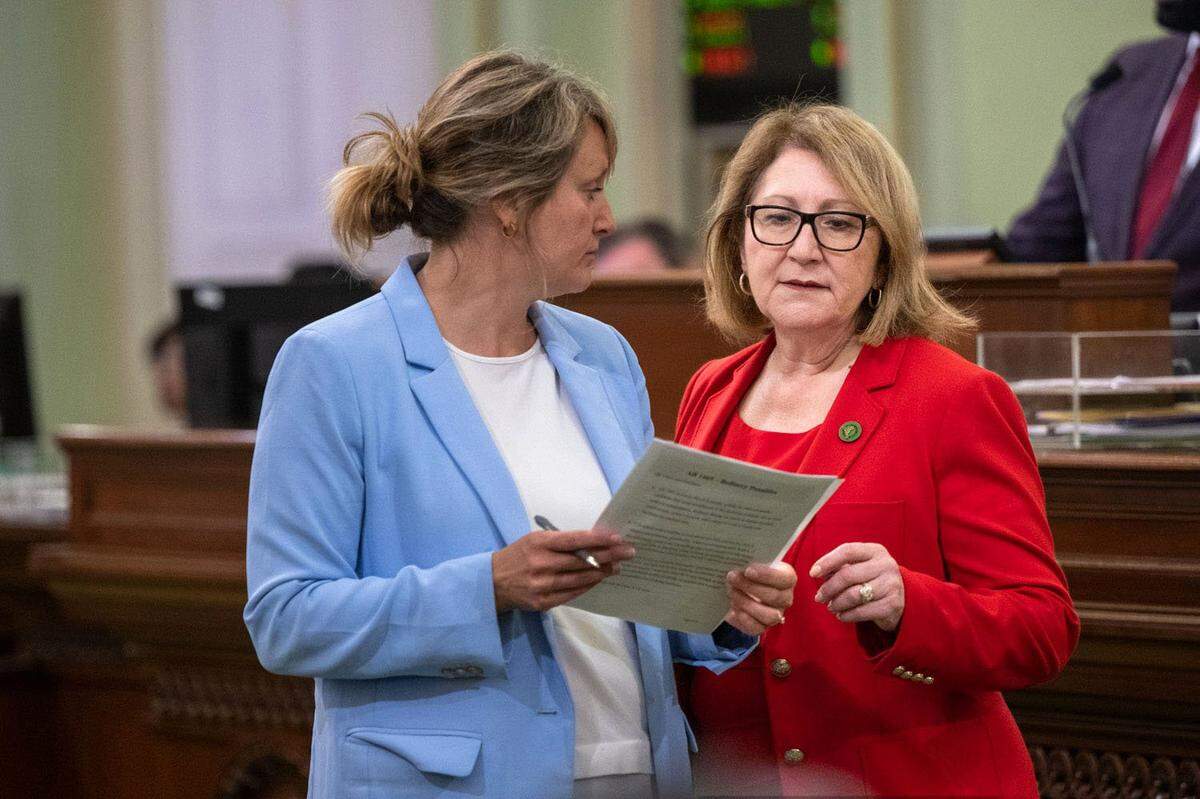
State Sen. Eloise Reyes, D-Colton, sponsored the 2018 resolution creating Dolores Huerta Day. At the time, Reyes was serving in the California Assembly. Herself a child of immigrants, Reyes today represents the Inland Empire, steeped in agricultural history, in the Senate.
The Sacramento Bee spoke to Reyes, who was at home in her district, by telephone on Friday about her recollections this week, her inspiration for the 2018 resolution and how she thinks lawmakers should honor Dolores Huerta Day going forward. The interview transcription has been edited and cut down for brevity and clarity.
Q: In 2018, what inspired you to bring the resolution creating Dolores Huerta Day?
A: I realized that, first of all, her birthday was coming up, and it was a perfect time to recognize this woman who had been a partner in founding the United Farm Workers Union. She worked so hard for women, for the marginalized, for civil rights, for the LGBT community, just had done so much, and I wanted to make sure that she was recognized.
We had just celebrated Chavez Day, and I had assumed there was also a day to recognize her, and found that there was no Dolores Huerta Day. Recognizing someone who is still alive is not normally what we do. This was important, though, to make sure she recognized how important she was, not just to women, but primarily to women.
Q: Was Huerta involved in the process, or did she want this day?
A: When I told her I was doing this, she said, ‘Why don’t you just do a day of service?’
I said, ‘No… we want to recognize all that you have done for California and for so many people. The children hear about you, the children learn about you, but I want them to know there is a day that recognizes you.’
Q: What have you felt and thought this week, as the news has broken about Cesar Chavez?
A: I am heartbroken to know that this dear friend of ours, who never hinted at anything about this, had been carrying this for over six decades. This is something that we know that lots of women do carry for a long time.
And also to hear how heartbroken she was, to hear of the young girls. As heartbroken as I was, I know she was more heartbroken about the girls.
Q: Chavez and Huerta’s legacies have always been intertwined, and that’s reflected in the resolution. (The resolution says: “The two made a great team. Cesar Chavez was the dynamic leader and speaker, while Dolores Huerta was the skilled organizer and tough negotiator.”) She was keeping this secret as she was being honored alongside Cesar Chavez. Have you thought about how she would have carried that?
A: Like so many women, quite frankly, when something is bigger than yourself, then you accept things more so than you should. She has described this: The movement was much more important than her own feelings. She describes how she kept silent because the movement and the empowerment of the workers and the successes and the wins for the workers was much more important than what she was going through. She felt that, as she has described, that to have brought that up would have halted or certainly disrupted the momentum of the movement.
I don’t judge her. I don’t fault her. This is just how she felt, and I honor how she felt.
Q: Have you thought about doing anything different with Dolores Huerta Day? There’s some folks that are saying, ‘well, change things named after Cesar Chavez to be named after Dolores Huerta.’
A: There have been many suggestions. It would be appropriate for legislative leadership to put together a committee to make sure that the community feels heard. If the community feels it should be Dolores Huerta Day, then we move in that direction. If it should be Farmworkers Day, then we should move in that direction. If it should be victims day, we should move in that direction.
But it should be something that is done in a thoughtful way, taking into consideration who we were fighting for, and that was farmworkers but also acknowledging that we have victims who were injured at the hands of the leader of that movement.
I’m not sure that (Huerta) would want the day named after her. I would also want her to be involved in that discussion.
Q: Have you spoken to her since this week’s revelations?
A: I have spoken to her. We talked about a lot of things, but naming Chavez Day after her was not part of that discussion. There were so many other issues to discuss.
Q: Are there takeaways from that conversation that you’d be comfortable sharing with the public, or that you think would be good for the public to hear?
A: Dolores is a very strong, strong woman. We have seen that from her over the years. In her 50s, she was beat up during a protest and almost lost her life. (Editor’s note: In 1988, at age 58, Huerta was hospitalized with fractured ribs and doctors emergently removed her spleen, according to reporting from that time. Family and union officials said she was beaten by police officers.) She came back from that. Now, she’s in her mid 90s and is still traveling around the world making sure she lends her voice for the voiceless, that she rallies people to remind them how powerful they are, that the power is in the people. It’s not in any person.
She has a rallying cry. I don’t know if you’ve heard it, as you know the phrase, “si, se puede.” That was her phrase. And the students at the Dolores Huerta International Academy here in Fontana, when I asked them, “who coined the phrase, ‘si se puede.’ “ it was the little girls who all raised their hand, and they all could tell me it was Dolores Huerta.
She’s an amazing woman. She is resilient. She’s powerful. She shares the power. She does whatever she can to uplift others, and this is what she has done even while she was carrying this secret for decades. And I love this woman, and to know that she has carried this for so many years, it just makes me admire her and love her even more.
This story was originally published March 20, 2026 at 5:38 PM.