
Revenue from AI boom allows California to delay many budget cuts, lawmakers say
California’s state Senate leadership says the state may be spared some of the most drastic cuts proposed by Gov. Gavin Newsom in his January budget forecast for 2026-27 due to higher than anticipated revenues.
A new budget framework released by the upper house of the Legislature, called “Foundation for the Future,” restores billions of dollars for programs that Newsom proposed cutting in his plan, including for K-12 schools, climate programs, child care slots and homelessness assistance funding. Amid all the restorations, the Senate did not propose any cuts in its plan, although it acknowledged cuts will be coming. There are still many steps in the budget process, but the plan is an indication of the tack one of “The Big Three” negotiators plans to take in the conversations.
“California families are doing everything right, yet many are still struggling to keep up. The Senate’s comprehensive plan refocuses our efforts on maintaining strong essential programs, while addressing some of the financial pressure on Californians,” said Senate President pro Tempore Monique Limón in an emailed statement.
Assembly Speaker Robert Rivas, D-Hollister, has not given indication of where he stands on the governor’s proposal. Newsom is expected to provide an updated proposal, known as the May Revision, in mid-May. The final, balanced budget, must be passed by June 15.
The restorations of programs are possible, the report reads, due to a “short-term revenue surge that California is currently experiencing.”
That surge, according to the Senate, is because of strong state income tax receipts, which are powered by a bullish stock market and buoyed by the state’s artificial intelligence boom. Whether that boom can be counted on is still an open question. In its Nov. 2025 budget forecast, the state’s Legislative Analyst’s Office incorporated the risk of a stock market downturn, resulting in a revenue estimate that was $30 billion lower than the governor’s.
The Senate seems to be moving full steam ahead with the rosier revenue estimates, proposing a plan that would build up reserves and maintain funding for programs advocates feared would be cut. Those include $5.7 billion for one-time funding for K-12 schools and $500 million of additional funding for Homelessness Housing, Assistance and Prevention funding.
The plan also maintains full scope Medi-Cal for asylees and other immigrant groups who were cut out of Medicaid by the federal government and delays Medi-Cal premiums for undocumented immigrants that would otherwise begin on July 1, 2027 to July 1, 2028.
No cuts proposed, but a corporate tax plan solidifies
Although the Senate notes in the document that the state has an ongoing structural deficit of over $20 billion, it says nothing about how it plans to reduce General Fund spending, other than that it is working with the Assembly and the governor’s office on the issue.
However, it does propose a way to raise revenue, a question that has been percolating since the state made difficult budget decisions last year.
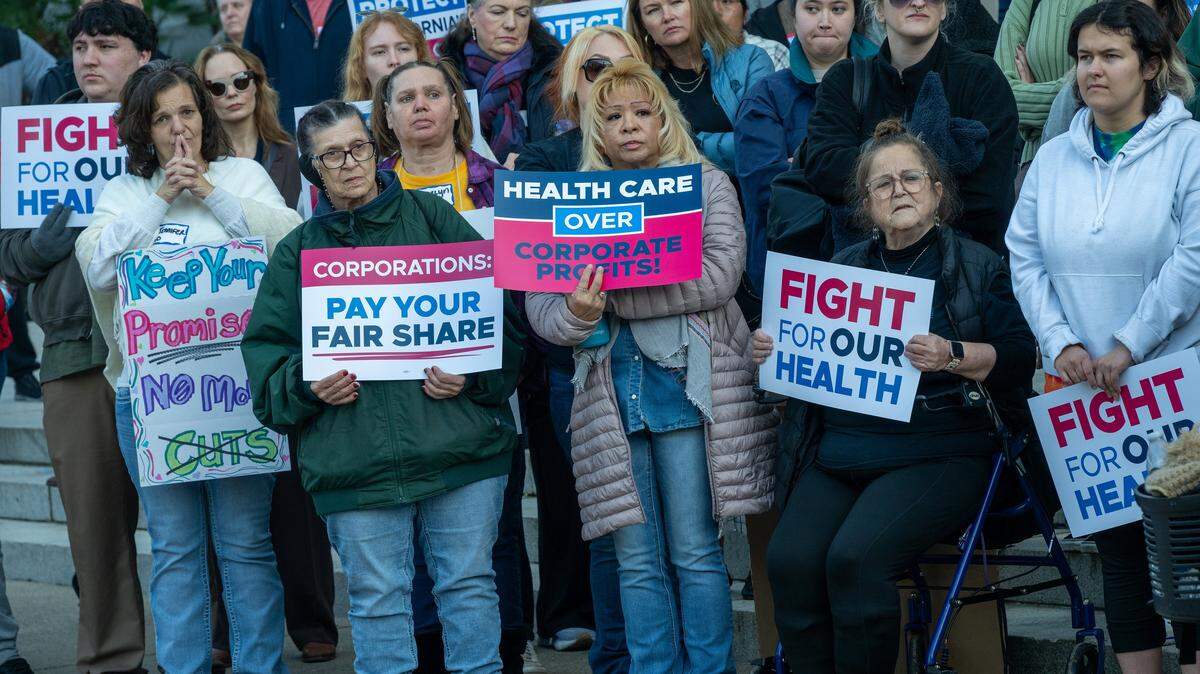
The Senate proposes a new fee on the state’s largest corporations to cover California’s rising Medi-Cal costs. The idea mirrors one that has been pushed by Assembly Health Committee Chair Mia Bonta, D-Alameda, who has sought to create a special tax for corporations who do not provide health insurance and pay their employees a low enough wage that they qualify for state-funded health care.
Bonta introduced a bill that would give her a vehicle to push the new tax but previously told The Sacramento Bee she was weighing whether to move legislation or attach the revenue-raiser to the budget bill.
The Senate budget drafters’ fee would generate $5 billion to $8 billion annually. That’s a lower amount of revenue than Bonta has previously floated. She had said the measure could raise as much as $17 billion a year, but, she said the scale of the new tax was flexible. Bonta has named companies like McDonald’s and WalMart as examples of corporations who leave their employees to receive state-subsidized health care and should be hit by the tax.
The Bee Capitol Bureau’s Andrew Graham contributed to this story.
This story was originally published April 16, 2026 at 3:29 PM.