
Local governments push for changes to California’s zero-emission vehicle plan
Daniel Corcoran runs a water agency spread across the Sierra foothills, and doesn’t think it’s realistic to replace his specialized trucks with all-electric ones.
That puts him at odds with California regulators’ proposed requirement that 50% of new heavy-duty vehicle purchased until 2030 be zero-emission vehicles. After that, 100% would have to be zero-emission vehicles.
Corcoran is the director of operations for the El Dorado Irrigation District, a water agency that serves residents from El Dorado Hills up to Pollock Pines.
“As you drive up to Tahoe, you can see your gas gauge go down. So imagine how that affects our battery, just trying to get to half of our facilities,” he said. The water district veteran is also worried about how unstable access to electricity, such as in the case of a power outage, could affect his agency’s ability to restore water service in an emergency.
As California’s Air Resources Board considers changes to its Advanced Clean Fleets rules, local government agencies are clamoring to be heard. They say the regulations are burdensome, costly and make for less effective and nimble responses to emergencies. One expert says the state is trying to balance its ambitious clean air goals with the reality of a geographically diverse area and a federal administration that has rolled back much of its support.
Over the past two weeks, at least 150 people and governmental entities, including the El Dorado Irrigation District, have written letters to CARB asking for the agency to make certain exemptions and changes to its zero-emissions plan. The 15-day listening period ends Friday.
Exemptions for certain heavy-duty vehicles, like the agency’s sewer-cleaning vactor trucks, are “really the only acceptable outcome to the district,” Corcoran said. But there’s no guarantee CARB’s final rules will reflect the desires of municipal governments.
“I don’t even know if they would make any changes, to be very direct,” said Mark Neuburger with the California State Association of Counties. “We hope that they just address our concerns.”
In an emailed statement on Friday, CARB spokeswoman Lindsay Buckley said the board had already added additional flexibilities for state and local government fleets, “while maintaining progress towards achieving emissions reduction.”
“Following the close of the public comment period, staff will review all submissions and assess the need for any additional changes,” she wrote.
Trump’s second term changed the calculus
For decades, California has been aiming to lower its carbon emissions to counter climate change, slowly adding on regulations to push the market in the direction of manufacturing and selling lower-emission vehicles.
In 2023, CARB approved its Advanced Clean Fleets rule, which set an aggressive schedule for government fleets to transition to zero-emissions. Daniel Sperling, the founding director of the UC Davis Institute on Transportation Studies, was on CARB’s board at the time the rulemaking was happening. He said that although the regulatory process is complicated, it was what California decided to do.
“An economist would tell you, you know, just put a tax on diesel fuel or a tax on diesel trucks and let the market figure it out. But our Legislature would never do that,” he said. “We’re left with using these regulatory tools, which are a little clunky and difficult to implement in a way that is fair, effective and timely.”
Since those rules were created, however, Sperling said the federal government has been hostile to California’s electric-vehicle mandates, weakening the state’s forward momentum. Early last year, the Trump administration canceled grants intended to expand the nation’s charging infrastructure.
In their letter to CARB sent April 14, a coalition of local government representatives, including the California Special Districts Association and the association of counties contends that not only is vehicle-charging infrastructure lacking, but the replacement specialty vehicles aren’t available, and electric vehicles can cost more than twice as much.
They wrote that clean fleets rules would “in effect require state and local agencies to purchase twice the number of vehicles they currently own at double the cost per vehicle, to even attempt to replicate the capabilities of their current fleet.”
Worries about the cost of compliance
In Folsom, questions about how the city will comply with the ZEV regulations are spurring conversations about who decides how city services are handled. City officials are contemplating taking decision-making authority out of the hands of voters to streamline the process.
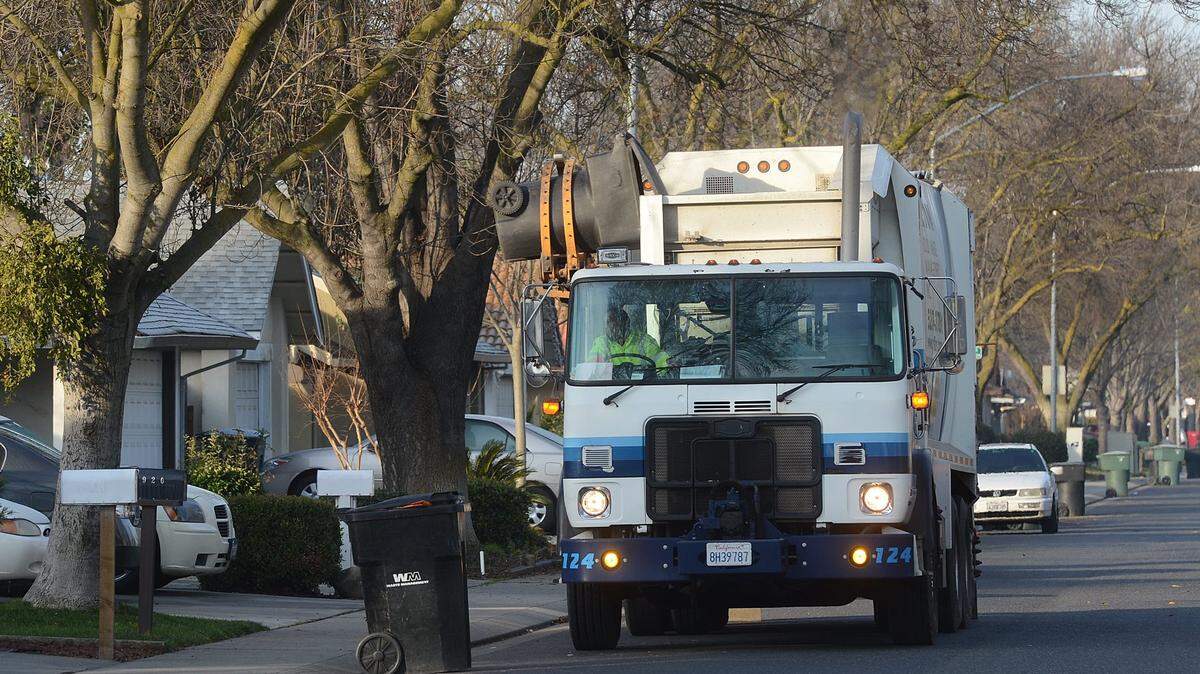
That’s because Folsom is considering contracting out garbage services, instead of converting its whole solid waste-collecting fleet to electric.
However, if it did that, under CARB’s current proposed rules, then it would need to confirm that its contractor is in compliance with the electric-vehicle mandate. That’s another element local governments are fighting.
“We’re essentially reporting on fleet procurement decisions made by private companies,” said Neuburger, of the association of counties, adding that it would be a huge burden on local governments.
For his part, Corcoran said he’s been heartened by his interactions with CARB. He says he feels they’re trying to understand where his water district’s concerns are coming from.
“They’ve actually come out — they’ve looked at our facilities,” he said. “We’ve literally driven them up and down the mountain to show them our facilities.”
Sperling said the state and CARB have been working hard to make the transition as palatable and easy as possible for local governments.
“The tension here is California lost a lot of its authority to do something, and yet the state is very committed to electrification, to climate change mitigation,” he said. “And so the challenge is, how do you move forward?”