Nick Shirley’s visit roiled the Capitol. But who is to blame in fraud debate?
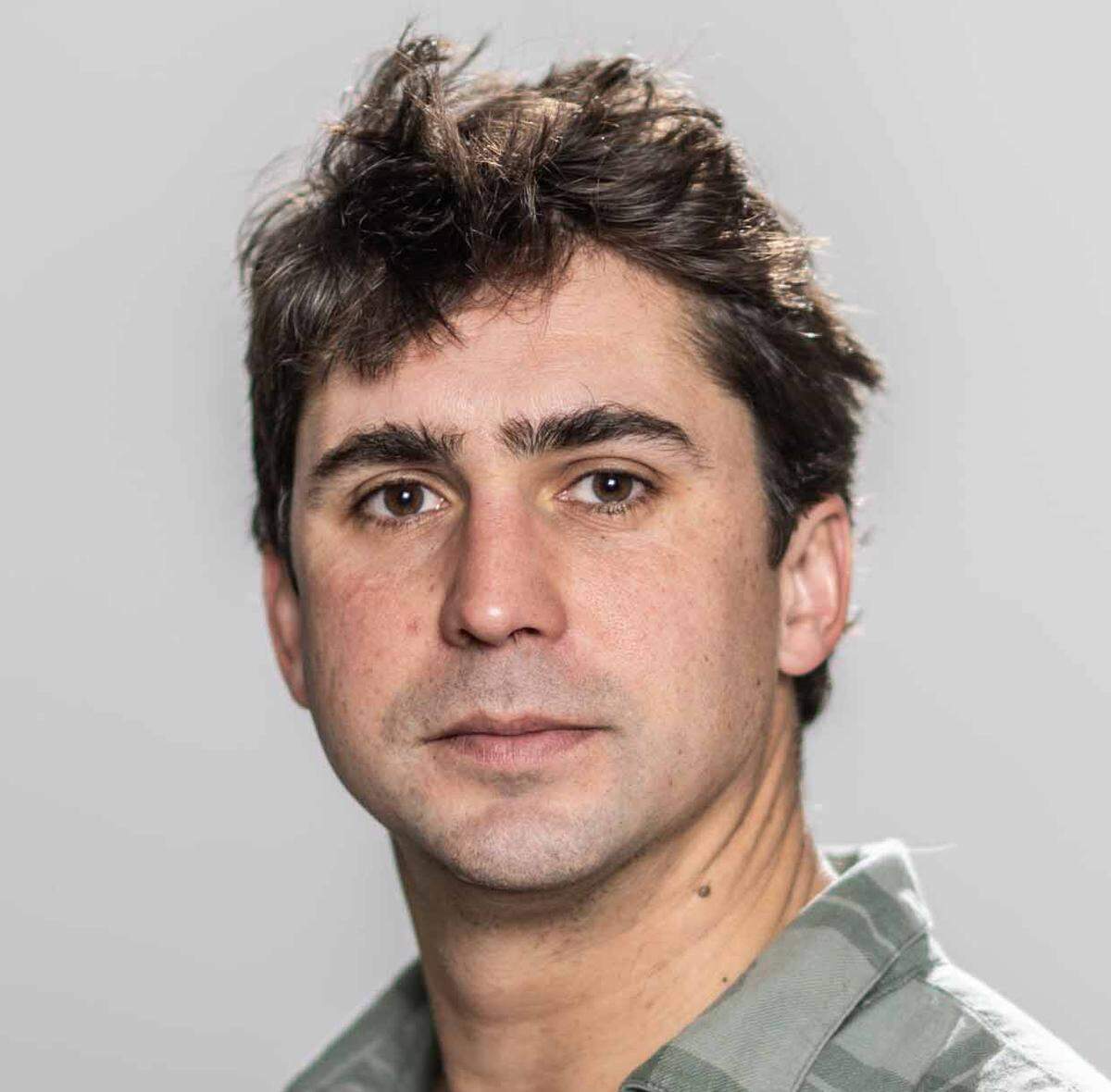
Online political influencer Nick Shirley wore a camouflage-patterned sweatshirt as he and a cameraman waited outside the Capitol to question California state lawmakers. The hunter’s garb seemed appropriate for the 24-year-old influencer, who has gained millions of followers through his ambush-centered style of online political journalism.
Shirley accumulated viral online fame after accusing daycare centers in Minneapolis that served the Somali community of widespread fraud — which in some cases were quickly disproven by local journalists, but were cited by White House officials in the subsequent federal immigration crackdown in Minnesota.
Since then, Shirley’s focus has turned to hospice fraud in California — a topic Republicans in the state have seized on, sensing a political vulnerability for the Democratic establishment. Gov. Gavin Newsom and Attorney General Rob Bonta have responded with sharp pushback and hospice fraud arrests, but the state’s recent history of public funding scandals, beyond fake hospice centers, has lent Republicans plenty of fuel.
Amid that increasingly convoluted political dispute, Democrats in the Legislature were largely uninterested in engaging with Shirley’s 1.8 million YouTube subscribers when he arrived at the Capitol last week.
Assembly Speaker Robert Rivas stepped quickly into a waiting SUV. Other lawmakers endured Shirley’s questions for the one-block walk from the Capitol entrance until they could step through an officials-only doorway of the Legislature’s office building on O Street.
“I think you are a psycho scam artist,” Sen. Scott Wiener, D-San Francisco, told the streamer as he stepped into that building.
Shirley did not respond to a Sacramento Bee request for comment or for an interview.
Shirley was confronting lawmakers over AB 2624, a bill carried by Assemblymember Mia Bonta, D-Alameda, that would allow lawyers, healthcare workers and other professionals who serve California’s immigrant population to hide their home addresses in the public record if they can prove a credible threat to their safety.
Republican lawmakers have labeled the bill the “Stop Nick Shirley Act,” and accused Bonta of creating cover for fraudulent businesses and blocking independent journalism. Bonta and her backers say conservatives have deliberately misled the public about her bill’s purpose, leading to a wave of vitriol and threats against the lawmaker.
“Any insinuation this bill would apply to Nick Shirley is insinuation that Nick Shirley intends to doxx individuals’ personal information with the intent to incite violence,” officials in her office said.
A history of hospice fraud
State officials have labeled fraud a concern in California’s hospice industry for years.
But Republicans have made a miniature parade to Los Angeles in recent months to spotlight the issue. Dr. Mehmet Oz, the head of the federal Centers for Medicare and Medicaid Services, shot his own Shirley-esque video in January, in which he pointed from inside a car to businesses he said were fraudulent in the city’s Van Nuys neighborhood.
Assemblywoman Alexandra Macedo, R-Tulare, also shot a video in Van Nuys, focused on a building she said had 197 hospices registered to it. Another video featured Macedo sitting in a park, scrolling on her phone. “Oh, I’m just out here investigating hospice fraud that might be going on in the state of California,” she says, over a Taylor Swift song.
In 2021, after the Los Angeles Times documented growing hospice fraud, Newsom and the Legislature put a freeze on new hospice licenses in place.
The next year, the California State Auditor published a report noting weak safeguards and a rapid increase in the number of hospices registering in Los Angeles County. It appeared likely that, “a network or networks of individual perpetrators in Los Angeles County are engaging in a large and organized effort to defraud the Medicare and Medi-Cal hospice programs,” the auditor wrote.
The governor and the attorney general have staunchly defended their response.
Newsom officials said the governor has taken a range of steps to combat hospice fraud since the auditor’s report came out, including the creation of a multiple-agency task force to address the problem and a growing number of arrests and investigations. But four years later, the California Department of Public Health is still implementing guidelines from the auditor’s report, leading the Legislature last year to extend the ban on new hospice programs into 2027.
Even as state and federal officials trade blame over who is responsible, law enforcement agencies at both levels of government have made highly publicized arrests of multimillion dollar fraud rings this month.
“This isn’t a political game for us,” Attorney General Rob Bonta said in an April news release announcing the charging of 21 people with suspected hospice fraud to the tune of $267 million.
Bonta’s announcement came a week after the U.S. Department of Justice announced its own arrests of nine people it accused of bilking the federal government out of more than $50 million through fake hospice programs.
It was Bonta’s second announcement of a hospice fraud bust in as many months. The first came in February, when he announced the arrest of seven people in Monterey County, including three doctors, over more than $3 million in alleged fraud.
“Claims that California is overrun with fraud and doing nothing about it are simply false,” Bonta said in the news release. “This case proves it.”
Touching a nerve?
Shirley’s online following grew quickly after his videos in Minnesota went viral and were cited by White House officials amid the federal immigration crackdown in Minneapolis. That crackdown culminated in the deaths of two residents, Alex Pretti and Renee Good, and in widespread outrage against the U.S. Department of Homeland Security.
But fraud scandals in state funding programs in Minnesota also led Gov. Tim Walz to end his reelection campaign. Shirley has sought credit for Walz’s withdrawal.
Though the furor over fraud investigations preceded the YouTuber’s arrival in Minnesota, Shirley and other conservatives thought they had found a winning playbook.
They quickly moved to apply it to Newsom and other blue state politicians.
Beyond hospice fraud, Republicans have raised the estimated $20 billion in fraudulent unemployment benefits California paid during the pandemic, and failures during the Newsom administration to track massive spending on homelessness.
The years of headlines stick with voters, Republican pollster Mike Madrid said.
Shirley, Madrid said “is on to something. And that doesn’t make him an honest broker but it makes him believable because people have seen it.”
Madrid pointed to February polling data he conducted with Latino voters in California, the vast majority of whom disapproved of Trump’s job performance. Of those poll respondents, 73% labeled corruption and fraud in government as an extremely important issue — far higher than the 53% who ranked concerns about U.S. Immigrations and Customs Enforcement that high.
With widespread allegations of corruption against the Trump administration, neither party has much credibility with voters on fraud issues, Madrid said.
Newsom has responded to Republicans’ rhetoric about California fraud in part by highlighting a criminal case in New York in which Trump’s companies have been convicted of tax fraud, and the president’s pardoning of people convicted of a litany of white-collar crimes.
“Donald Trump is the personification of fraud,” Newsom said in January. “His hypocrisy knows no bounds.” The governor and his team have also said the federal government noted that the Trump administration paused a hospice oversight program last year.
Democrats shouldn’t brush off Republican attacks over fraud, said Dan Schnur, a political analyst who teaches at University of California Berkeley’s Institute of Governmental Studies.
“It’s not going to fundamentally change the power dynamic in the Capitol, but they’d be wise not to ignore the issue,” he said. “It’s clear that both the governor and the attorney general see some potential vulnerability on this issue so they’ve been working to demonstrate their concern. It’s not clear whether the Legislature sees the same urgency.”
So far, the supermajority has given no indication it intends to spend time developing new anti-fraud initiatives.
Assemblymember Bonta usually takes care to separate her political work from her husband’s. But she cited the attorney general’s recent arrests as evidence that the state has the resources and infrastructure in place to police fraud.
“This is the only time,” Bonta said, “that I will speak to the work of my partner in life and partner in service, but I actually believe that our Attorney General is doing a very fine job and completing investigations that have been years in the making.”
California Republicans are playing the best — often the only — cards the outnumbered political party have in the statehouse to force the issue: Vocal criticism, and occasional theatrics.
On April 15, Republican assembly members called for a special legislative session to address fraud at a news conference in the Capitol basement.
“Instead of taking action, the politicians up here are circling the wagons and keeping secrets,” Assemblymember Carl DeMaio, R-Valley Center, said.
The next day, as Shirley positioned himself outside the Capitol, Democrats killed the Republican’s special session motion without a debate. They did the same to an attempt by DeMaio to table Bonta’s bill.
“Outrageous,” DeMaio said in a video posted to his X account after the vote. “Protect freedom of speech,” DeMaio said, imploring voters to call their state lawmakers. “Expose the fraud.”
Bonta: Bill extends a program to protect threatened workers
Legislative analysts say Bonta’s bill won’t thwart fraud investigations, and the lawmaker rejects the idea that Shirtey has anything to do with her bill.
She began working on the legislation last fall, she told The Bee, before Shirley had turned his attention to California or even Minnesota. She had not heard of the YouTuber, she said, before this month’s furor.
The progressive lawmaker’s concern was the safety of people who provide services to immigrants during an era of increasing xenophobia, she said.
Her tool to do so is by expanding the California Secretary of State’s Safe at Home program, created by lawmakers in 1998 to allow victims of domestic violence or stalking to have their personal information removed from the public record if they can document threats against them.
Since then, the Legislature has expanded the program to include other people lawmakers have viewed as vulnerable to attack – adding abortion providers and patients, election and public health officials, and health care providers who give gender-affirming care.
Bonta’s bill would add to that list those who provide social services to immigrant communities — including legal, humanitarian and translation services. It would also make it a crime to publish such workers’ personal information or images, if the intent is specifically to threaten or incite violence.
Shirley has labeled Bonta’s bill a threat to journalism and the First Amendment, saying the Democratic lawmaker is trying to stop his investigations.
The criticism, from Shirley, his supporters, and California Republicans, has not swayed Democratic state lawmakers. If anything, it’s coalesced support.
“Shame on anyone who is making this lightning rod, this firestorm happen,” Assembly Public Safety Chairman Nick Schultz, D-Burbank, said.
Schultz’s committee was the third in the assembly to endorse Bonta’s bill on Tuesday, voting along party lines 7-2 to advance it. Surprisingly, given the robust opposition to the bill online, only one person showed up to speak against the bill: Sacramento resident Damian Duran, who described himself as an independent journalist and “truth seeker” who wanted to investigate fraud in California.
Duran told The Bee that videos posted by Shirley and DeMaio had driven him to attend the committee hearing and speak against the bill. But he changed his position over the course of the hearing.
“Now that I’ve listened, O.K., it’s more about the immigration (service providers), what they were going through,” Duran said. “It had nothing to do with Nick Shirley, nothing to do with the hospice fraud.”
The same day as the assembly committee’s meeting in Sacramento, the U.S. House Ways and Means Committee held a hearing on hospice fraud.
“Videos by citizen journalists in Gavin Newsom’s California show people hiding the dirty conditions of neglected or wholly non-existent facilities, all while driving away in luxury vehicles and refusing to answer questions,” Rep. Jason Smith, R-Missouri, the committee’s chairman said.
He was describing scenes from Shirley’s investigation in Los Angeles.
The influencer is a celebrity even in California’s capitol city. During his visit last week, Shirley took time to greet fans in between questioning lawmakers, at one point posing for a photograph with a young boy and his father.
“We love you Nick,” one motorist shouted as Shirley followed a lawmaker down the sidewalk, “get ‘em!”
This story was originally published April 26, 2026 at 5:00 AM.