Official predicts 6 weeks of stability before gas prices spike — if war goes on
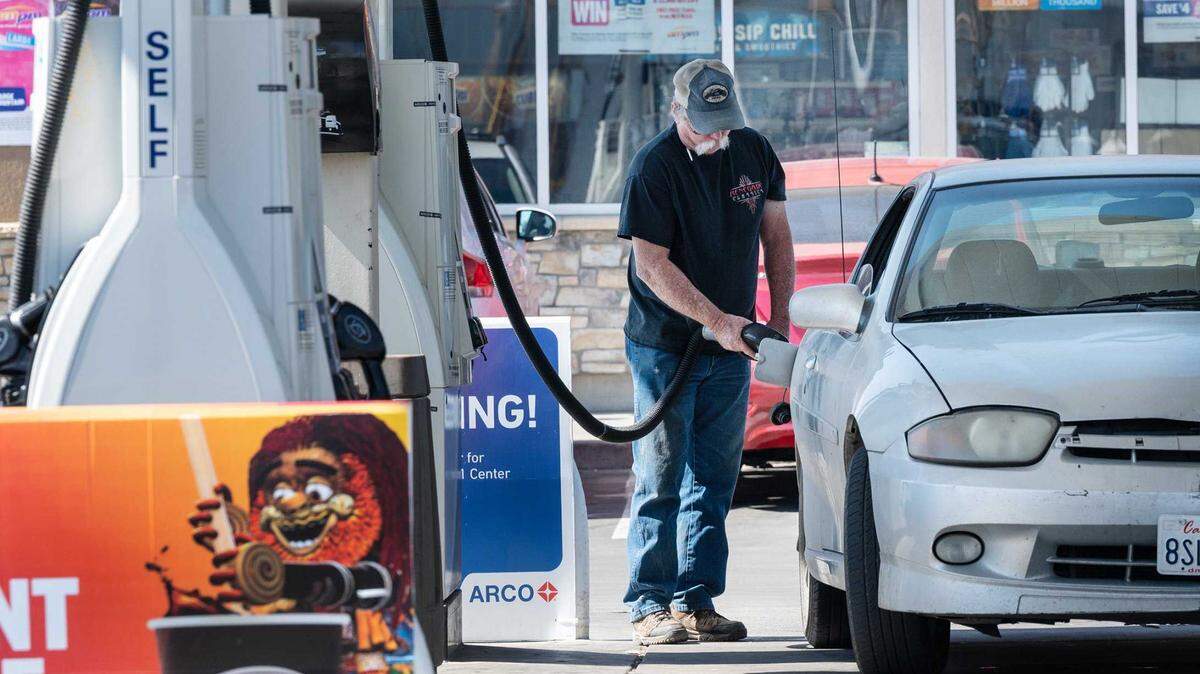
California has about six weeks of stability in gas prices ahead of it before the Iran war, if it continues, could bring even sharper increases, a state energy official told lawmakers on Tuesday. Experts disagreed on how high the price at the pump could rise.
Average gas prices in California are currently above $6 per gallon. Tuesday’s hearing came as The New Corolla, the last oil tanker to come through the Strait and sail to California since the war began, unloaded its cargo in Long Beach. Once that ship has unloaded, California no longer has a clear path to replacing as much as 200,000 barrels a day it has relied on from the Persian Gulf, according to the Los Angeles Times.
But oil companies have shipments in the works that could provide stability for another six weeks, California Energy Commission Vice Chair Siva Gunda told lawmakers on the Assembly Utilities and Energy Committee.
After that, without an opening of the Strait, “we would likely see price increases,” Gunda said.
But Gunda also said state officials are working to ease agreements between energy companies and other crude oil producing nations, such as some Asian countries, to stave off even sharper price increases if the war continues into the long term. Gunda is hopeful the state could find sufficient supply to stabilize prices over the next six months, if necessary. He said the price per gallon could stabilize around $6.50, or at least under $7, he said.
Another expert offered lawmakers a more dire assessment. Severin Borenstein, director of University of California Berkeley’s Energy Institute at the Hass School of Business, said it was possible the cost could rise as much as another $2, which he described as “crisis” levels.
“We all hope that doesn’t happen and the flood of oil resumes,” he said. “But we are on borrowed time as we run down inventory.”
Who is being blamed for California’s gas prices?
The Iran war came at a vulnerable moment for the state. Policymakers have yet to set a clear path forward for increasing California’s oil refining capacity after losing two facilities representing around 20% of the state’s refining capacity in the last two years.
That leaves California increasingly reliant, at least for now, on imports as global oil markets entered a period of uncertainty unseen in decades. But the state’s gas price increase are in line with others around the country so far, state officials said, they just started from a higher base in part because of California’s gasoline tax.
Members of both political parties have pointed fingers over the recent price increases, with Democrats blaming President Donald Trump for an unprovoked and disruptive war with Iran, and blaming congressional Republicans for failing to intervene.
Trump ran for reelection in 2024 largely on lowering prices for American consumers and avoiding foreign entanglements. His second term, however, has been marked by military interventions abroad, and he has yet to indicate a clear path out of the Iran war and the closure of the Strait.
Though California drivers of lesser means who have already been paying high gas prices are getting hit particularly hard, the wartime gas hike in the state isn’t out of line with the rest of the country. Retail gas prices in the state have risen by $1.47 a gallon since the war began, according to the California Energy Commission.
In Wyoming and Montana, two energy-producing states that voted heavily for Trump in 2024, prices increased by $1.56 and $1.54, respectively, according to the Commission’s charts. Midwestern states have seen the highest increases, with prices in Ohio and Indiana rising by more than $2 a gallon.
Still, California Republicans and energy industry lobbyists say policymakers have spent years putting the state in a bad spot through excessive regulations, gas taxes and the state’s mandate for a blend of gasoline that is separate from the rest of the country. To source that special blend, the state depends on in-state refineries or importing fuel refined to that standard from abroad.
“California’s petroleum system has been weakened by design and global events are now exposing just how fragile its become,” Jodie Muller, president of the Western States Petroleum Association, told the committee on Tuesday.
Democratic lawmakers aren’t particularly sympathetic to the industry, pointing to reports of soaring profits for oil companies as the war chokes consumers around the world.
Could lawmakers suspend the gas tax?
Suspending the state’s gas tax has yet to receive serious consideration in the Legislature, though it’s popular on the campaign trail. At a debate last week, two Democratic candidates, San Jose Mayor Matt Mahan and State Superintendent of Public Education Tony Thurmond joined Republican candidates in saying they’d move to suspend the gas tax if elected governor in November.
At Tuesday’s hearing, Borenstein suggested the state could set the gas tax to rise when gas prices are low and drop when they spike because of global events like the war. Such a change, he said, would help California drivers but introduce more volatility to California’s already fickle state budget.
But lawmakers on the committee did not seize on that idea. Instead, they expressed hope that the state’s energy commission and industry players could source sufficient fuel for the state to weather the Iran war.
“We obviously have a crisis right now,” said Assemblymember Gregg Hart, D-Santa Barbara. “But as legislators, we have very little ability to influence that today, or for the next six weeks or six months. We need to build a system that’s resilient over the next years.”
Committee members also reminded Californians that prices at the state’s pumps vary more widely than in many other states between gas companies. Prices at Chevron, Mobile and Shell stations had increased the highest during the war, according to the California Division of Petroleum Market Oversight.
Hypermart pumps, and off-brand gas stations, offered the same gasoline at far cheaper prices, as much as 80 cents in recent weeks, according to the agency.
“Our the main public service announcement we want to communicate to Californians is shop around,” said committee chair Assemblymember Cottie Petrie-Norris, D-Irvine.
This story was originally published May 6, 2026 at 10:27 AM.