Proposals to tax corporations hit speed bumps in Legislature but aren’t dead
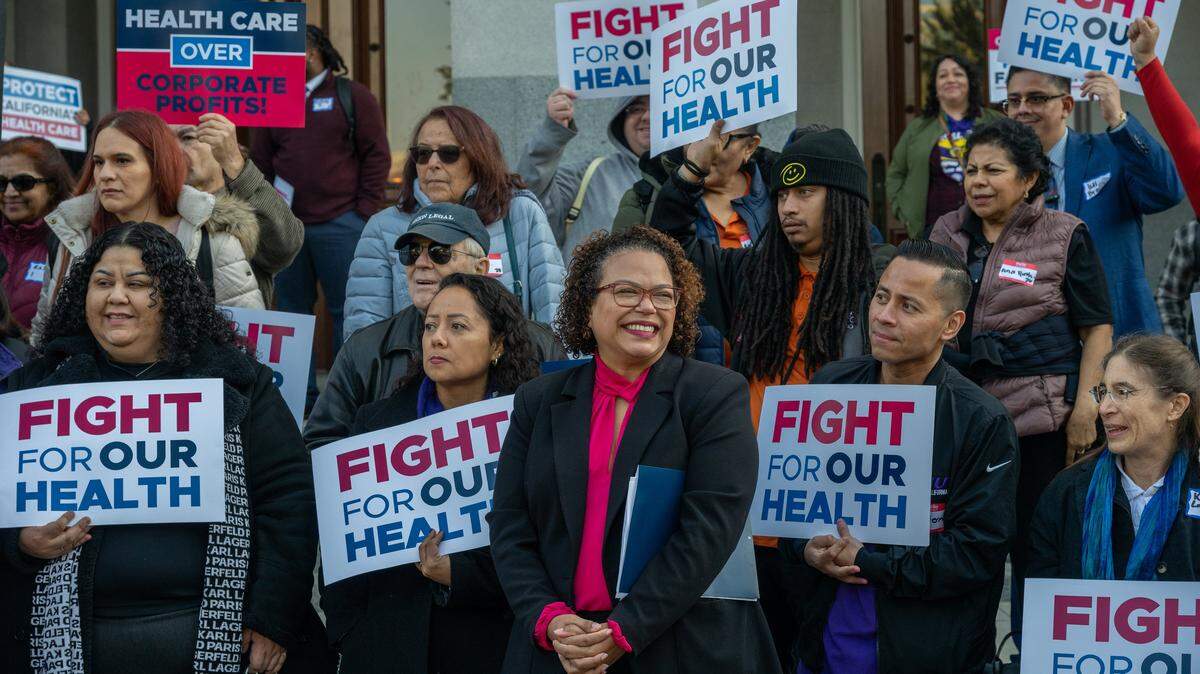
Two tax proposals pushed by progressive lawmakers in the California Assembly and backed by a coalition of labor unions, immigrant rights groups and health access advocacy organizations hit a setback Thursday when the Assembly Appropriations Committee held both bills back.
The committee rejected Assembly Bill 1790, which would restructure the way multinational corporations are taxed to force them to more completely report their offshore profits. It also bounced back Assembly Bill 2729, which would have imposed a fee on mega corporations like WalMart, McDonalds or Amazon that pay many of their employees rates below what would require them to provide employer-sponsored health insurance.
Money from the fee would have gone into an account to support Medi-Cal, which many of those employees subsequently rely on for coverage.
Neither bill is dead, as the state’s legislative rules allow tax bills to be considered throughout the session. But they will have to find a new way onto the Assembly floor for a vote, as proponents weighed whether to try reforming the proposals and going back to committees or seek leadership’s support for including the measures in the chamber’s budget proposal. Or, the sponsors could try bringing versions of their bills through the Senate side.
“Its future is currently uncertain,” Assemblymember Damon Connolly, D-San Rafael, the sponsor of AB 1790, which has been shorthanded as the Water’s Edge bill, said of his legislation.
“I am encouraged that the near-term budget condition looks stronger,” Connolly said, “however, that should not serve as a justification to allow multinational corporations to continue avoiding paying billions in California taxes.” The lawmaker noted that as many as 2 million Californians are still set to lose health insurance coverage after President Donald Trump and congressional Republicans cut deeply into Medicaid funding in order to pay for tax cuts benefitting mostly corporations and the wealthiest Americans.
Connolly said he would continue to look for a way to advance his measure as the Legislature begins more focused budget conversations in the weeks ahead.
Assembly Health Committee Chair Mia Bonta, D-Alameda, did not immediately comment on the fate of her bill, the fee on large corporations whose employees rely on Medi-Cal. That measure may have a Senate path, however. Senate leadership endorsed the idea last month, including it in their budget blueprint. As outlined in the Senate plan, the fee would generate $5 billion to $8 billion annually.
Gov. Gavin Newsom included his own corporate tax proposals in the budget he unveiled on Thursday. Under his plan, California would limit some corporate tax credits to either $5 million or 50% of a company’s tax liability, depending on which represented a higher share of the entity’s tax bill. He also proposed a tax on certain software sales and a tax on healthcare management companies.
Altogether, Newsom’s revenue proposals are estimated to raise $3.6 billion this coming fiscal year and $5.1 billion in the following.