CA lawmakers turn to tax law to target private immigration prisons, contractors
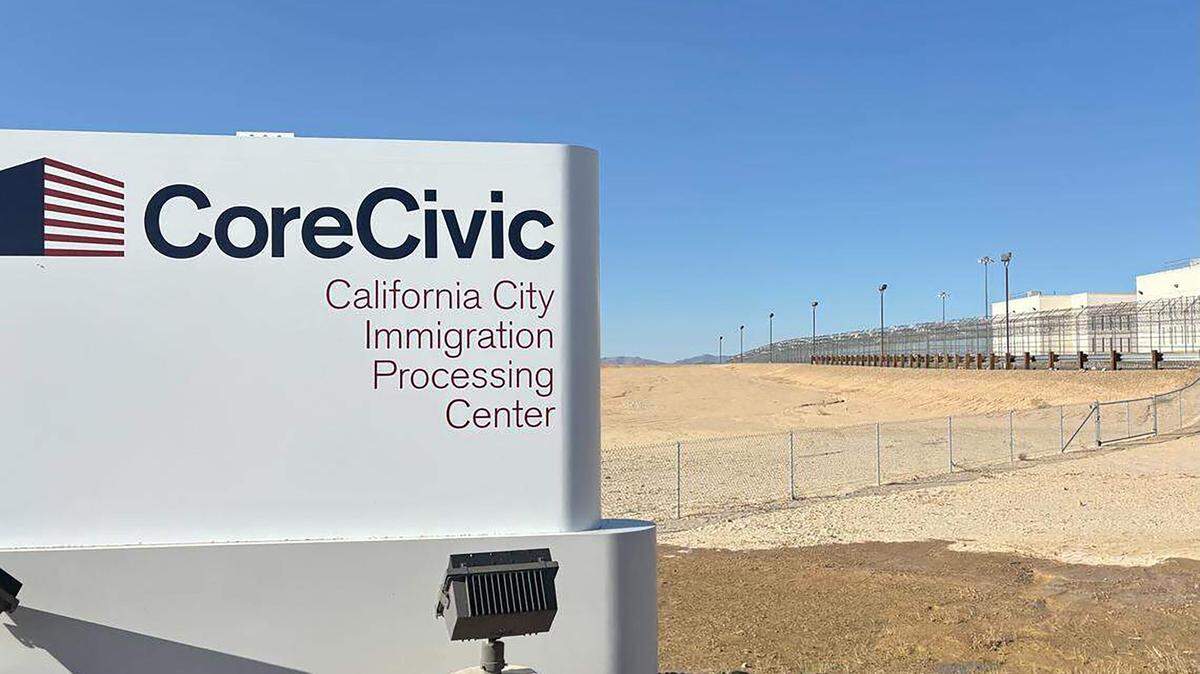
A trio of bills steaming through the California Assembly would use the tax code to disincentivize private prison companies and other companies from taking federal contracts for immigration enforcement in the state.
The bills are being driven by the California Legislature’s fierce interest in checking President Donald Trump’s immigration enforcement crackdown. Lawmakers have advanced the bills despite concerns from business associations that they’re too broadly worded, and over warnings from legislative attorneys that one measure might fall into similar constitutional limitations that lawmakers hit in 2019, when they tried to ban private immigration prisons in the state outright.
Lawmakers this year are trying only slightly more subtle tactics to curb private prison companies. Assemblymember Matt Haney, D-San Francisco, introduced a bill to tax private prison companies a whopping 50% of their profits.
“Despite the fact that California has passed laws in the past saying that we don’t want private prisons or private immigration detention in our state, they operate with very little accountability or oversight,” Haney said of CoreCivic and GEO Group, the two main private prison companies operating in the state, in an interview with The Sacramento Bee on Monday. A third company, Management and Training Corporation, operates a detention center in the Imperial Valley.
U.S. Immigration and Customs Enforcement contracts with the three companies to manage eight detention facilities in California, two of which represent expansions made during the second Trump administration. As of April 2, those facilities were holding more than 5,800 people, according to Syracuse University’s Transactional Records Access Clearinghouse.
ICE expanded into a 700-bed GEO-run facility in Kern County in the Central Valley late last month, according to prior Bee reporting.
The companies that run detention centers for ICE are “contributing to family separation and human suffering,” Haney said. “And my bill simply says, if they’re going to operate here, they should pay for the harm that they’re causing.”
Unlike two other bills targeting immigration enforcement contractors in the state, Haney’s bill hasn’t faced opposition from California business and contracting associations. That’s likely because his bill is narrowly tailored to hit the gross receipts of just the private prison companies, not ancillary government contractors, he told The Bee. CoreCivic and GEO representatives have not been visibly active lobbying against the bill in the Capitol, where the companies are deeply unpopular after a litany of allegations of human rights violations against the immigrants held in their facilities.
But CoreCivic executives are clearly worried.
“Although it is uncertain whether AB 1633 will be enacted into law,” company officials wrote in a notice to shareholders filed with the United States Securities and Exchange Commission, “we can provide no assurance that it will not be enacted, and if enacted, would not impact our ... operations and cash flows.”
Legislative analysts warned, in their review of Assembly Bill 1633, that it could run into constitutional problems. In 2019, now-California Attorney General Rob Bonta successfully sponsored a measure outright banning private prison facilities within California. But attorneys for the first Trump administration successfully argued in court that, because the federal government so thoroughly relied on private prison companies to carry out immigration detention, California’s ban amounted to the state trying to outlaw federal immigration enforcement within the state.
Ultimately, the 9th Circuit Court of Appeals in San Francisco ruled Bonta’s law violated the U.S. Constitution’s supremacy clause, which gives federal law precedence over state law when the two conflict. Legislative analysts warned that prison companies or the federal government may be able to challenge Haney’s bill, if not on supremacy grounds, then on the idea that the narrowly targeted tax is discriminatory.
Haney’s bill is waiting for its third reading in the Assembly, before crossing over to the Senate.
Other bills target contractors, businesses raise concerns
Assemblymembers Liz Ortega, D-San Leandro, and Alex Lee, D-San Jose, have brought separate bills that aim for the same goal — ensuring businesses that contract with DHS’s immigration and border enforcement agencies can’t benefit from California’s business tax credits. Though the bills have different language, their essential structure would make companies that contract with ICE, U.S. Customs and Border Protection, or a private prison company ineligible for the state’s various business tax credits.
The tax dollars those companies would then have to pay go into a fund supporting immigrant services and legal defense.
“ICE’s corporate collaborators are profiting from human suffering,” Lee said in a statement this week celebrating his bill’s passage through the key Assembly Appropriations Committee. “The No Tax Breaks For ICE Contractors Act ensures that public dollars are not enriching corporations that enable ICE’s lawless violence.”
Lee cited private prison companies and the data giant Palantir, which contracts with DHS for tracking software, as well as airlines that are offering their planes up for deportation use and a California company that makes restraints for ICE. His press release did not name another California technology giant, Anduril. That company has Southern California facilities, a CBP contract for automated surveillance towers and close ties between its executives and Trump administration officials. An Anduril spokesperson did not respond to The Bee’s request for comment on Wednesday about whether it was affected by the two bills and if it opposed them.
More than a dozen California business groups, however, including organizations like the California Chamber of Commerce, the California Bankers Association and the California Trucking Association, do oppose the bills. The groups are quick to make clear, however, that their opposition does not come “in defense of (ICE) or their recent conduct and the escalating tensions it has caused,” according to a May 7 letter provided to The Bee by a spokesperson for the California Chamber of Commerce.
“On the contrary, we oppose the economic disruption caused by recent federal immigration activities and have long supported the creation of a pathway to citizenship for undocumented workers, as they are critical to addressing California’s workforce needs,” the letter continues.
Business groups oppose the legislation, they say, because despite the authors’ intentions, the bills could still create problems for companies that contract with DHS in areas outside immigration enforcement. The bills’ authors have argued their measures are sufficiently narrow to capture only companies doing business with ICE and CBP.
But lobbyists opposing the measures have argued DHS contracts to provide software to cybersecurity efforts or disaster relief supplies to the Federal Emergency Management Agency could potentially lead to a loss of business tax credits.
On a more philosophical level, opponents say California lawmakers shouldn’t put businesses in a position where they’re squeezed between the legislatures of conservative and liberal-leaning states.
“Businesses end up stuck between competing political priorities for different politicians in different regions when the business is merely trying to continue to operate,” the Chamber of Commerce letter read.
ICE challenges in the Legislature
The three bills are just one part of a wave of legislation through which lawmakers hope to challenge Trump’s immigration enforcement crackdown. Lawmakers introduced many of those bills, with the full-throated support of Legislative leadership, amid the uproar that followed ICE and CBP agents shooting and killing two Minneapolis protesters, Alex Pretti and Renee Good, at the start of the year.
Despite the immediacy Senate and Assembly leaders expressed after those deaths, they have not moved to put together an urgency package of immigration bills and have instead let the measures move through committees normally. The vast majority of anti-ICE bills appear to be passing without friction. Haney told The Bee on Monday he had not received word of leadership putting together an immigration bill package.