California Democrats push through $351.7 billion budget bill with Newsom support
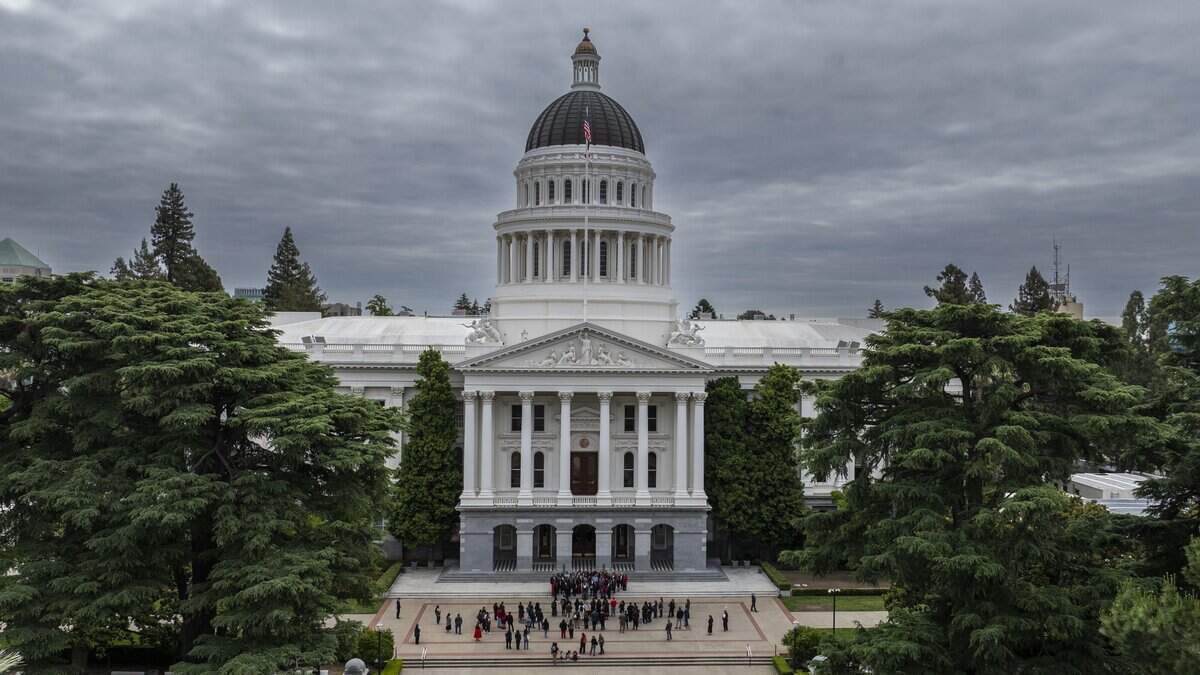
California Democrats approved a $351.7 billion budget Monday they said serves as a counterweight to federal spending cuts pushed by President Donald Trump while safeguarding the state’s financial future.
The spending plan followed months of negotiations among legislators and with Gov. Gavin Newsom, though it was staunchly opposed by state Republicans. The Legislature’s independent fiscal analysts have also raised concerns that the state’s books remain vulnerable to the specter of a deep drop-off in the stock market.
Both chambers of the Legislature voted on the budget Monday evening, and Newsom was expected to sign the bill later in the day.
The budget delays cuts and changes to the state’s Medicaid program, called Medi-Cal, to the relief of advocates for immigrant populations. Trump and congressional Republicans had restricted who is eligible for government healthcare, but California’s new spending plan backfills coverage for certain immigrants for more than eight months.
“A lot of these concepts we discussed in the budget, they can feel abstract, they can feel bureaucratic, they can feel technical, but at the end of the day, this is about the people we serve,” Assembly Budget Committee Chairman Jesse Gabriel, D-Encino, said. “This is about moms and dads sitting around the kitchen table. It’s about kids who want to get food and go to school and play and grow and breath clean air and have opportunities. Those are the people who were brought into this conversation.”
That said, not all Democrats were completely satisfied. Progressive lawmakers had pushed hard for state leaders to protect health care for undocumented immigrants. In remarks Monday, Assembly Health Committee Chair Mia Bonta, D-Alameda, among the more prominent of those voices, called the budget bill a good compromise but one that still comes with real costs to some people, saying she was “saddened” for undocumented immigrants who would ultimately see some losses in health coverage if the state doesn’t reverse course next year.
“This budget is a product of responding to the deep gutting of our social safety net that came down from the White House and a committed attempt from this body to stop the bleeding on several fronts,” she said.
Lawmakers on Monday also advanced non-fiscal policy changes that Newsom pushed into the budget agreement. Chief among them was a bill diluting the power of the state superintendent of public instruction by transferring much of the office’s administrative duties to the control of a new governor-appointed office.
That proposal drew opposition from unions and associations representing teachers and school employees.
The budget also raises a tax on commercial health plans, part of a suite of revenue-raising measures lawmakers and the governor agreed upon to balance the budget. Opponents of the health insurance tax increase, including the companies that administer those commercial plans, estimate it could increase the cost of families’ monthly insurance premiums by around $400 a year.
But budget negotiators say they needed to raise the tax to stave off deep cuts to California’s federal Medicaid allotment.
Republicans have repeatedly echoed the concerns of the Legislative Analyst’s Office — which advises the Legislature on fiscal matters — about the state’s spending. Even though California is flush with tax revenue, agency analysts still warn that the state could face large deficits in the future.
On Monday, Republicans accused the majority party of continuing to saddle the state government with debt and Californians with high taxes and costs of living. “This budget is actually a very compassionate budget,” Assembly Budget Committee Vice Chairman David Tangipa, R-Clovis, said. “My fear is that it’s not too much of a competent budget. The budget continues the pattern that Californians know all too well of ‘spend now, justify it later, and hope somebody else gets the bill.’”
Democrats last week passed a proposal to allow the state to put more money into the state’s “rainy day” savings account during times of flush tax revenue that will go before voters in November. The fund will have over $15 billion after this budget and overall the state has more than $28 billion in reserves, according to the Newsom administration.
Also on the tax front, lawmakers passed a bill ordering the Department of Finance to analyze the extent to which major corporations in the state leave their employees reliant on Medi-Cal for health insurance coverage.
The bill represented a compromise between state leaders and a coalition of progressive lawmakers and labor unions who’d pushed hard for the proposal. It attempts to force Newsom, or more likely his predecessor, to at least bring forward a proposal to tax those corporations, though the governor and Legislature could ultimately reject those bills.
“We needed to be able to lay out some of the mechanics of that,” said Senate President pro Tem Monique Limón, D-Santa Barbara. “And that is what the framework achieves. Understanding the mechanics of a potential program, without necessarily turning it on.”
Republican gubernatorial candidate Steve Hilton rejected the plan in comments to The Sacramento Bee earlier this month. Democrat candidate and former U.S. Health and Human Services Secretary Xavier Becerra did not respond to the Bee’s request for comment about the proposal, but the tax is listed on his campaign website as a policy he supported.
Senate Budget Committee Vice Chairman Roger Niello, R-Fair Oaks, lamented how the budget process went. Republicans were left out of the months of conversations around the plan. Newsom and Democrats announced a deal on the spending plan after 5 p.m. Friday. Niello said he received a briefing late afternoon on the array of budget-related bills that passed Monday.
“So it is impossible to make an informed, intelligent decision on all of those,” Niello said. “There is that significant problem with transparency.”
This story was originally published June 29, 2026 at 6:40 PM.