
Bonta co-leads coalition opposing new Trump administration tariffs
AI-generated summary reviewed by our newsroom.
- USTR proposed tariffs up to 12.5% on some countries and 10% on Mexico, Canada, EU.
- Attorneys general argued tariffs would raise import costs and harm U.S. production.
- California, Oregon and Arizona attorneys general led 22 states opposing new Trump tariffs.
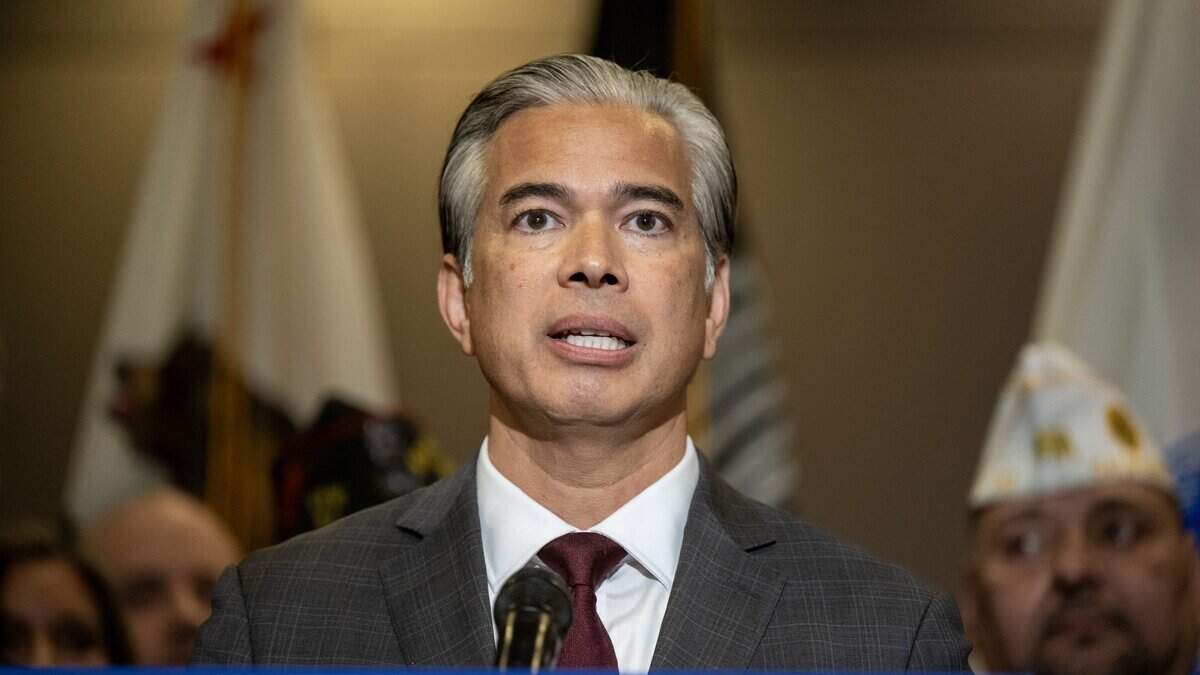
California Attorney General Rob Bonta, Oregon Attorney General Dan Rayfield and Arizona Attorney General Kris Mayes led a coalition of 22 state attorneys general to oppose proposed tariffs in a Monday letter to the U.S. Trade Representative Jaimeson Greer.
Greer proposed a new set of tariffs on June 2, alleging that 59 countries and the European Union have labor policies inconsistent with Section 307 of the Tariff Act of 1930. The section prohibits importing of any products made using forced labor.
The U.S. Trade representative used the results of its investigation to justify imposing tariffs of up to 12.5% on trading partners like China, the United Kingdom, Japan and Brazil and 10% on Mexico, Canada, and the European Union.
According to Greer’s report on the proposal, an investigation found that 54 economies have “failed to impose a legal prohibition on the importation of goods produced wholly or in part with forced labor” and six have failed to “effectively enforce a forced labor import prohibition.” The 60 trade partners found guilty of these violations account for 99.4% of U.S. imports, the report stated.
The report cites the act’s definition of “forced labor” as “all work or service which is exacted from any person under the menace of any penalty for its nonperformance and for which the worker does not offer himself voluntarily.” According to the report, Section 301(b) of the act allows the U.S. trade representative to address foreign countries’ policies if they are “unreasonable or discriminatory and burden or restrict (U.S.) commerce.”
Kevin Mather, the senior director of trade services for the World Trade Center of Northern California, said there is “fairly broad agreement” that forced labor is a long-standing concern on the global scale.
“Forced labor is a known issue in international trade,” Mather said. “I don’t think anybody’s going to argue that that’s something that needs to be considered or addressed. Whether this is the best way to go about addressing that is difficult to say.”
In their letter, Bonta and other attorneys general said they “oppose forced labor in all its forms.” However, they also underscored their objection to the Trump administration’s new tariff proposal.
“Goods made with forced labor should be barred from entry into our ports, and governments, including the United States government, should continue to take steps to eliminate forced labor around the globe,” the letter reads. “But the proposal uses forced labor as a pretext to continue an illegal tariff scheme that is so broad that it defies its stated aims.”
The letter asserts that tariffs would “likely fail” to reduce the use of forced labor in U.S. trading partners. It argues that tariffs would divert resources from reform initiatives and compliance efforts in targeted countries.
“Tariffs are a poor way to assist those economies that are trying but failing to eliminate forced labor in their supply chains,” the attorneys general wrote. “Coercive tariff measures do not lead to durable institutional reforms.”
The letter further argues that imposing tariffs on trade partners would hurt the U.S. economy by increasing the cost of imports of goods without domestic substitutes and intermediate goods — materials used by domestic manufacturers to produce other items.
According to Mather, tariffs — taxes on imported goods — impose costs on domestic supply chains.
“One of two things happen” when tariffs take effect, Mather said. “Either the importer is going to have to absorb those costs and reduce their margins, or those (costs) are going to be passed on to consumers.”
The letter said taxing “essential inputs” imported by U.S. businesses would impair domestic productive capacity in an “arbitrary and capricious” manner.
The letter came just before a three-day hearing on the proposed tariffs. Proceedings began Tuesday morning with defenses from a panel of government officials, including diplomats and trade authorities from Mexico, Chile, Ecuador, Guatemala, Guyana, Honduras and Peru, according to reporting from Bloomberg.
According to Mather, the tariffs could set off a “tit-for-tat” international response if they are imposed.
“If other nations implement something reciprocal, then it makes exporting goods from the United States more difficult,” Mather said. “It makes it more difficult for U.S. exporters to compete, assuming there is that tit-for-tat. It depends on what our trading partners do.”
.jpg)