Newsom announces cannabis busts as illegal market continues to roil legal one
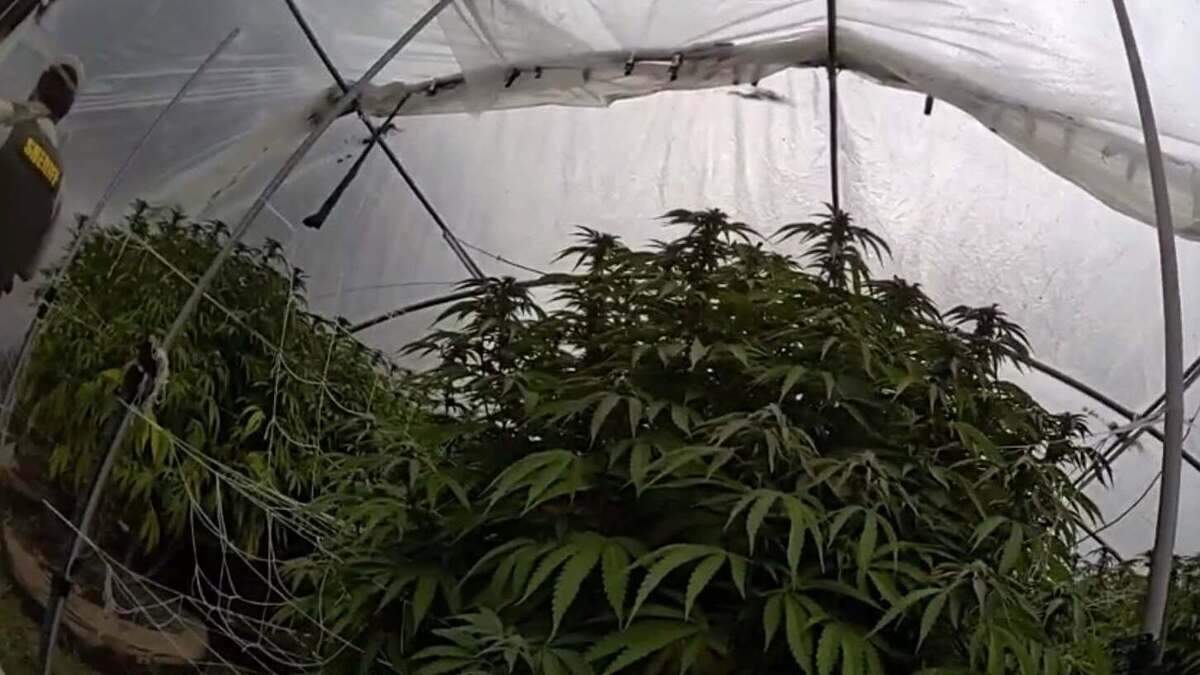
Gov. Gavin Newsom touted a string of cannabis seizures by law enforcement agencies over the last few months, as critics continue to contend the state has allowed the illicit pot market to boom through lax enforcement and the imposition of high taxes and crushing compliance costs on legal producers.
On Wednesday, Newsom announced that the Unified Cannabis Enforcement Task Force had gone on a tear since April, raiding illegal grow operations across 10 counties, destroying nearly 90,000 illegal plants and more than 63,000 pounds of cannabis, seizing cash and guns, and arresting 24 people. The majority of action was in the southern Central Valley and northern Antelope Valley, across Tulare, Kern and Los Angeles counties, according to the news release from his office.
Butte and Stanislaus counties also saw busts during the operations.
“Disrupting the illegal cannabis market is about more than seizing unlicensed products — it’s about taking on criminal networks, removing illegal firearms out of the hands of dangerous individuals and stopping activity that threatens public safety,” Newsom said in the news release. He began the task force in 2022, and since then, according to the release, agents have seized more than 841,000 pounds (which equates to 420 tons, a striking numerical milepost for cannabis users) of pot valued at more than $1.3 billion.
“We must keep enforcement pressure on illegal operations that pose risks to consumers and undermine the progress of the regulated industry,” Clint Kellum, the director of the California Department of Cannabis Control, said in the release. “Through the work of (the task force), California is leading the way in cracking down on the illicit cannabis market, making sure that consumers are safe and the legal cannabis industry remains strong and supported.”
State report: Illegal pot far outweighs legal crop
Critics of the Newsom administration’s handling marijuana’s legalization in California, which Newsom first helped spearhead as the state’s lieutenant governor, say the touted busts represent a drop in the bucket. According to a 2024 report commissioned by the California Department of Cannabis Control, the amount of pot grown illegally continues to vastly outstrip legal production. That report estimated that around 11 million pounds of illicit cannabis is grown each year, compared to just 1.4 million pounds of licensed cannabis.
“If we were serious about the issue, we wouldn’t let this illicit market take root in the first place,“ Los Angeles-based cannabis industry consultant Hirsh Jain told The Bee.
The task force Newsom created is composed of officers from the California Department of Fish and Wildlife, the Governor’s Office of Emergency Services and the Department of Cannabis Control’s law enforcement division. Organized criminal operations have long seen the cannabis market as a profit maker, even as legalization has taken hold in a growing number of states, Kevin McInerney, the Department of Cannabis Control’s law enforcement chief, told The Bee.
“There’s relatively low risk and an extremely high reward if you’re willing to take that risk,” he said.
The size of the illicit market is daunting, McInerney said, but its scale does not detract from the value of each individual enforcement action. “It’s a big problem, and it’s going to take a lot of work and it’s going to take time,” he said. “Every arrest has an impact.”
Legal cannabis growers, meanwhile, continue to struggle under the weight of low prices for their products and, according to industry advocates, crushingly high state taxes and compliance costs. Around half the legal farms in the state have gone out of business in the last five years, said Ross Gordon, a policy analyst for the group Origins Council, which advocates on behalf of legacy cannabis growers who have operated for decades, largely in rural parts of California, and made the switch to legal production after 2016.
Gordon and other advocates said most analyses of California cannabis sales estimate that around 60% are illegal.
“Organized crime, the use of pesticides and egregious environmental violations, those are all significant issues and should be prioritized,” Gordon said. But ultimately he said, “the number one thing the state can do to affect that proportion is support the licensed markets and make it more viable to compete in the licensed market.”
Reminiscent of the war on drugs
California imposed a 15% excise tax on legal marijuana sales — last year, that tax jumped up to 19%, before Newsom and the Legislature, recognizing the industry’s struggles, paused the increase until June 2028. Industry advocates, for both small growers and larger businesses, say the tax burden has proven too high to create a sustainable industry, and is compounded in areas by additional fees that local jurisdictions impose.
The impact of high taxes is worsened by high costs of compliance with myriad state and local regulations. Small farmers in particular, Gordon said, feel the state has often brought a heavier hand to enforcing regulatory compliance against them than cracking down on illegal grows. “There’s a very widespread feeling that a lot of that enforcement on licensees is for small and technical violations,” he said.
Los Angeles attorney Richard Ormond guides cannabis companies through receivership as they close their doors, and said he repeatedly sees those businesses fail for the same reasons. That work moved him recently to write a column for the San Francisco Chronicle laying out reforms the state needed to make to staunch the industry’s bleeding. Among them were tax relief, less stringent regulations and more consistent and thorough enforcement against illegal operations.
“They’re very frustrated, and they don’t see any movement or action really helping them,” he said of the growers and retailers he works with.
As legal businesses fail, some farmers are turning, or returning, to the illicit market, Ormond said. He and other critics of the administration said the current environment is reminiscent of the ineffective policing war on marijuana that Californians voted to end in 2016.
“Every few months you have a few raids here and there and someone standing on a pedestal saying, ‘Hey, we’re doing something about it,’” Ormond said. “It becomes ‘whack a mole.’”
This story was originally published July 8, 2026 at 4:47 PM.