California Primary 2026: How was voter turnout going after a sluggish start?
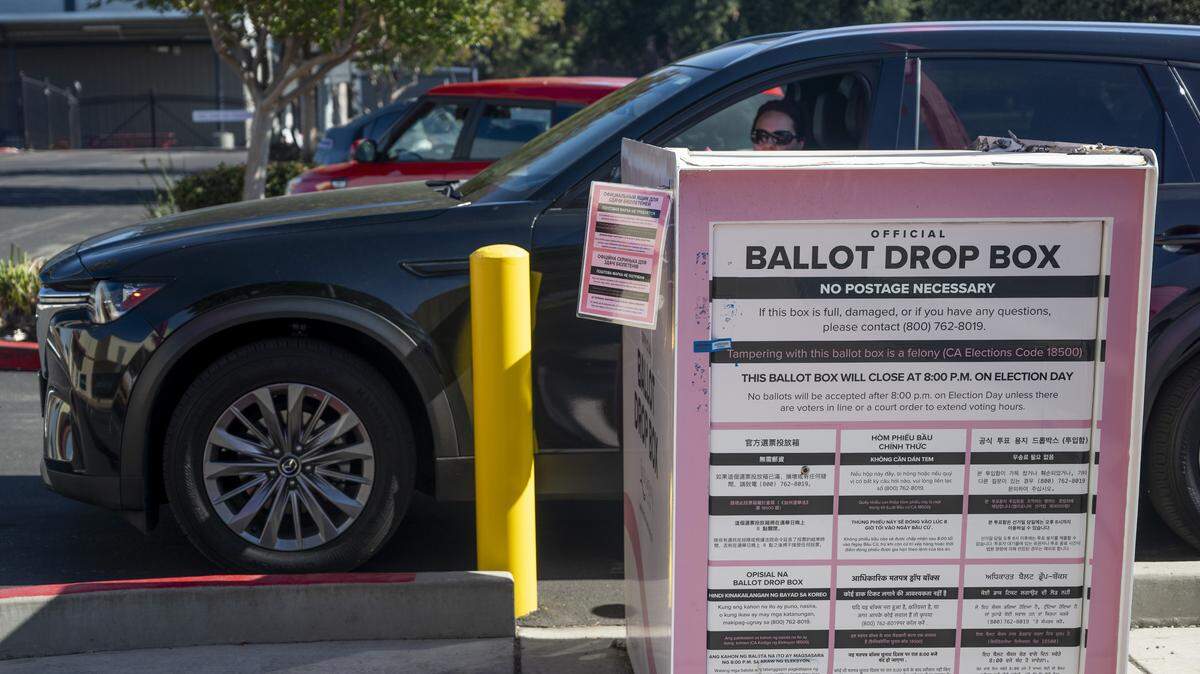
Early evidence shows that Democrats “flooded their ballots in at the end” ahead of Tuesday’s primary, but it is still too early to tell how big the groundswell was on Election Day.
That’s according to Paul Mitchell, a voting data expert who produced California’s newly drawn congressional maps that were approved by Proposition 50, which passed in a special election last year.
“We definitely see a big Democratic surge at the end,” he said Wednesday morning.
Coming into Tuesday, early voting for Democrats was behind what it was heading into the 2022 primary. Republicans, on the other hand, were returning ballots at a rate slightly higher than they were for that election.
As of Wednesday morning, voters had turned in more than 5 million ballots, or roughly 23% of the total. Turnout in Los Angeles County was about 22%. In San Diego County, it was almost 25%. It was 20% in Sacramento County.
The number of outstanding ballots for each party could be a key decider in how races could shift across the state in the coming days and weeks. The California Secretary of State’s Office is expected to put that number out on Friday, Mitchell said.
“A big question mark, an absolute unknown, is the Republican turnout,” Mitchell said.
What affected the pace of Democratic voting?
Dan Schnur, a political commentator and professor at the University of California, Berkeley, had his own pending question Tuesday evening.
“Did those Democrats wait as long as they did because they were uninspired or because they were frightened and strategic?” he said.
The fear was over concern during the campaign that two Republican candidates for governor could advance to the November ballot through the state’s open primary system, which takes the top two vote getters regardless of their party.
Schnur said the lack of inspiring governor candidates played at least some role. Prominent Democrats, including former Vice President Kamala Harris, Sen. Alex Padilla and Attorney General Rob Bonta, declined to run, and former U.S. Rep. Eric Swalwell dropped out of the race after facing accusations of sexual misconduct.
Republican Steve Hilton and Democrat Xavier Becerra were in the lead after early returns. Hilton had 27.8% of the vote to Becerra’s 25.4% as of Wednesday morning.
“Even if Becerra moves on to the General Election, even if he becomes governor,” Schnur said, “it is noticeable how little of a groundswell there has been around his candidacy.”
Early demographic data points
Mitchell said early results show voters skewed older and Latino turnout appeared to be higher. Still, white Californians were making up more than two-thirds of all voters as of Wednesday morning.
Mike Madrid, a Republican consultant who closely watches Latino voting trends, said the early returns did not appear to show as high of a Latino turnout as seen in other races across the nation. But something else jumped out to him about the early returns.
“Voters are increasingly voting more on class lines than ethnic lines,” Madrid said uesday night. There was “a pretty significant transition towards a more class-based voting bloc, than an ethnic one.”
The full picture of those and other voting trends is weeks away.