
Proposition 30: Should California tax the rich to pay for electric cars, wildfire protection?
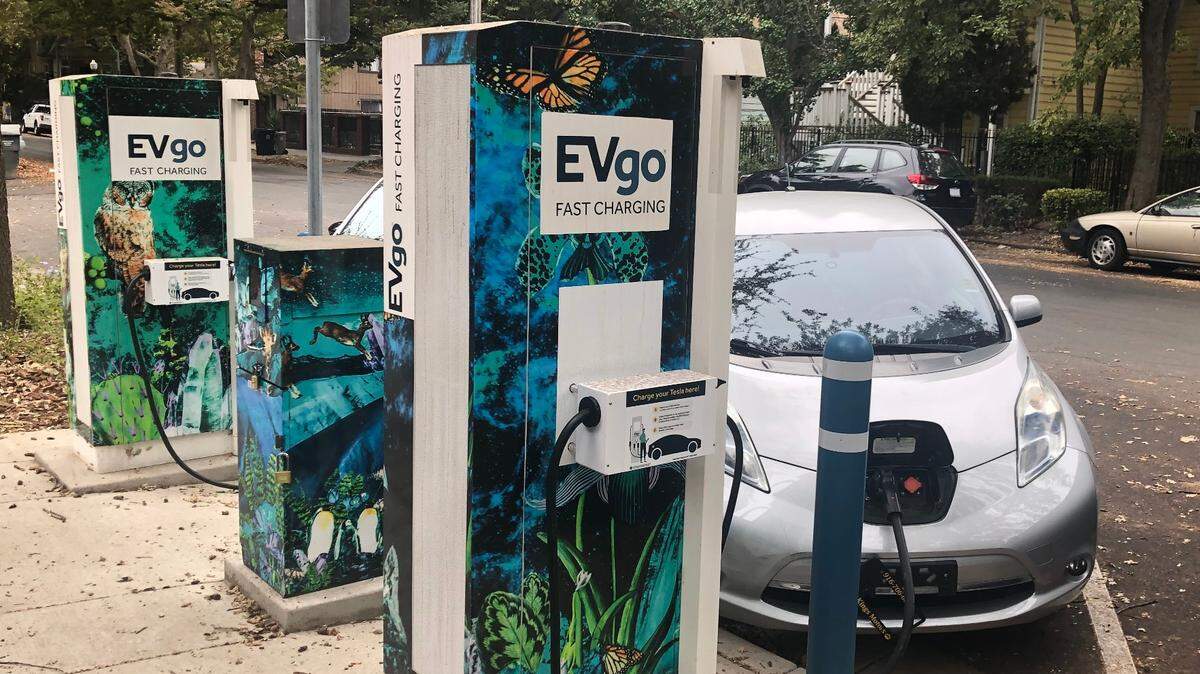
A measure to tax the wealthy to pay for expanded electric vehicle infrastructure and wildfire protection has divided Democrats and made for some unusual political alliances.
The California Democratic Party supports Proposition 30 while its standard-bearer, Gov. Gavin Newsom, is siding with state Republicans in opposition.
The proposal comes as the state seeks to grapple with, and mitigate, the effects of severe climate change, including drought and worsening wildfires.
What does a ‘yes’ vote mean?
A “yes” for Proposition 30 would impose an additional tax of 1.75% on personal incomes above $2 million annually. Revenue would go to supporting zero-emission vehicle programs as well as wildfire prevention and response.
What does a ‘no’ vote mean?
A “no” would prevent the tax from being imposed.
Who benefits?
The ridesharing app service Lyft, to hear Newsom tell it. He charges that the proposal is a taxpayer-funded giveaway to subsidize the company’s compliance with a state mandate that ridesharing services use zero-emission vehicles for 90% of miles driven by 2030.
Prop. 30 supporters in the environmental community say Newsom’s narrative is misleading and that Lyft is only one of many stakeholders who helped bring the proposal to the ballot. The real beneficiaries, they assert, are the millions of Californians who breathe some of the country’s worst air, and who contend with calamitous year-round wildfires.
Prop. 30 would generate up to $5 billion annually, according to the Legislative Analyst’s Office. It would be spent making electric vehicles more affordable through direct rebates and financial assistance and building out the state’s electric vehicle charging infrastructure. Funds would also go to hiring additional state firefighters, acquiring firefighting equipment and managing forests to prevent the most extreme wildfires.
Who doesn’t?
Opponents argue that California already has one of the highest tax burdens in the country and that the measure would drive businesses and investment out of the state. They predict that the addition of up to 3 million new electric vehicles subsidized by Prop. 30 would push the state’s power grid beyond capacity.
Critics say that California already is spending billions of dollars to improve its electric vehicle infrastructure, and that the state’s massive budget surplus can be used to improve wildfire response.
Follow the money
Supporters have raised more than $37.1 million thus far, according to Ballotpedia, which draws its data from the California Secretary of State. Meanwhile, they have spent more than $30.3 million to advocate for the measure.
Lyft is the chief financial backer of the proposition, though other notable donors include the International Brotherhood of Electrical Workers PAC, Zinc Collective, California State Association of Electrical Workers and the California Environmental Voters Issues Committee.
Opponents have raised $12 million thus far, and they have spent $11 million, according to Ballotpedia.
Top funders include Catherine Dean, Mark Heising, Michael Moritz, Sierra Pacific Industries and Arthur Rock.