
Proposition 27: Should California legalize online sports betting beyond tribal casinos?
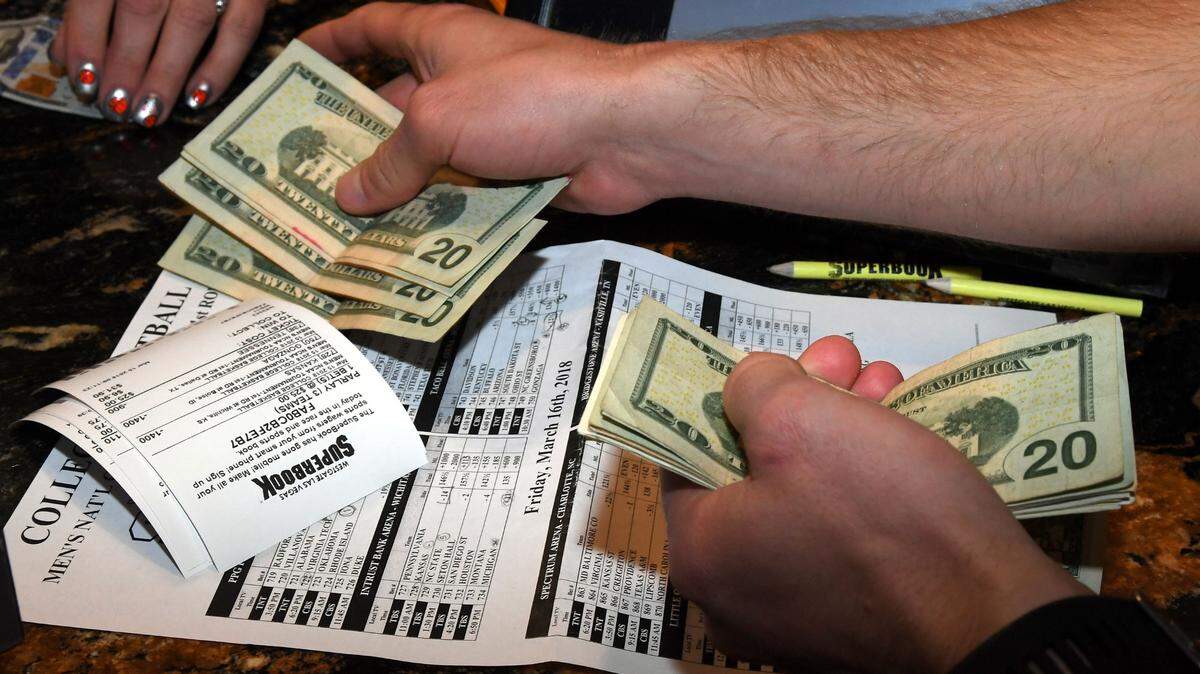
California is a vast untapped market for sports gambling giants like FanDuel and DraftKings, companies that are wagering millions that Californians will legalize online betting this fall.
Proposition 27 is one of a pair of gambling-related measures on the November ballot, along with the tribal-backed Proposition 26. Unlike Prop. 26, Prop. 27 would legalize sports betting not just in tribal casinos or racetracks, but everywhere in the state, via mobile devices.
What does a ‘yes’ vote mean?
A “yes” on Proposition 27 means that licensed tribes and gambling companies could offer online sports betting to people 21 and older on non-tribal lands in California. Sports betting operators would be required to pay the state a share of the bets made. A new state unit would be formed to regulate the action.
What does a ‘no’ vote mean?
A “no” would keep online sports betting illegal in California.
Who benefits?
The Legislative Analyst’s Office estimates that Proposition 27 would generate as much as $500 million a year for the state. The proposal says the money would be spent to address homelessness, mental health and addiction.
Supporters argue that the ballot measure would benefit all of California’s tribes, but especially rural and economically disadvantaged tribes that don’t own big casinos. The initiative is supported by three Northern California tribes: the Big Valley Rancheria of Pomo Indians, the Middletown Rancheria of Pomo Indians of California and the Santa Rosa Rancheria Tachi Yokut Tribe.
Also supporting the measure is Major League Baseball, which said in a statement that Proposition 27 would create a responsible, well-regulated betting market in California, “a state with millions of MLB fans looking for alternatives to illegal offshore betting sites.”
Who doesn’t?
Children, who would be at risk of developing problem gambling habits from mobile sports betting, opponents say. Prop. 27 has no in-person verification requirement.
Opponents also argue that more money isn’t the solution to California’s homelessness crisis, and that the state should more effectively manage the billions it’s already spending.
Though some tribes support the measure, many do not. Those that oppose Prop. 27 contend that it undermines tribal gaming rights, jeopardizing vital revenue that tribes use for housing, health care, education, firefighting and other services.
Follow the money
Both supporters and opponents of Proposition 27 have raised, and spent, hundreds of millions of dollars. The political action committee in support has collected more than $169.2 million, while the PAC that opposes has raised $214.5 million, according to the website Ballotpedia, which draws its data from the California Secretary of State’s Office.
The Yes On 27 committee has spent more than $160.4 million thus far, while the two committees opposed to the measure have spent a total of more than $205.2 million to defeat it.
Top donors in favor of Proposition 27, according to Ballotpedia, include FanDuel, DraftKings, BetMGM, FBG Enterprises and Penn National Gaming.
Top donors in opposition include the San Manuel Band of Mission Indians, Federated Indians of Graton Rancheria, Pechanga Band of Indians, Yocha Dehe Wintun Nation and the Agua Caliente Band of Cahuilla Indians.