
Candidates for 8th Senate District: Angelique Ashby, Dave Jones compete for Sacramento seat
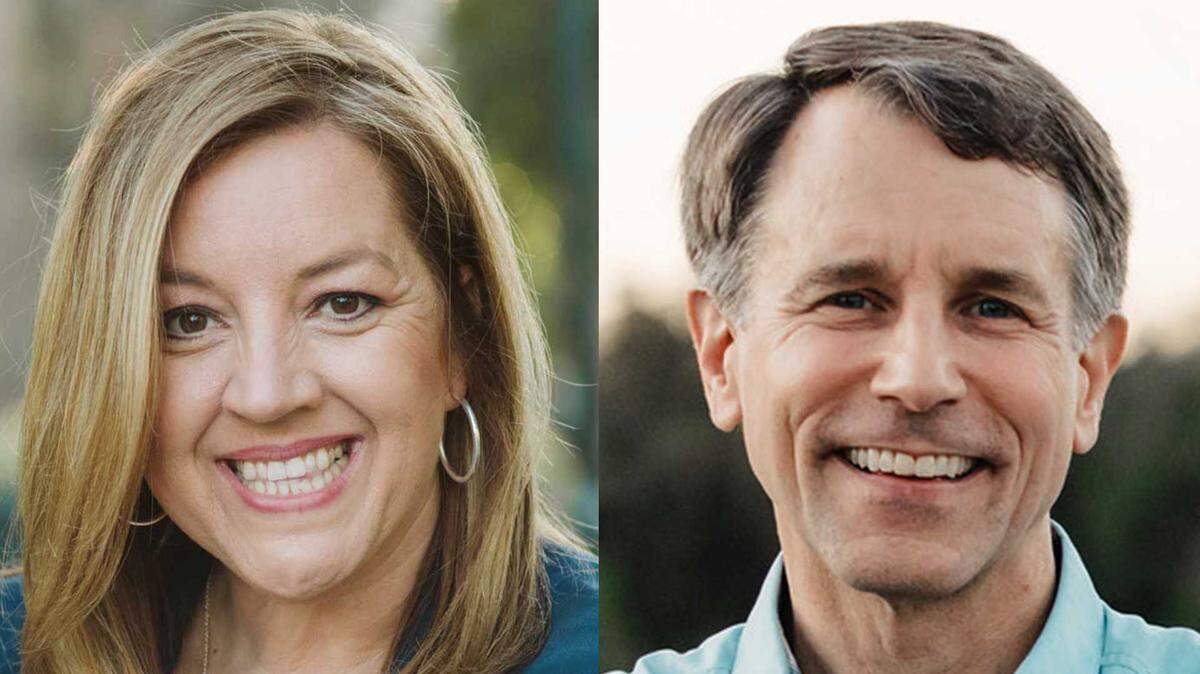
Two well-known Sacramento Democrats are competing for an open state Senate seat this November, with City Councilwoman Angelique Ashby squaring off against former Insurance Commissioner Dave Jones.
Angelique Ashby
Age: 47
Party: Democratic
Birthplace: Ashland, Oregon
Residence: Sacramento region since age 10; Natomas for last 20 years
Occupation: Sacramento vice mayor and city councilwoman
Education: McGeorge School of Law, Juris Doctorate; UC Davis, bachelor’s degree
Offices held: City Councilwoman, District 1, since 2010
Website: AshbyForSenate.com
What specific actions do you think state legislators could take to help unhoused residents and prevent homelessness?
Homelessness is a complex problem without a “silver bullet” solution. But reducing homelessness requires (1) more housing, (2) the ongoing availability of mental health, drug rehabilitation and other services, and (3) intensive outreach to both those on the verge of homelessness and those currently experiencing homelessness.
There is no simple way to accomplish these goals without strong, long-term partnerships between state and local governments and the community providers that do this work every day. We need better coordination between the multiple agencies at the local, county, state and federal levels.
We also need to ensure the billions of dollars we have budgeted to address homelessness are used effectively and efficiently to keep the unhoused off the streets, sheltered and back into the workforce when that is possible. Last year, I worked to receive state funding to convert a Natomas hotel into a supportive housing community. It has onsite services for 110 families with children experiencing homelessness. The shelter opens this year. I couldn’t be prouder of this effort and the real impact it is having for so many Sacramento families. We need to duplicate efforts like this across our state. With a record $300 billion budget, no child should be sleeping on the street in California.
The recent establishment of the Community Assistance, Recovery & Empowerment (or CARE) Court by the governor and Legislature is a pivotal step in the right direction. It will help break the endless cycle faced by many of our state’s residents struggling with mental illness and addiction. On the housing side, I would also support increased efforts in the Legislature to reduce the burdensome processes that inhibit local governments and developers from building more of the type of housing we need where we need it. “Affordable housing” shouldn’t cost $800,000 per unit to build.
What do you think about the recent environmental legislation package lawmakers recently passed at the behest of Gov. Gavin Newsom? What strategies would you use to address climate change?
Californians are feeling the impacts of the climate crisis firsthand — drought, extreme and longer periods of heat, poor air quality and an increasing number of wildfires. I applaud the governor and the Legislature for passing this critical package of bills, which I support. But we need to do more to maintain California’s leadership — pioneering efforts that have led to thousands of new jobs and massive investments in technology and innovation.
We must keep moving closer to carbon neutrality, continue our shift to clean energy, and create a framework for carbon capture and sequestration, which will help California reach its aggressive climate goals as quickly as possible — all while protecting disadvantaged communities who often bear a disproportionate economic burden of change.
In addition, the Legislature and governor need to continue to make investments to reduce wildfires and the resulting climate-changing smoke that is degrading the quality of the air we breathe. We must do everything we can to prevent another tragedy like Paradise, including by encouraging and incentivizing Californians in fire-prone communities to harden their homes and communities to be more resilient against wildfires.
I also favor incentives to make zero-emission vehicles more affordable for families and small businesses. We have many of the right overarching strategies in place, but we must help communities that are in most need of support. We need to increase education and awareness, and focus economic incentives to aid the transition to cleaner energy.
What can lawmakers do to cut through local red tape and promote more community housing construction?
Housing in the area I represent in Sacramento came to a halt due to the Great Recession and a federal moratorium, which prohibited construction and complicated our ability to increase housing stock. I worked across party lines with federal and state government to streamline development and bring back construction jobs and new affordable housing. Today, Natomas is the largest new growth area in our city. The key to that economic transformation has been creating reliable partnerships, streamlining processes and building desirable communities rich with amenities and high quality of life experiences regardless of income.
In the State Senate, I will:
▪ Continue to support a diverse array of construction like duplexes and triplexes. We must keep advocating for dense, transit-oriented infill development that doesn’t negatively affect the environment, while also maintaining safe, livable neighborhoods.
▪ Support financing for first-time homebuyers and entry-level homes, which is key to creating generational wealth and stabilizing families. It’s imperative that the state find opportunities to break cycles of intergenerational poverty; improving accessibility to homeownership is a sound way to do that.
▪ Work with the governor and my colleagues in the Legislature to champion a state budget that provides and improves workforce development programs and builds on existing mechanisms like the California Infrastructure and Economic Development Bank that helps leverage credit, financing and other expansion incentives that help get housing projects moving.
Dave Jones
Age: 60
Party: Democrat
Birthplace: Philadelphia
Residence: Sacramento
Occupation: Environmental advocate/educator
Education: Harvard Law School, Juris Doctorate; Harvard Kennedy School of Government, master’s of public policy; DePauw University, bachelor’s degree, DePauw University
Offices held: Sacramento City Councilman, 1999-2004; California State Assembly, 2004-2010; California State Insurance Commissioner, 2011-2018
Website: DaveJonesForSenate.com
What specific actions do you think state legislators could take to help unhoused residents and prevent homelessness?
We have to start by being honest about the problem, and about the failures that have produced the status quo. We have had systemic policy failures in housing, mental health, health care and substance abuse treatment that has fueled the rise in homelessness. There is blame to go around, but the clearest responsibility rests with elected officials who have opposed building affordable housing and shelters for the unhoused.
Voters have a right to be angry about it, and they should be angry. We need to build more housing of all kinds, including affordable housing, market-rate housing, shelters with services for the unhoused and transitional housing. We need to invest in mental health care, and we need to work harder to keep people from falling into homelessness through financial assistance to families that are struggling.
The state Legislature needs to insist that cities and counties approve and build affordable housing and shelters with services for the homeless. The Legislature should also provide funding and remove regulatory barriers to building affordable housing. I have the experience to make a difference here. When I was on the Sacramento City Council, I wrote the law that required developers to make 15% of new units affordable housing for low-income families. In the state Senate, I’ll work to strengthen the safety net that is supposed to help our most vulnerable residents stay on their feet, and I’ll fight for the resources our communities need to reduce homelessness.
What do you think about the recent environmental legislation package lawmakers recently passed at the behest of Gov. Gavin Newsom? What strategies would you use to address climate change?
Climate change poses an existential threat. We need to accelerate a just transition from greenhouse gas producing industries. The recent environmental package is a good start but more needs to be done. Sacramento already suffers from poor air quality from wildfires, record heatwaves and drought. California is a national leader, but we need to do more. The most urgent and important goal is shifting our energy production and other sectors away from fossil fuels towards renewable energy sources.
As California’s Insurance Commissioner, I was the first financial regulator in the world to ask an entire industry to divest from fossil fuel. As the director of the Climate Risk Initiative at UC Berkeley’s Center for Law Energy and the Environment, I’ve spent the last several years developing new laws and approaches that will effectively and efficiently shift industries away from fossil fuels and fossil fuel investment. That transition will create jobs and help fuel our economy, but we have to commit the resources now to do the job. We also need to get smarter about the ways we use, store, and produce drinking water; how we move people and goods; and how we manufacture products and grow food.
All of these transitions are difficult, but if we manage them carefully, we can help build a stronger California. The communities that suffer the most from climate change are often historically marginalized communities and our most vulnerable residents. The people most impacted by air pollution are children and seniors with pre-existing respiratory conditions, and poorer communities and communities of color are often where fossil fuel extraction occurs. I’m proud to have the support of organizations leading the way on these issues, including the Sierra Club, California Environmental Voters, Clean Water Action Fund, California Environmental Justice Alliance, and others.
What can lawmakers do to cut through local red tape and promote more community housing construction?
The first step is to stop getting in the way of affordable housing and other housing construction. Too many local elected officials have stood in the way of building affordable and other housing we desperately need. I strongly support efforts to build more housing of all types including permanently affordable housing, market-rate housing and shelters. I think there are opportunities for the state Legislature to reduce barriers to building housing, including affordable housing. The state Legislature needs to insist that cities and counties zone enough developable or re-developable land at sufficient densities to accommodate their fair share of housing for households and individuals at all income levels, but also insist that cities and counties approve and build the housing, affordable housing and shelters we need to get people off the streets, not just zone for it.
The state Legislature should also provide for streamlined approval processes for affordable housing, prohibit arbitrary denials of affordable housing developments, provide funding and low-income housing tax credits for affordable housing developments, provide infrastructure funding for affordable housing developments, and further reduce regulatory hurdles. I believe we need an “all of the above” approach to housing and affordable housing.
This story was originally published October 9, 2022 at 5:00 AM.