
Ken Cooley, Josh Hoover face off for Assembly. Here’s their vision for Rancho Cordova, Folsom
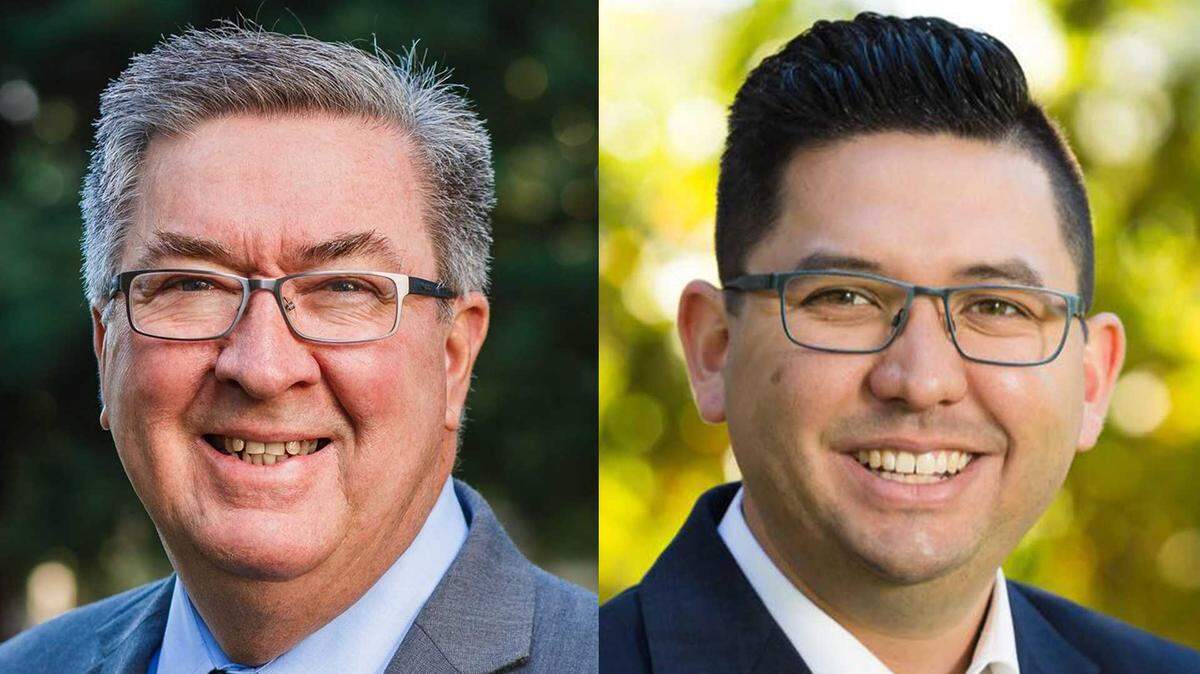
Ken Cooley
Age: 69
Party: Democratic
Birthplace: Berkeley
Residence: Rancho Cordova
Occupation: Assemblyman
Education: Bachelor’s degree, UC Berkeley; law degree, McGeorge School of Law, UOP
Offices held: Rancho Cordova City Councilman, 2002-2012; Assemblyman, since 2012
Website: KenCooley.com
What specific actions do you think state legislators could take to help unhoused residents and prevent homelessness?
I most recently worked to secure $25 million for Sacramento County to address homelessness on the American River Parkway. I also authored AB 870 in 2015 to combat homelessness by creating a program in four counties to support “rapid rehousing” principles through grants from the Department of Housing and Community Development. “Rapid Rehousing” is predicated upon the idea that if we move unhoused individuals rapidly into safe housing, their outcomes in dealing with other issues they are facing are much improved. Finally, I supported and voted for $2 billion in the state budget this year for a variety of housing programs, including for manufactured housing, increasing affordable housing, multifamily housing, farmworker housing, increased funding for ADU financing, $500 million for the California Dream for All homebuyer aid program, and significant funding for Veteran’s Housing and Homelessness prevention.
What do you think about the recent environmental legislation package lawmakers recently passed at the behest of Gov. Gavin Newsom? What strategies would you use to address climate change?
I have always supported common-sense legislation and proposals that tackle the climate crisis. It’s not just an issue about the future. It affects many facets of our lives now — including public health and safety, the economy, where we find housing, how we commute, and how we recreate. Gov. Newsom’s climate package included some policies that will go far to address this critical issue while ensuring the needs of people are met. That’s why I was proud to support legislation ensuring that Californian’s have clean air to breathe, a safer and more stable power grid that will lead to fewer fires and emergencies in the future, and clean, good-paying union jobs.
It’s important to have a diverse climate portfolio. We need to be nimble and have all hands on deck. A multi-pronged approach that allows for creative thinking would allow local governments that are spread across different topographies the ability to best address their needs, utilize their strengths, and share resources. Therefore, in 2019, I authored AB 296, the Climate Innovation Act, which aimed to foster new innovations that address greenhouse gas emissions and ensure we have clean air and water for generations to come. AB 296 received broad bipartisan support. If signed, it would have gone a long way in helping California prepare and mitigate against the negative impacts of climate change — all without creating unnecessary red tape, new regulations, or taxes.
What can lawmakers do to cut through local red tape and promote more community housing construction?
I authored AB 1095 last year to create a level playing field between affordable home ownership and rental projects in state funding programs to ensure projects that support affordable ownership are eligible to compete for critical funding. This bill was signed into law.
I also supported AB 2651 this year to extend the property tax exemption for Community Land Trusts, which will make the affordable housing these organizations build easier to pencil out. We have to be creative in identifying and supporting ideas to cut through red tape and streamline housing projects. For instance, Los Angeles has an adaptive reuse ordinance to make it easier for developers to re-purpose underutilized structures into residential homes. This has been successful in Los Angeles and could offer a model to be used elsewhere.
Josh Hoover
Age: 34
Party: Republican
Birthplace: Fresno
Residence: Folsom
Occupation: Public policy advisor
Education: Bachelor’s degree, political science, UCLA; master’s of public administration, USC
Offices held: Folsom Cordova Unified School District board member, since 2018
Campaign website: HooverForAssembly.com
What specific actions do you think state legislators could take to help unhoused residents and prevent homelessness?
First and foremost, we need to acknowledge that homelessness is not just a housing problem. To identify that as the only solution is misguided. We must address the mental health and substance abuse issues that underpin many of the problems that we see on a daily basis in our communities.
As an Assembly member, I will fight for policies that address these issues. One of the underreported problems with Prop. 47 was its destruction of drug courts that incentivized homeless individuals to seek treatment. Our community believes in compassion and care, but it is not compassionate to allow people to live on the street under the conditions that we see. It is also unacceptable that taxpayers and families are unable to use the public parks and spaces they paid for because of encampments. Law enforcement needs to be empowered to clear these encampments for the sake of public safety.
Finally, I plan to propose a full audit of homelessness spending in California. We have spent over $10 billion in the last few years and the homeless population has only grown. In fact, California is now home to one-quarter of our nation’s homeless. An audit would show us which programs are working and which ones are not, allowing us to better invest our resources in programs that actually get results.
What do you think about the recent environmental legislation package lawmakers recently passed at the behest of Gov. Gavin Newsom? What strategies would you use to address climate change?
While I am excited for a clean energy future in California, I am concerned that some of the recent pieces of environmental legislation passed by lawmakers will only place a greater financial burden on consumers. I believe government can play a role in incentivizing new technologies but attempts to mandate them only serve to increase costs on low-income Californians.
I also oppose California’s recent plan to ban gas-powered cars by 2035. Not only will this harm those who cannot afford an electric vehicle, it is painfully obvious that our electric grid is not ready to support this change. During our hottest days of summer, our state was on the brink of rolling blackouts while electric vehicle owners were being asked not to charge their cars. This is not sustainable.
For these reasons, I do support the Legislature’s recent actions to extend the life of our state’s only nuclear power plant. It is critically important that we invest in clean energy projects that provide reliable sources of power to California, not just renewable projects that cannot provide the necessary power when we need it most.
What can lawmakers do to cut through local red tape and promote more community housing construction?
As the father of a young family, I am saddened that the American dream of homeownership is becoming harder and harder to reach for many Californians. We absolutely need more housing to meet the needs of the residents in our community, but we also need to make sure we are growing in a responsible way. This requires thoughtful planning, adequate water supply, and robust community input.
I believe the success of our region is dependent on increasing the supply of affordable housing for working families. In order to meet this need, we have to remove onerous regulations that have stalled development projects with frivolous lawsuits and added to the cost of building homes. This includes reforming CEQA, one of the biggest impediments to residential development, or extending CEQA exemptions to housing projects. If we can exempt our state’s large sports stadiums from CEQA, we can do the same to help solve our growing housing shortage.
This story was originally published October 9, 2022 at 5:00 AM.