Peek into the Central Valley campaign trail with candidates in tight elections for Congress
Sacramento Bee political reporter Gillian Brassil spent a week on the campaign trail, following congressional candidates in close races around California’s Central Valley. Here are some scenes from the trail.
9th Congressional District
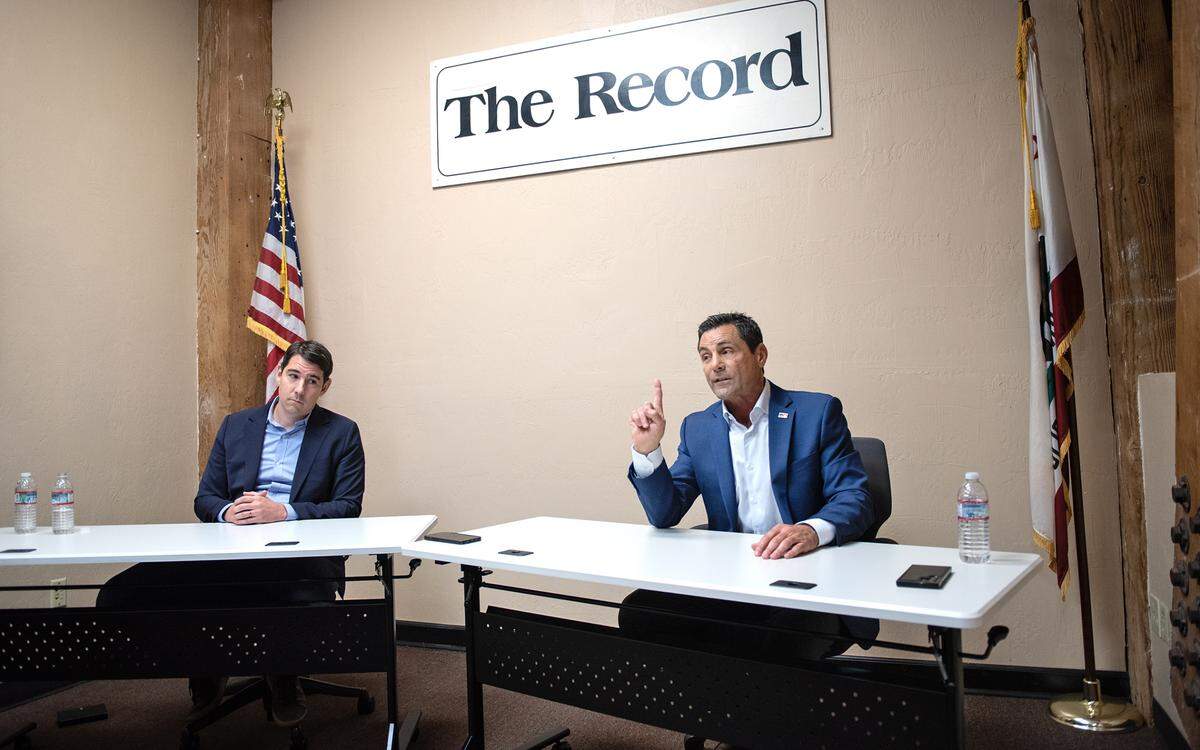
Josh Harder wears jeans. These voters like that. “Because I wear them too,” says the local high school basketball coach, Balaji Kannan.
It’s crowded in this Mountain House home where voters, some fiscal conservatives skeptical of the Democratic congressman and others here purely in support, wait for the candidate. Locals chat about community gossip, eat Indian food and marvel at the extraordinary temperature. Luckily, the event is inside. White fold-out chairs face the front of the first room in the home.
Pebble Aulakh, one of the event organizers, says that she hopes to hear plans for jobs in the area. Here, everyone knows everything about everyone. And they know who travels how far for what, especially with more people moving into the area.
The name Mountain House comes from the Gold Rush, and holds steady, as a midway rest point between San Francisco and the Sierra Foothills. Now, sheltered by the Altamont Pass, it’s an in-between collection of villages — not a town — that are neither purely Valley or purely Bay Area.
Mountain House is perhaps different than Harder is used to. He represents a farming-heavy district now that includes Modesto and Turlock. Just as Mountain House is yet to be used to a district that shed Contra Costa County neighbors to the north.
Harder, 36, greets the family dog, shakes hands and smiles with voters who will determine whether the Democrat becomes their next congressman.
Slowly people pile into the main area to listen to what Harder plans to do for jobs, water and health care for the area. Hands on his hips, Harder cocks his head down and to the left with a listening ear, eyes burning with concern, toward the questioners. He rattles off solutions: Sacramento shouldn’t push the Delta Tunnel Project. Railroads should extend further into the Valley. No gas tax. Address education gaps, health care gaps, business gaps.
Tom Patti wears a comfortable work polo, though he said his only remaining plans for the day are family dinner. It’s early evening and Patti, a Republican and San Joaquin County supervisor, said it was too hot to have campaign volunteers come in today. Plus it was Labor Day. He says to move the car to the shade in the large, mostly barren parking lot of the Stockton business park where his campaign office is.
It’s cool and quiet in the spacious office, with dozens of stereotypical cubicles set up with phones, promotional materials and computers. Patti’s office is tucked in the back left corner. He walks quickly, with purpose, hands held together as if warming up for a bout in the ring as he trained to do with Mike Tyson and Cus D’Amato decades ago. But in a friendly, readying way, with assurance that he has a lot to say.
He does.
Over two hours alone with a reporter, his eyes bulge with animation. It’s otherwise quiet. He nearly jumps out of his seat and his hands fly between his temple, the table and each other as he speaks on the issues he wants to address if he becomes a congressman for the 9th Congressional District. Patti, 59, talks about the opioid epidemic, primarily fentanyl; homelessness and housing issues; domestic oil production; water storage projects; apologies for long-winded, winding answers; abortion should be legal and safe; guns shouldn’t be so heavily restricted. Gas should be affordable. Food should be affordable. Life should be affordable in Stockton.
Stockton just misses a list of California’s 10 most populous cities. In 2012, following decades of mismanagement and the 2008 financial crisis, Stockton became the largest U.S. city to seek bankruptcy protections (to be surpassed by Detroit the following year). It emerged from bankruptcy in 2015, but the impacts still haunt residents.
He is both motivated and troubled by something a friend told his daughter: After she graduates college, she is told, leave and never come back. Why? Patti asks. “That’s part of the problem.”
13th Congressional District
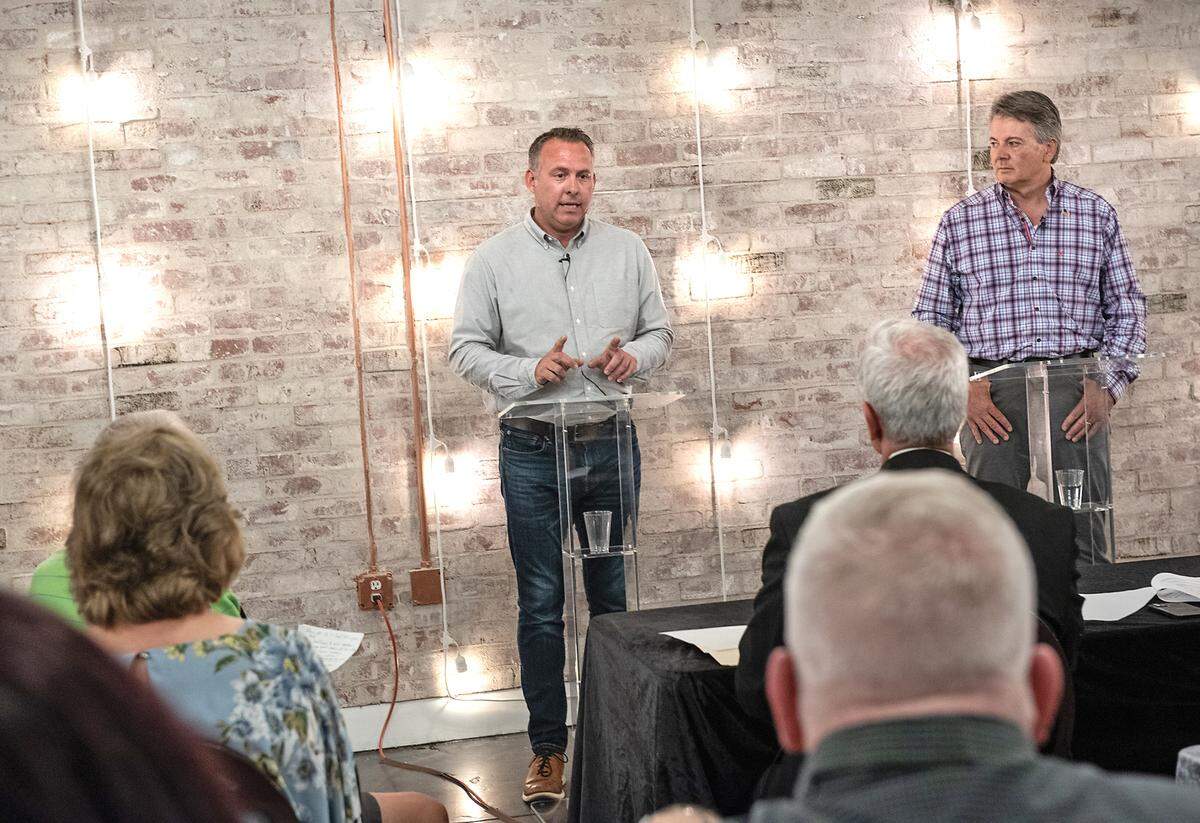
John Duarte’s white Ford F-350 is piled with boxes of campaign fliers, bumper stickers and remnants of farming attire — dust-worn gardening gloves, a cooler and hydration powder Liquid IV. It’s his seventh truck since he was 23 and working as a field representative at his family’s nursery, talking to people across the Central Valley. He parks on a street of one-level houses with unused cars, untended lawns and unlocked front gates in Kerman, just west of Fresno.
It’s 113 degrees outside when Duarte, sporting a spider bite on his left cheek that he’s planning to get checked out, goes door-knocking in a checkered, long-sleeve button-down and slim khakis.
There are few other people outside: a mother and children in an above-ground pool; a handyman fixing a neighbor man’s washer; the man and his Chihuahua, who tries to find shade under a rusted car; an uncollared, blue-eyed kitten who scampers across two sun-burnt lawns to find solace in the shade of a driveway where two men fix a car.
Duarte, 56, walks fast. He’s slim and slightly hunched, shading his face and bright blue eyes under the visor of his “John Duarte for Congress” hat. It’s his only one, he tells one of the homeowners who wants one. “Inflation,” Duarte says.
No cars drive by during the hour and a half of knocking on houses as Duarte, a Republican, says “let’s send a farmer to Congress — water on the farms, lower your cost of living, drill American oil” to a dozen people who crack their doors slightly, skeptical of who would be coming by on a hot day but happily taking a bumper sticker and flier.
In their 21 years of being there, one family says, they’ve never had anyone running for office knock on their door.
They don’t get many visitors.
Adam Gray’s black GMC Sierra is spotless. He’s sitting in the passenger seat with his left arm on the back of the driver’s seat, wearing a pink button-down, light-wash jeans and gray-brown walking shoes.
A Democrat, he talks about the moderate groups he hopes to join if he’s elected to Congress in November, how he hopes to work with people who want to “roll up their sleeves and get stuff done.”
Following Gray out of UC Merced, where he teaches a class about the California Legislature, there are spacious yellowed fields. The UC has only been there since 2005 and looks overtly modern against older family businesses, homes and fields. It is late and the sun is descending into the horizon’s layer of dust, wildfire smoke and pollution that hangs in the air. That air that distinguishes the Central Valley from other parts of California en route to his campaign office — the one Gray, 45, used to run for the Assembly before.
This time the space has air conditioning. It’s over 105 degrees again. No, he says, it has never been this hot for this long since he was born in Merced to a dairy-supply family.
There are few people downtown. Gray points to the local bar near the office with wood-paneled ceilings before talking about a tentative water agreement in Modesto and Turlock.
Inside, it’s a family postcard operation. Mom, step-dad, sister and niece (who is too young to chat but holds one of the puppy postcards that will eventually be sent out with a handwritten message about voting for Gray in November), family friends and UC Merced students. There’s a few options for scripts, his step-dad says, but most people end up writing their own thing.
Gray points to a map of the new congressional district on the wall. “It’s a district of farmers,” he says, brown eyes giddy. “I’m proud of my people.”
22nd Congressional District
Rudy Salas knows he’s not more important than nap time.
So the Democratic assemblyman and his team, two local firefighters and teachers, wait in a small office room for 15 minutes at Head Start Home Garden Learning Center in Hanford, California, to hand out backpacks as part of his annual “Stuff the Bus” giveaway with community partners.
Perhaps waiting is a good break; they’ve been driving all day, handing out backpacks, with barely enough time to swallow a burrito at a local taqueria during a reporter’s interview in between.
The school is tucked behind homes in a rural suburban neighborhood of Hanford, a dairy community in the San Joaquin Valley. It wouldn’t be hard to miss, with just a few parking spots in front of a tan building that matches the dust that builds up in the air. It’s 119 degrees here today, the car thermometer reads.
It’s time. Teachers help the groggy children put away their beds, blankets and toys, then sit on the carpet in a huddled corner, looking up at Salas, the firefighters, a representative from SoCalGas, one of the community partners.
Clean-shaven, in a pale-blue button-down, Salas, stands before awe-struck preschoolers who can’t believe that they are being given new backpacks in blues, pinks, greens, reds; some army-patterned, others with brightly-colored zippers.
They are the children of people who are hardly handed anything: farmworkers primarily. Some of them learn what’s happening in Spanish as they clutch their new bags and prepare to take a photo with the firetruck outside in the heatwave that many of their parents are working in. Salas knows — he worked the fields with his father when he grew up in Bakersfield.
Salas, 45, has worked to provide more funding for schools and hospitals in the area as an assemblyman, and he hopes to do so as a member of Congress. If he gets there, he’ll be the San Joaquin Valley’s first Latino congressman.
Someone counts down in English and Spanish to take the photo.
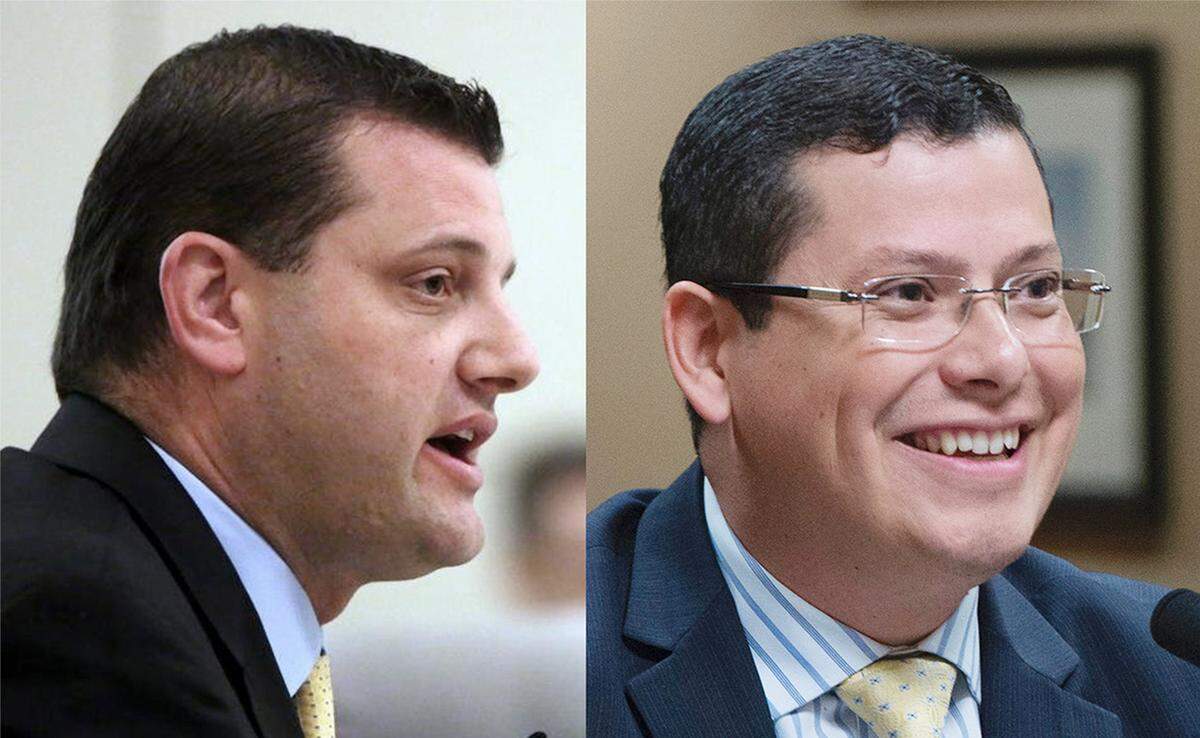
David Valadao is surprised that ER staff want a photo with him. But willing to oblige.
“You’re tall,” one of the Delano health care professionals says, staring upward with smiling eyes and a laugh. “I get that a lot,” the 6-foot-4 Republican congressman says. In a button-down and dark khakis, he towers over most of the nurses, interns and staff.
He thanks them for their work and asks what they need, what they’re struggling with.
Really Valadao, 45, could be a reporter with the number of questions he has for Adventist Health leaders, telling them it’s been a while since he’s been here. Around every corner, “how much is the cost to make a new bed? How many people come in here per week? Where are interns coming from and how many? Are the physicians local? What can the lab process?”
Kiyoshi Tomono, community partnership executive for Adventist Health in Bakersfield, and Matt Cauthron, the director of community integration for the health care group in Delano, respond with similar enthusiasm as they tour the hospital facilities, just a handful of people in tow.
It’s a quiet day here, not busy. But no one here uses that “b” word because at the flip of a switch, someone could be taking the turn too fast around the ER corner that normally operates at 150% capacity.
Delano is the second largest city in Kern County, behind Bakersfield, and one with a hospital. Small streets surrounded by farmland trail the area around the campus, which was recently equipped with an early-detection cancer screening center. Kern County has some of the highest rates of cancer and obesity in California, Tomono and Cauthron explain.
And some of the poorest workers. Delano is mostly home to farmworkers, who can’t afford the healthy food that they grow. That’s why Adventist has a three-acre community garden, so kids can learn to grow and eat their own healthy food. They have mobile health care units to try to prod people who wouldn’t normally go to a doctor to see one.
Valadao focuses on agricultural issues that he knew well as the son of a dairyman who became one, and talks about the health care needs with a humble smile, a quiet voice but assertive tone. Now he’s running between events — this one started before 8 in the morning — and behind. He takes a final photo before the next congressional duty.
This story was originally published October 19, 2022 at 5:00 AM.