Measure G explained: Why Folsom is asking voters for a tax increase in this election
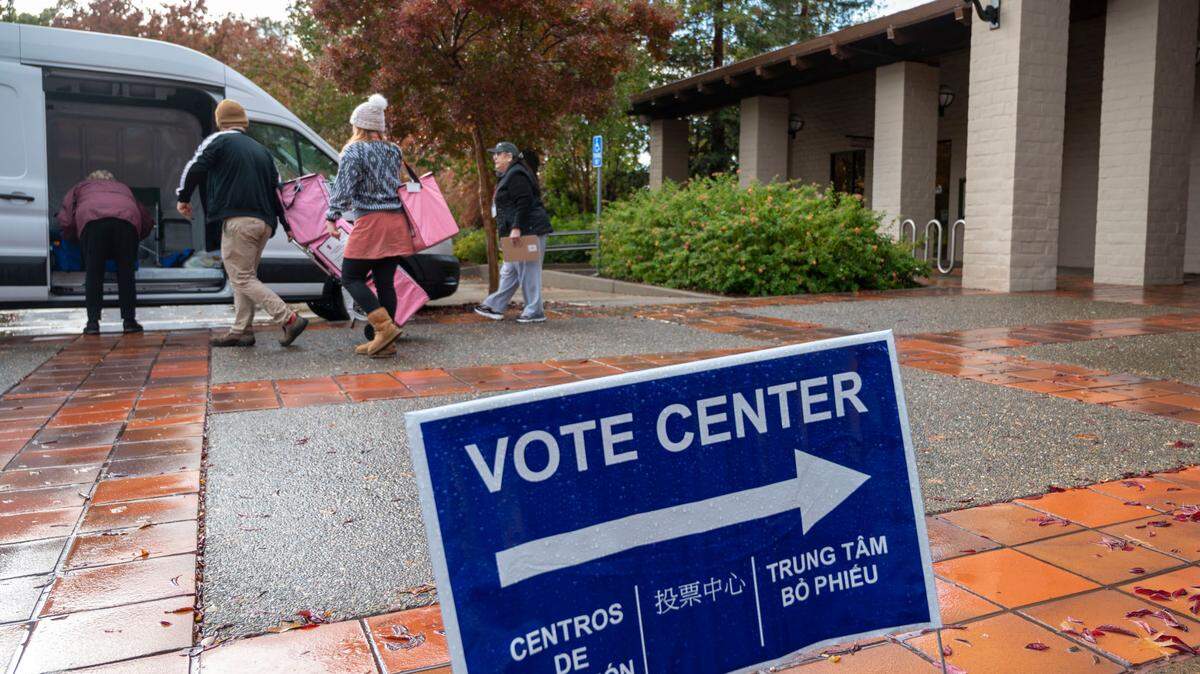
A ballot measure in Folsom has residents divided over whether their city should increase its sales tax by 1% or risk cutbacks to city services.
Opponents have cast the proposal as unnecessary and argue that Folsom could stand to cut costs. Proponents say it’s an essential investment to bridge the gap between stagnant revenues and rising costs — and to allow the city to continue providing the services that keep the area vibrant.
“I want my city to be the best it could be. And that takes investment,” Jim Snook, co-owner of Snooks Candies & Chocolate Factory, said on a recent afternoon at his storefront on Sutter Street.
As he spoke, two workers crouched nearby on the flat, square stones, each man equipped with a pair of knee pads and a bottle of stain. They moved across the surface, coating the grout lines that intersect the floors.
Snook was making an investment of his own: Once the floors were completed, the storied Folsom confectionery would expand into a second storefront with more retail space, tables and a chocolate enrobing machine.
“I just feel like if you don’t invest in your own business or community, how do you expect to get the results that you want?” he said. “That’s why I’m getting the floors done … You don’t get anything back if you don’t put something forward.”
Come November, voters across the region will weigh in on sales taxes that fund a wide range of city services, from road repairs to libraries, city services and parks.
In Placer County, voters in Roseville, Rocklin and Lincoln will vote on a 30-year, half-cent sales tax increase to support road and highway improvements, and Loomis residents will decide whether to extend an existing quarter-cent sales tax that funds the city library. In Yolo County, voters in West Sacramento, Davis, Winters and Woodland will consider 1% sales tax increases to fund a broad array of city services.
At least in Folsom, a contingent of residents are skeptical.
David Doherty, co-founder of the No on Measure G movement, believes the city could become more efficient. Plus, a 1% sales tax may not seem like much to people on the higher end of the socioeconomic spectrum, but it would surely hurt those who make less.
Like Snook, his views are informed by his experience in business. Doherty serves as CEO of Stanfield Systems, a local tech firm, and in 2007 he was part of a group that founded Folsom Lake Bank, months before the Great Recession. To weather the crisis, he recalled, raises were halted. Vacant positions went unfilled. Employees took on extra responsibilities.
“Prices still went up. Insurance still went up. All these things kept going up,” Doherty said. “But we had to maintain costs.”
Today Folsom’s shoppers pay 7.75% in sales taxes, the revenues allocated among the city, the county and the state. The additional 1% tax would raise the cumulative rate to 8.75%, matching Rancho Cordova, Sacramento and Elk Grove.
How did we get here?
Proponents of the sales tax say Folsom faces a structural deficit. Inflation, they say, is boosting the costs associated with operating a city, and key revenue sources like property tax aren’t keeping pace.
“There is a real fiscal problem,” said Bruce Cline, co-chair of the Measure G campaign and Folsom’s former city attorney. “It needs to be solved if we’re going to keep this city vibrant.”
Mayor Mike Kozlowski said the city cut around $500,000 in services last year. This year, he said, the gap is expected to grow to around $1 million. Folsom has changed the cadence of grass-cutting, pothole-filling and trail maintenance. The city, he said, has had to curtail “around the edges” of many city services, and has been unable to expand services in the way some would like to.
“We’ve tried to be careful and judicious with the money, but now we’re to the point where the next round of things that we stop doing, people will notice,” Kozlowski said. “Folsom is extremely attractive to businesses. It’s extremely attractive to new residents. But when we start making cuts that become obvious, it becomes less attractive to both, and the overall vitality of the city starts to diminish. And we want to avoid that.”
Dan Carson, the Folsom unit representative for Sacramento Area Firefighters Local 522, said that since 2008 the fire department has lacked a Type 1 fire engine — the category typically used for medical calls and house fires. During a shift Saturday night, he said, he waited three to four additional minutes for such an engine to arrive to a fire.
One of the main arguments against the tax is that the amount Folsom would collect — projected at $29 million annually — exceeds the expected shortfalls.
Councilwoman Anna Rohrbough said the city would have been better served by a half-percent sales tax increase. Still, she said she’s remaining neutral on Measure G. If it fails, she doesn’t expect any significant cuts in services. If it passes, the money will be invested in valuable priorities, like economic development.
Kozlowski, the mayor, argued that the gap between revenues and costs is expected to grow progressively larger with time.
“Inflation’s not going to stop. This flattening in revenue — there’s no apparent end in sight to that,” Kozlowski said. “So yes, in 2025 it’s a very generous amount of money that will be collected if the tax passes, and we probably only have to have a portion of that. But five years from now, it will be absolutely necessary to have that kind of cushion in our revenue.”
Where would the money go?
Gary Qualset, a CPA who serves as treasurer for Citizens Against Folsom Tax Initiatives, said he thinks the city could address the expected shortfalls through more modest means, like raising occupancy taxes for hotels and short-term rentals, or pushing the state for a larger allocation of online sales tax.
The Howard Jarvis Taxpayers Association has also opposed the measure, and argues that the sales tax should require approval by two-thirds of voters, rather than a simple majority.
The sales tax has the backing of Folsom’s chamber of commerce. Board Chair Mark Bahouth, normally a skeptic on tax increases, said he was swayed after hearing about the sales tax revenues the city misses out on due to the growth of online retail, and after considering the quality of life he’s enjoyed over his years in Folsom.
“We love the quality of life we have in the town, and we just don’t want that to unravel,” Bahouth said. “For me, I’m willing to pay an extra penny.”
Plus, he’s hopeful about the possibilities the money could open up for economic development.
The language of the measure would require Folsom to dedicate 20% of the tax revenues to policing and crime reduction, 20% for fire and emergency medical services, 15% for parks and trails, 15% for traffic mitigation and water quality, 15% for major capital improvement projects and 15% for economic development.
Some in Folsom believe the central business district along Bidwell Street could be revitalized, said Cline, the former city attorney. And the funds could be used to incentivize businesses to move to Folsom — rather than Elk Grove or Roseville — by covering some of the fees those companies would otherwise pay.
The tax requires approval by a simple majority of voters. It would take effect April 1.
This story was originally published September 26, 2024 at 7:00 AM.