Your guide to California’s 3rd Congressional District primary race
California’s primary for the 3rd District Congressional seat features seven candidates jockeying to represent a previously Republican-leaning district that may swing to the Democrats after redistricting in 2025.
The district was a direct target of California’s Proposition 50 push to rebalance the House in response to Republican gerrymandering, and the current representative — Rep. Kevin Kiley, who caucuses with the Republican Party but switched to identify as an independent in March — will run in the 6th District this year. The district has been chopped up, dropping local Republican strongholds in Roseville and Lincoln and picking up staunchly blue-leaning areas, most notably by expanding into Sacramento.
Another sitting member of the House — U.S. Rep. Ami Bera, D-Elk Grove, who currently represents the 6th District — appears to be the frontrunner in the new 3rd District race and has raised the most money by far.
EDITORIAL BOARD’S PICK: Read The Bee’s endorsement for California’s 3rd Congressional District.
Where is the 3rd District?
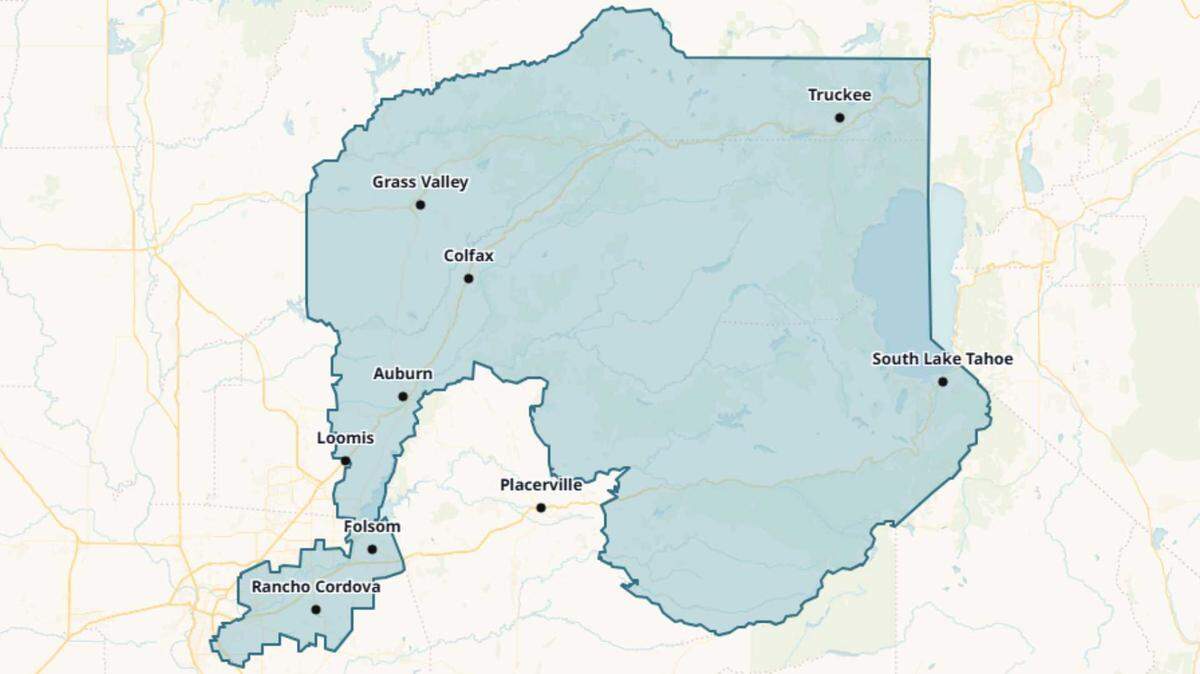
The recently redrawn 3rd District covers Nevada County and much of El Dorado County; communities around Lake Tahoe, as well as other parts of Placer County will also vote in the race. A narrow swath of the district now stretches into the southeastern part of the California capitol, so residents of south Sacramento neighborhoods will also have a say at the polls.
Before redistricting under Prop 50, the eastern California district stretched from Death Valley to Chester — southeast of Redding — and included Placer County, parts of Sacramento County and much of the Sierra Nevada.
Who are the candidates?
The Democratic candidates are Chris Bennett, Bera, Lyndon “Pacey” Cervantes and Heidi Hall.
Christine Bish and Robb Tucker are running as Republicans. Laura Koscki, a Republican, and Chris Richardson, a Green Party candidate, are also set to appear on the ballot, though Koscki does not appear to be campaigning, and Richardson was not listed on the Federal Election Commission’s fundraising list.
Bera is the only candidate with experience as a federal politician. After a career as a practicing physician, he became the chief medical officer for Sacramento County, and has served in the House since 2013, where health care access has been one of his major issues..
Hall lives in Grass Valley and has been a Nevada County supervisor since 2017. She has said that, if elected to higher office, she wants to end tax loopholes for billionaires and push to build more housing. She also said politicians need to enshrine abortion rights at the federal level.
Bennett is an Army veteran and a Sacramento County resident with an MBA who has said on his campaign website that he quit his tech sector job to run for Congress. His campaign has focused on affordable housing and affordable groceries.
Cervantes is a radio personality who is campaigning on a platform to lower health care costs and tax the wealthy. He has also said he wants to turn utilities such as PG&E into community-owned organizations.
Like Hall, Republican candidate Tucker is a Nevada County supervisor, though he just started his term on the Board of Supervisors in January 2025. He’s been endorsed by Kiley and former Sacramento County Supervisor Sue Frost. As of April 9, the Federal Election Commission had not reported any fundraising disclosures by Tucker, and it was not clear whether he had raised any money.
Bish, a realtor, has highlighted issues of “parents’ rights” in her campaign. She is an advocate for school vouchers that allow money for public education to be diverted to private schools.
Who is funding the race?
Bera, the most established politician in the group, has the largest cash reserves, with 1.7 times as much money raised as the second-place fundraiser, Hall. The most recent FEC filings from April show Bera with $858,000 in net contributions, Hall with $457,000, and all the other candidates with $125,000 in net contributions or less.
The biggest single business contribution to Bera’s campaign was from the Bank of Stockton, which gave almost $30,000. Twenty political action committees — many of them focused on issues related to health care or agriculture — each gave $5,000.
Unlike Bera, Hall has said her campaign is refusing corporate PAC money.
Hall received the most money from ActBlue, a Democrat PAC and fundraising platform that gave multiple donations adding up to more than $40,000. ActBlue also gave money to Bera and Bennet. Hall’s biggest contributor is herself: She has loaned or given at least $27,000 to her campaign.
The other candidates in the races have raised sums that are paltry in comparison to Bera and Hall. Like Hall, Bennet, Bish and Cervantes were each their own biggest donor at the end of 2025. Tucker and Cervantes each raised less than $100,000.
The Sacramento Bee Voter Guide has additional information on statewide, congressional, legislative and local races. To find races in your community, go to sacbee.com/voter-guide.
This story was originally published April 21, 2026 at 4:00 PM.