California converts public buildings into affordable housing. Lawmakers want more
After Gov. Gavin Newsom ordered state departments to clear homeless encampments on public property, a persistent question remains: Where are people who live in those spaces supposed to go?
That was the question Assemblywoman Sharon Quirk-Silva posed during a Wednesday legislative hearing to update lawmakers of the ongoing effort to create more affordable housing from repurposed state properties.
“We need a holistic approach, permanent housing, mental health services, substance abuse treatment and job training programs,” the Fullerton Democrat said. “We must leverage all available resources and develop a comprehensive long-term strategy to not just move people but to help them rebuild their lives.”
Since 2019, California has been in the process of repurposing public properties, the result of an executive order from Newsom aimed at addressing the ongoing affordable housing crisis. With the approval of Proposition 1, which will put $6.4 billion in bond money toward expanding housing and treatment beds for those with mental health issues, the state is pursuing multiple options to increase housing supply in California.
The state has completed one project since Newsom first sought to convert excess public buildings into housing, the 58-unit Sonrisa Affordable Housing Project at 13th and O streets in Sacramento, which is now home to over 70 low-income residents, said Danielle Foster, the executive director of the Capitol Area Development Authority.
Three other developments are under construction in Reedley, Riverside and South Lake Tahoe, Jason Kenney, chief deputy director of the Department of General Services, told lawmakers. Kenney said the South Lake Tahoe property will contain between 60 and 80 units and is scheduled to be completed by the end of the year.
In addition to the three projects under construction, DGS reported that 16 projects are in the development phase.
In an initial review of 44,000 state-owned parcels, DGS found 114 sites that have no current or future use to the government and could be converted to housing. But one year after Newsom’s executive order, the number of vacant buildings expanded, after the COVID-19 pandemic forced many state workers to transition to hybrid or work-from-home schedules.
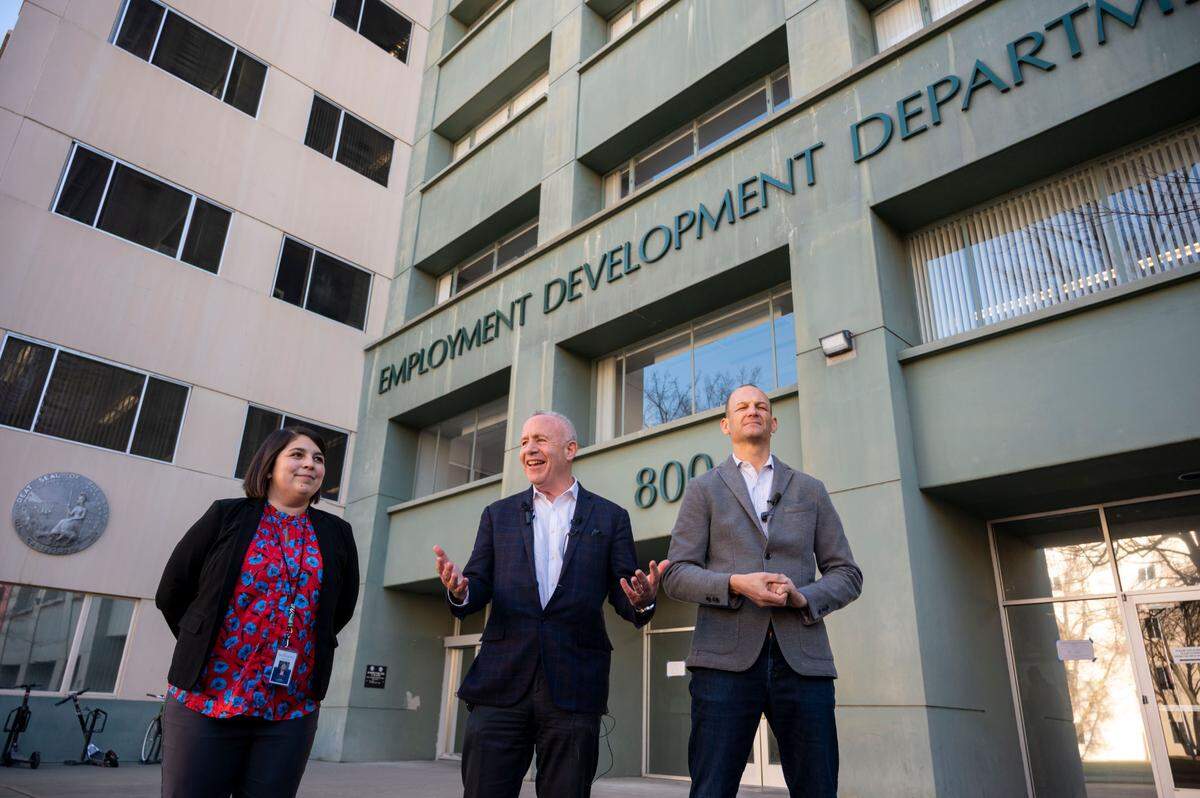
That includes three other public buildings in Sacramento that could be converted to housing. Those include the Employment Development Department building at 800 Capitol Mall, the EDD Solar Building at 751 N St. and the state Personnel Board Building at 801 Capitol Mall. Last year, the state contracted the St. Louis-based developer McCormack Baron Salazar, to take on those conversion projects.
Looking to convert even more state-owned buildings, Assemblyman Kevin McCarty, D-Sacramento, authored a bill in 2022 that required DGS to deliver to the Legislature a streamlined plan for how to transition underused office spaces into affordable housing.
DGS identified three more eligible properties: the office buildings belonging to the California Department of Social Services at 714 and 744 P Street in Sacramento; the Hugh Burns State Building at 2550 Mariposa Mall in Fresno; and the California Tower at 3737 Main Street in Riverside.
Kenney said these properties are still being used to some degree and are not in the pipeline for redevelopment yet. But as state workers return to in-person work and departments determine their need for office space, these properties could eventually become available for development, he said.
The California Department of Housing and Community Development has pledged $123.5 million in grants to match local government funding of development projects to speed up the overall process.
“I really see this as us having skin in the game, as a state,” said Megan Kirkeby, deputy director of Housing Policy Development at HCD. “You’re always going to need multiple financing sources to make affordable housing development come together.”
At the hearing, lawmakers also discussed how to leverage some of Proposition 1 bond money to address homelessness among target populations.
Jennifer Seeger, a deputy director of financial assistance at HCD, said nearly $2 billion of that money would be used to build upon the existing state program “Homekey,” which converts buildings such as hotels, motels, residential facilities and commercial properties into permanent housing. The money for “Homekey Plus,” as Seeger referred to it, would be allocated to develop housing specifically for veterans and people with behavioral health issues.
This story was originally published August 8, 2024 at 8:55 AM.