Bill seeking to close California state workers’ pay gaps has final hurdle: Gavin Newsom’s desk
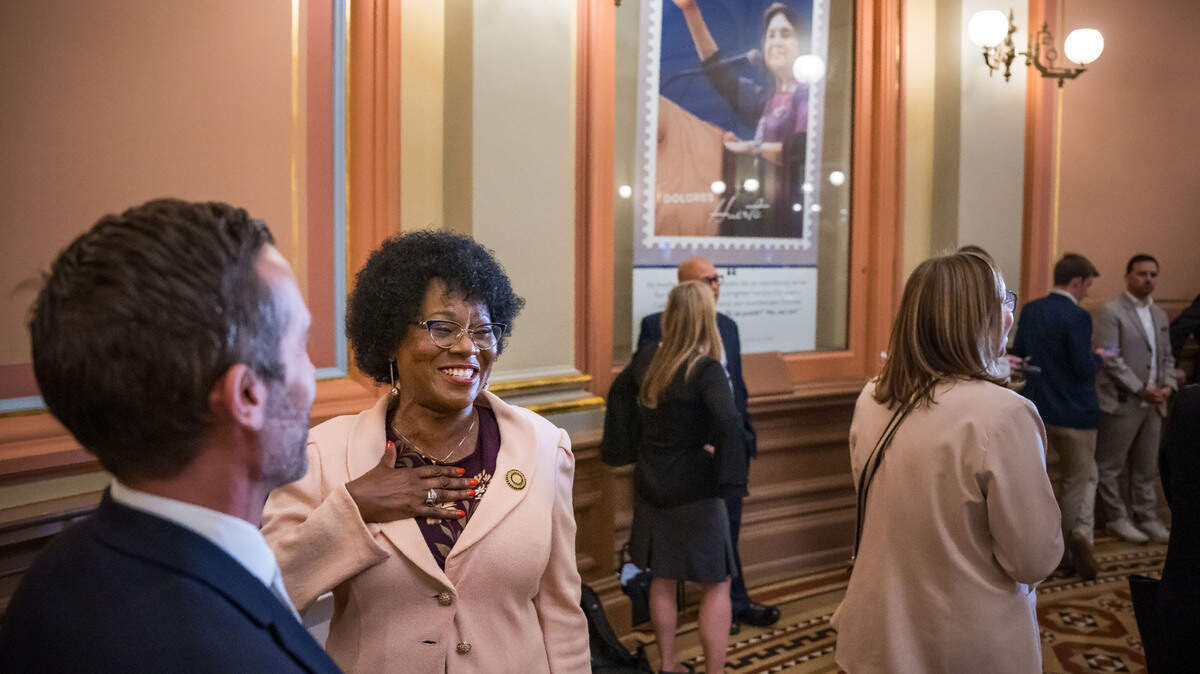
For years, some female employees of the state of California have worked alongside men, performing nearly identical work while earning up far less.
That assessment is the basis of a bill passed by the Legislature this week that would require California to study gender pay equity at the state and adjust civil servants’ salaries to close wage gaps.
But according to analysts’ estimates, the bill’s has significant price tag, though the exact amount is unknown. During a massive budget shortfall, that cost may present an insurmountable hurdle before the legislation becomes law. Recently Gov. Gavin Newsom has vetoed other broadly-supported but costly bills this session, citing the tight budget.
For the second year in a row, Assemblywoman Tina McKinnor, an Inglewood Democrat, has successfully navigated a bill to address pay inequities impacting state workers through both chambers of the house. Last year, Newsom vetoed her bill, saying it would undermine collective bargaining — an issue could prove to be another obstacle to the 2024 bill.
The exact scope of pay inequities among civil servants isn’t clear, though the state has made efforts to address gender pay gaps. In 2022, the governor announced the California Equal Pay Pledge, which sought to achieve equal pay across the state’s workforce.
Yet, McKinnor said, the issue remains, with the starkest examples of gender pay disparity existing between state engineers and scientists, the Inglewood Democrat said.
Earlier this year during a Senate committee hearing, the California Association of Professional Scientists explained that its predominantly female-members have historically been paid up to 40% less than their engineering counterparts, who belong to a majority male bargaining unit, though the groups perform similar work.
“Providing equitable pay is essential for promoting gender equality, attracting and retaining state employees and enhancing the state’s ability to be the employer of choice,” said McKinnor during the Senate committee hearing.
On Monday, McKinnor’s 2024 version of the bill passed the Senate, putting the issue back on Newsom’s desk.
Assembly Bill 2335 would explicitly require California to similarly compensate civil service jobs with comparable responsibilities.
Among other requirements, the legislation would require the California Department of Human Resources to study the salaries of public employee classifications in bargaining units where women and minorities are overrepresented, and report any pay gaps across gender or ethnicity. CalHR would also study pay equity for positions across state civil service, the private sector, and other public employers such as the federal government.
In the event salary adjustments are needed, CalHR would be required to negotiate with bargaining units to close those gaps. The state would also be required to compensate employees retroactively to compensate for historical pay gaps that have persisted for years.
McKinnor said she resurfaced the issue after Newsom’s veto because the state continues to lose scientists to the private sector and other public employers.
“I don’t think that we should hold back paying our scientists, who we’re going to need especially in this climate, right when we’re just getting out of COVID,” McKinnor told The Sacramento Bee.
The Department of Finance opposes the legislation, citing the unknown, ongoing and significant cost. A bill analysis released earlier this year estimated CalHR would need $1.9 million to conduct the pay studies and meet the other requirements of the bill. The finance department did not provide an exact cost for the salary adjustments but it did hint at how much the additional salary expenses would inflate the budget.
“For illustration purposes, a one percent increase in annual compensation for state employees would result in costs of $368 million,” the department’s bill analysis read.
The finance department additionally opposed the legislation on the grounds that it would eliminate California’s ability to negotiate salary increases for state workers through the collective bargaining process. When he returned McKinnor’s unsigned bill, Newsom wrote that legislation “effectively circumvents the collective bargaining process.”
Newsom’s office told The Bee that the governor evaluates the merit of legislation once it reaches his desk.
This story was originally published August 29, 2024 at 12:47 PM.