
California state workers have returned to downtown, but they’re leaving their dollars at home
Five years ago, K Street in downtown Sacramento was a lively pedestrian area, with tens of thousands of employees descending from the capital region every weekday to work in government offices in and around the Capitol. The workforce’s reliable presence helped support restaurants, coffee shops and retail businesses that made up the bustling downtown.
Then COVID-19 hit — and downtown business ground to a halt.
In the years since, things have opened up. People began trickling back into offices downtown. This summer, per an order from Gov. Gavin Newsom, state workers returned downtown at least two days a week. But the bustle associated with K Street before the pandemic has not fully returned.
“We still don’t have the same level of state workers that come by consistently,” said Katie O’Reilly, a manager at Capital Books on K and 10th streets. “I don’t think they’re spending as much money downtown either now that they’re back.”
O’Reilly said weekday foot traffic from public employees was part of the reason the independent bookstore opened on K Street. But now, weekends are the store’s busiest days.
Business owners across downtown echoed the sentiment. While the economic outlook looks better today than it did when workers were fully remote, the partial return of state workers has not resolved the challenges downtown businesses are facing.
“I think that it exposed the vulnerability downtown had in many respects, with being so overly reliant on the public-sector workforce,” said Scott Ford, Downtown Sacramento Partnership’s deputy director. The organization represents property owners in the 66 block area spanning from Old Sacramento on the west to 16th Street on the east.
While the public sector is a great foundation, Ford said, it can’t be the full extent of the Sacramento region’s economy.
Substantial economic losses
Prior to the pandemic, state workers contributed almost $3,000 a year on average to downtown Sacramento’s economy, a 2023 study of the economic impact of the state’s telework policies by the consulting firm Varshney & Associates found.
With roughly 70,000 workers coming into the city’s center Monday through Friday in 2019, the study concluded that Sacramento would suffer “substantial economic losses” if pandemic trends continued.
Business owners who have been closely tracking their bottom lines this year hoped the return of the public workforce would result in a bump this summer. While some has seen some gains since June, multiple businesses said the uptick has been marginal.
“It might be that they are making food at home and packing lunches,” said Erik Freeman, CEO of Jimboy’s Tacos, whose downtown locations saw significantly more lunch traffic prior to the pandemic.
Of the taco restaurant’s 40 locations scattered throughout California and Nevada, the two downtown restaurants have been the slowest to recover. Freeman estimated the sales of those two locations are between 15 and 30% below 2019 levels.
Freeman noted that there is a certain “gravity” lacking from downtown. In effect, the presence of state workers around Capitol Mall draws even more people to eat, shop and recreate in the area. The presence of public employees downtown only two days a week hasn’t been enough to boost sales, business owners said.
Cell phone data shared by the Downtown Sacramento Partnership revealed that daily visits to the area represented by the organization declined by more than 50% in and around the Capitol Mall between 2019 and the past year.
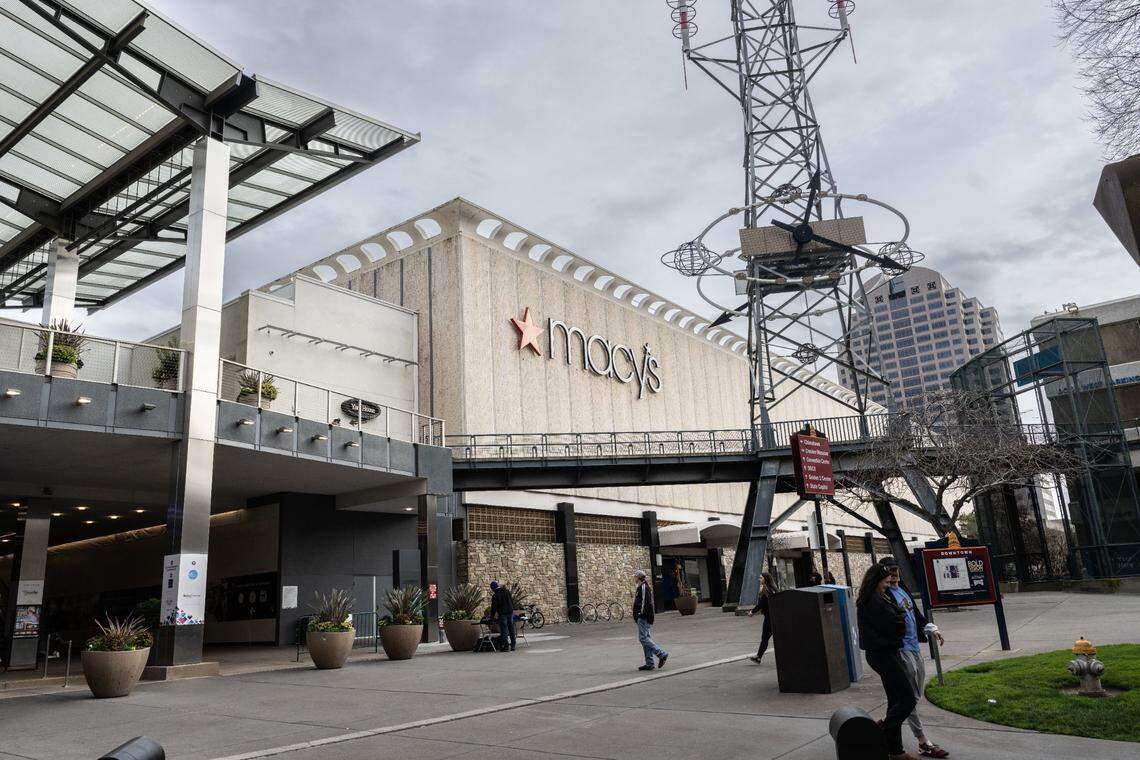
Retail occupancy is also down significantly from 2019, according to the partnership. Earlier this year, a business leader threatened the downtown Sacramento Macy’s would be the next to close after the department store shuttered its San Francisco location.
“There’s no doubt that either the foot traffic needs to increase or rents need to decrease for it to make sense for new businesses to come in,” Freeman said.
The mayor’s message
Two years ago, as lockdowns were lifting and life was beginning to resemble pre-COVID-19 times, Sacramento Mayor Darrell Steinberg stood before an audience of hundreds and delivered his “State of Downtown” speech. The mayor told attendees at the Safe Credit Union Convention Center how the city was hoping to help struggling businesses get back on their feet.
“I will shout to the rooftops to the governor and to other state leaders that the state should bring all of their state workers back downtown,” Steinberg said.
More recently, the mayor’s message has shifted.
“While the return of part-time return of state workers has been very helpful, it’s important to recognize that Sacramento is far more than just a government town,” Steinberg said in a statement.
Asked if he had ever asked the governor’s office to bring state workers back into Sacramento offices, Steinberg said, “I have always been consistent in my communications that state workers returning to the office several days a week both respects the need for worker flexibility and provides our downtown and its businesses with more support during a challenging time.
The mayor said Sacramento should not return to the city’s pre-pandemic identity. Instead, the capital should embrace a mixed-use district that is home to residential buildings and entertainment venues, he said.
In February, the mayor wrote in an opinion piece that investments in downtown were transforming the area, attracting visitors to the Golden 1 Center and the Old Sacramento Waterfront.
“Our new downtown will be the place state workers come because they want to, not because they have to,” Steinberg wrote earlier this year.
Downtown’s future
Both candidates for Sacramento’s next mayor agree with Steinberg’s call for more mixed-use development downtown.
Assemblymember Kevin McCarty has been a strong proponent of converting state-owned buildings into housing. His opponent Flojaune Cofer hopes to incentivize individuals to create pop-up stores or events in downtown spaces that are on the market and vacant. Cofer and McCarty have both advocated for attracting universities to Sacramento’s downtown.
In this respect, business and city leaders are aligned on downtown’s future.
Sacramento can help prevent future downturns, Ford said, by embracing mixed-use development, which combines office, retail and residential spaces. Ford said more private-sector businesses, higher education and housing — at all levels of affordability — would help diversify downtown Sacramento’s economy.
“We need to recognize that the world has changed, but it gives us an opportunity to evolve Sacramento into something stronger,” Ford said. “If we collaborate, if we act with a sense of urgency.”
This story was originally published October 28, 2024 at 2:34 PM.
