Back in offices, California state workers’ parking frustrations returned as state revenues surged
When Lacy Bauer started working for the state of California nearly two decades ago, it was immediately clear she needed to secure a coveted monthly parking pass.
At that time, monthly passes were awarded on a first-come, first-serve basis. Parking administrators posted available spots outside one of the main state-owned lots on O and 10th Streets once a month. On the advice of coworkers, Bauer set up camp outside the 10th street garage at 9 pm on a weekday in August 2008 to guarantee she would secure one of the available permits.
“I had a four-month-old son at the time and my husband brought him in the middle of the night for me to nurse him,” the Department of Fish and Wildlife attorney said.
The experience reflects the lengths some state workers will go to avoid the headache that comes with parking downtown, which continues to frustrate employees who drive to work 16 years after Bauer camped outside a garage. State employees’ partial return to in-person work has resurfaced car commuters’ concerns over the cost and availability of parking since they started coming back downtown.
At the same time, the return of employees to the office this year has contributed to higher-than-normal parking profits for the state, which manages 16 parking lots in Sacramento and a handful of others across California to accommodate its public workforce.
Based on data shared by the Department of General Services, the state made $771,000 in parking revenue for fiscal year 2022-23. The following fiscal year, the revenue increased to $1.15 million — and the first few months of available revenue data from this year suggest the upward trend will continue.
The state is collecting more money, in part, because monthly pass holders don’t come into offices five days a week, meaning the state can charge daily parkers who fill empty spots.
Another driver of parking revenue this year came from the opening of the May S. Lee State Office Complex, DGS said. The sprawling state facility added over 1,600 spots to state employees — 80% of which are held for monthly pass holders, according to the department.
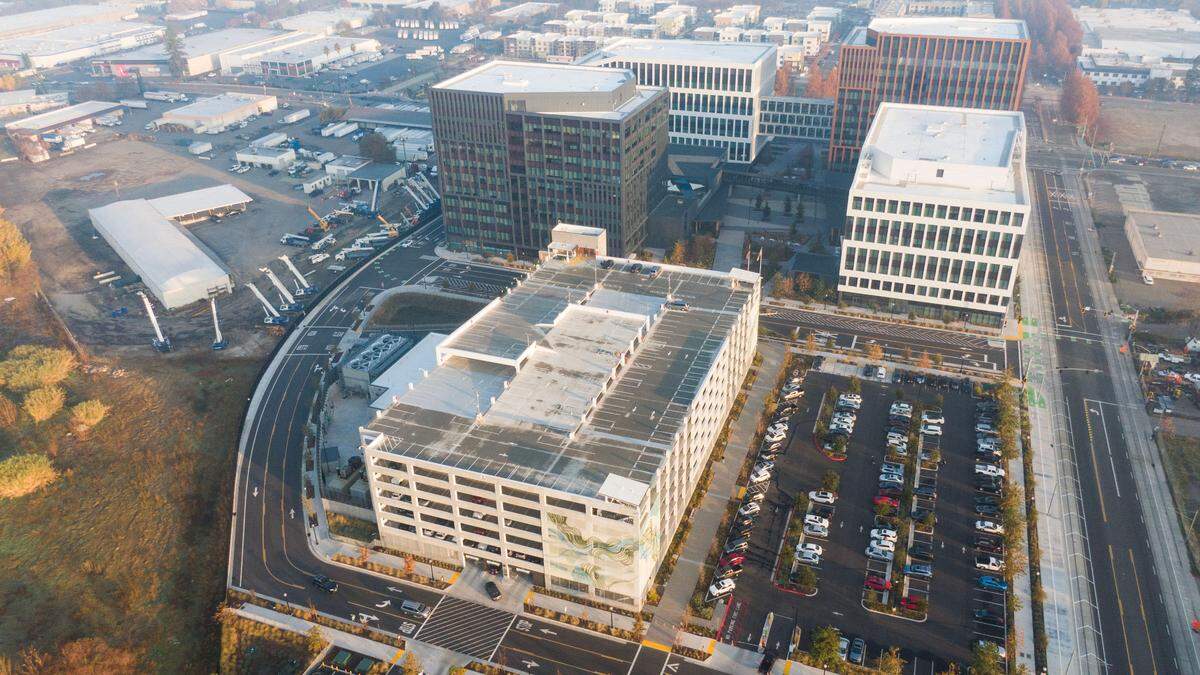
While state-operated garages serve the needs of thousands of parkers on a daily basis, other drivers must find private lots or limited street parking. The challenges and costs associated with those options further frustrate workers who are already unhappy with having to pay to park and come into the office.
DGS said it was proud of the parking options offered to state employees, noting that providing parking is not the state’s responsibility. Given that a monthly parking pass with the state is cheaper than private lots, DGS said this creates more demand than the department can accommodate.
“While we understand the frustrations that some state employees may have in obtaining state parking, our parking services remain a value to those employees who are able to utilize them,” Jennifer Iida, a DGS spokesperson, said in a statement.
More spots means more daily parkers
With hybrid work as the new normal for public employees, the state has made some efforts to ease parking frustrations.
The two days in office schedule of many Sacramento-based state workers means more drivers are looking for daily spots, DGS said. In turn, the department expanded the number of spaces allotted to daily parkers, adding nearly 1,000 spots at the state’s East End Complex and the May Lee Office Complex in the last year.
When government offices shut in 2020, DGS reduced the cap for daily parking from $20 to $8 to better accommodate state workers who drove into offices only a couple days a week.
Public employees noted that the cost to pay the daily rate, twice a week, four weeks a month, is close to the same cost of a monthly pass, $70, but without the in-and-out benefits.
Despite those cheaper parking rates, the state has more than doubled the amount of revenue it makes from daily parking fees in recent months, according to revenue data DGS provided, compared to pre-pandemic months.
In September 2019, prior to the COVID-19 pandemic the state took in over $63,000 in parking revenue for daily tickets. This past September, the state raked in nearly $160,000.
The number of monthly parkers has also ticked up in the last year due to the increase of spots in state-owned garages. DGS did not provide revenue data for monthly parking passes.
The state provided 8,765 monthly passes to garages across California in September 2024, compared to 8,067 passes in September 2019.
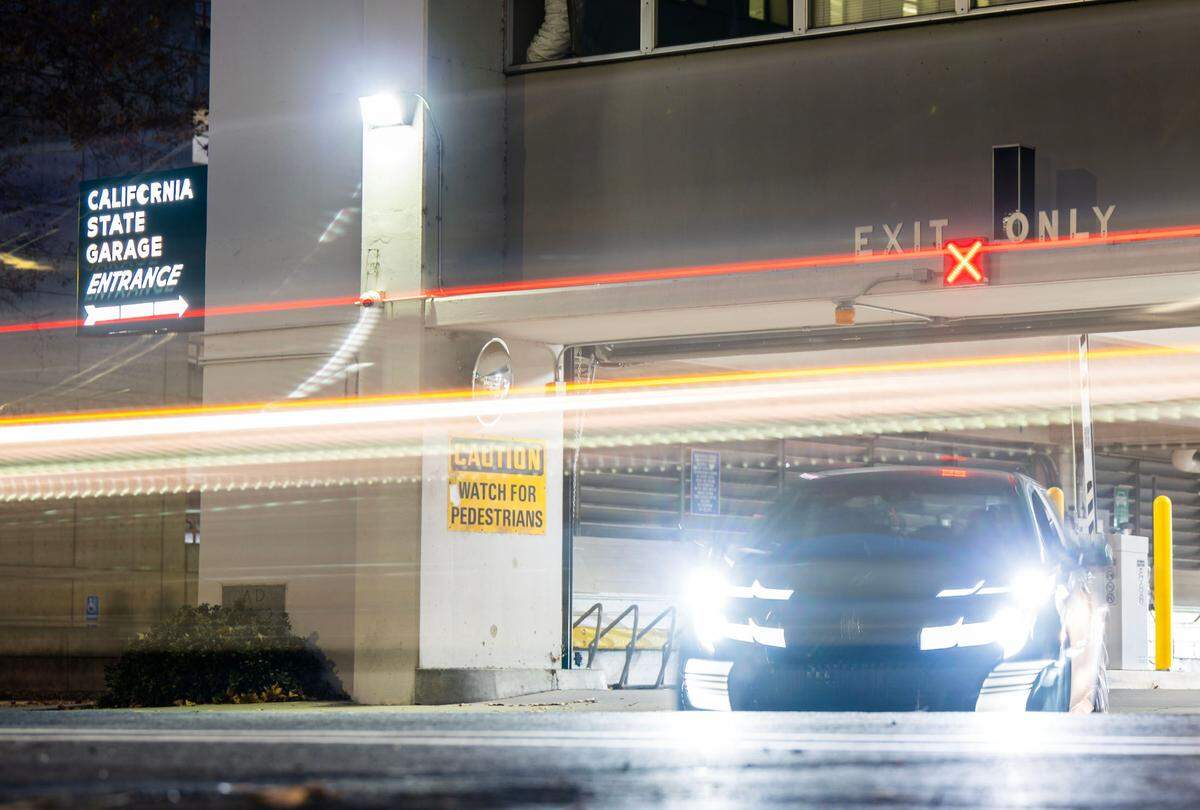
Despite fewer state workers coming into downtown offices during the week, there are thousands of people on the waitlist and lottery vying for one of the monthly parking permits. Some state garages have a lottery system for distributing monthly passes, while others have a waitlist that preferences more tenured employees.
“The parking lottery is in place to prevent preferential treatment and ensure an equitable distribution of parking spaces,” Iida said. She said names are drawn randomly to backfill canceled permits.
Even for hybrid staff commuting to offices a couple times a week, DGS said, monthly parking is still the most popular option.
To ensure monthly pass holders are not crowded out, the department said each garage has daily parking caps to maximize the number of people at each lot.
The state ran into this issue in June when the governor directed departments under his leadership to bring employees back into offices at least two days a week.
A handful of monthly parkers were turned away from their regular garage in June because daily users had filled up the spots. DGS offered to reimburse those employees, but the department said only one person asked to be reimbursed for non-state parking — for which they received $25.
How state workers navigate parking
For those without monthly passes, state workers have a variety of parking strategies.
Some pay for private lots which can cost twice as much as state-operated garages. Other employees hunt for parking on residential streets that only allow non-permit holders two hours of free parking, meaning workers use their breaks and lunches to move their vehicles throughout the day. Another option is to park further from downtown, where there is not parking enforcement, and ride a scooter to the office.
Asked for tips on how to avoid parking headaches, other state employees recommended looking for positions in offices outside of downtown, where parking is plentiful and free.
During the pandemic, when workers were fully remote, many wrestled with the decision to keep, or forgo, a monthly pass they had waited years to obtain: Save money or navigate the other, less-than-ideal parking options.
When Bauer returned to the office two days a week, she hoped to save money by sharing the permit with a colleague that worked in-person on different days of the week. When she asked about this possibility, Bauer said the state told her that it doesn’t have the technology. DGS also said it is department policy to individually assign parking passes.
These frustrations don’t plague all state employees, only those who choose to drive to work.
The state encourages employees to use public transportation through a reimbursement program that entirely covers transit costs for rank and file employees.
The state also offers parking incentives to drivers of zero-emissions vehicles through discounted monthly rates and waitlist priority. (The department said that more than 1,300 drivers of zero-emission vehicles have taken advantage of the benefit.)
Not all employees can buy an electric vehicle or take public transportation. In Bauer’s case, she needs to have the flexibility of a car to pick up her children from school.
Moving forward, Bauer plans to keep her monthly pass, despite only using it a couple times a week.
“I’m not going to give up something that I slept on 10th Street to obtain,” Bauer said.
This story was originally published December 18, 2024 at 5:00 AM.