Thousands of UC employees strike amid contract negotiation stalemate
Thousands of clinicians, researchers and other University of California employees initiated a three-day, statewide strike on Wednesday over concerns about staffing levels and workers’ rights to raise concerns about working conditions.
Employees at UC Davis walked off the job amid stalled negotiations involving the University Professional and Technical Employees and the American Federation of State, County and Municipal Employees. The labor groups say the university is stifling workers’ freedom to organize around affordability issues and staff vacancies after contracts between the union and UC system expired last year.
Sonya Mogilner, a social worker who works in the UC Davis trauma surgery team and who was out picketing on Wednesday, said she had a caseload last week of 120 patients — four times higher than what it should be.
“When it gets that high, it’s really impossible,” Mogilner said. “You’re just triaging and putting out fires. I’m not able to sit with my patients for a long time to really get an understanding of what their diverse and complex needs are.”
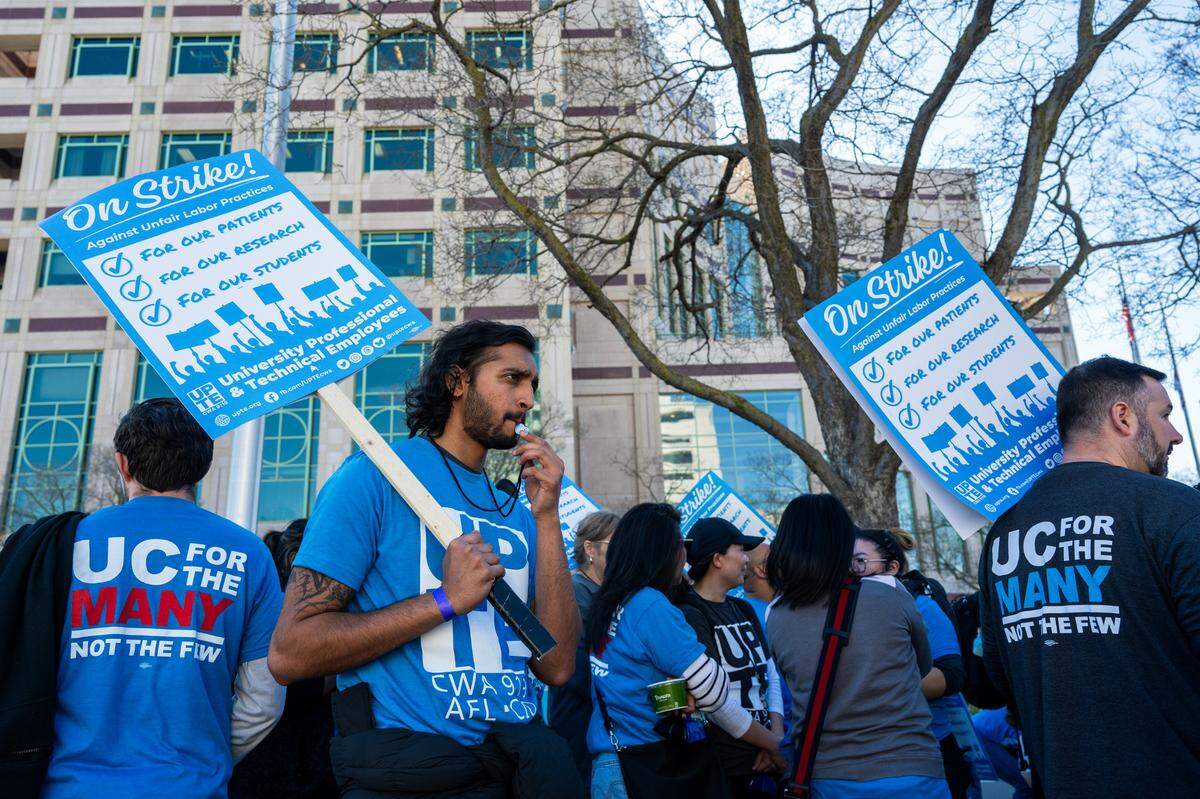
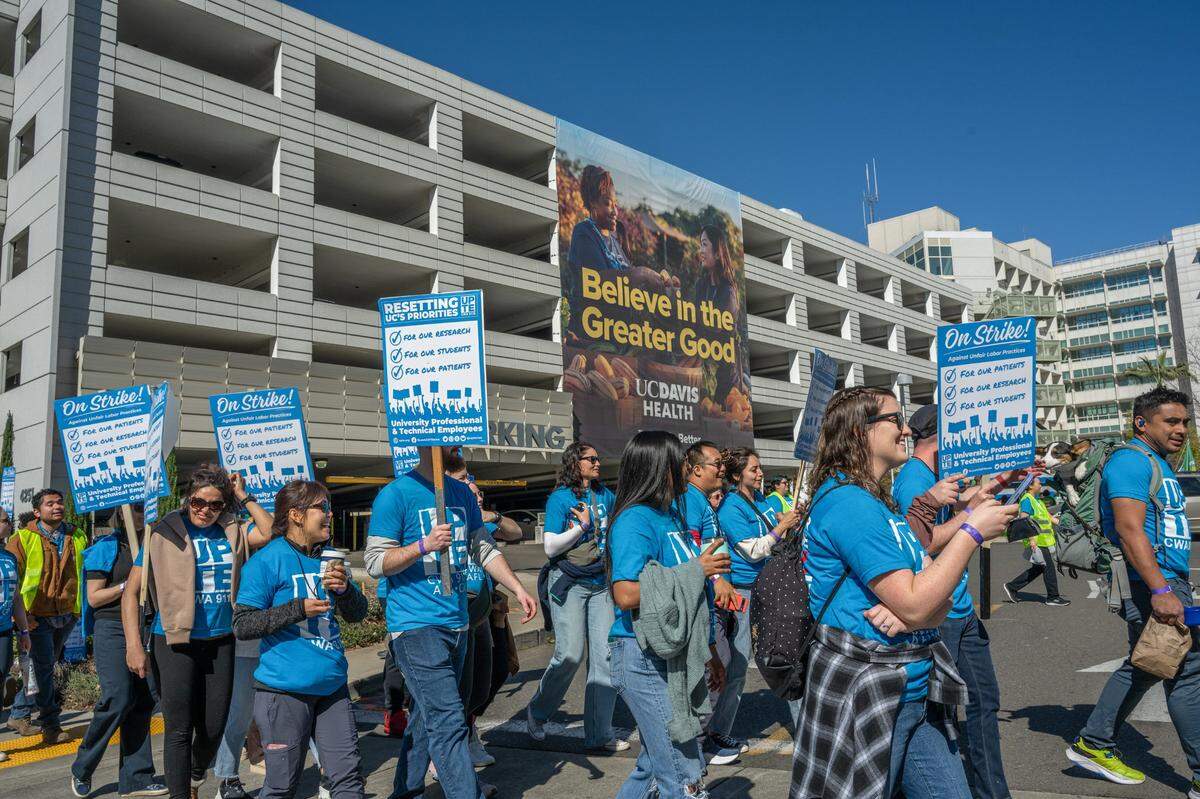
Surrounded by teal-clad union members holding signs that read “On strike against unfair labor practices,” Mogilner said her patients are survivors of mass shootings, car accidents and suicide attempts — some of the most vulnerable people admitted to the hospital. Short staffing has led to patients being unsafely discharged, and in some cases readmitted, she said.
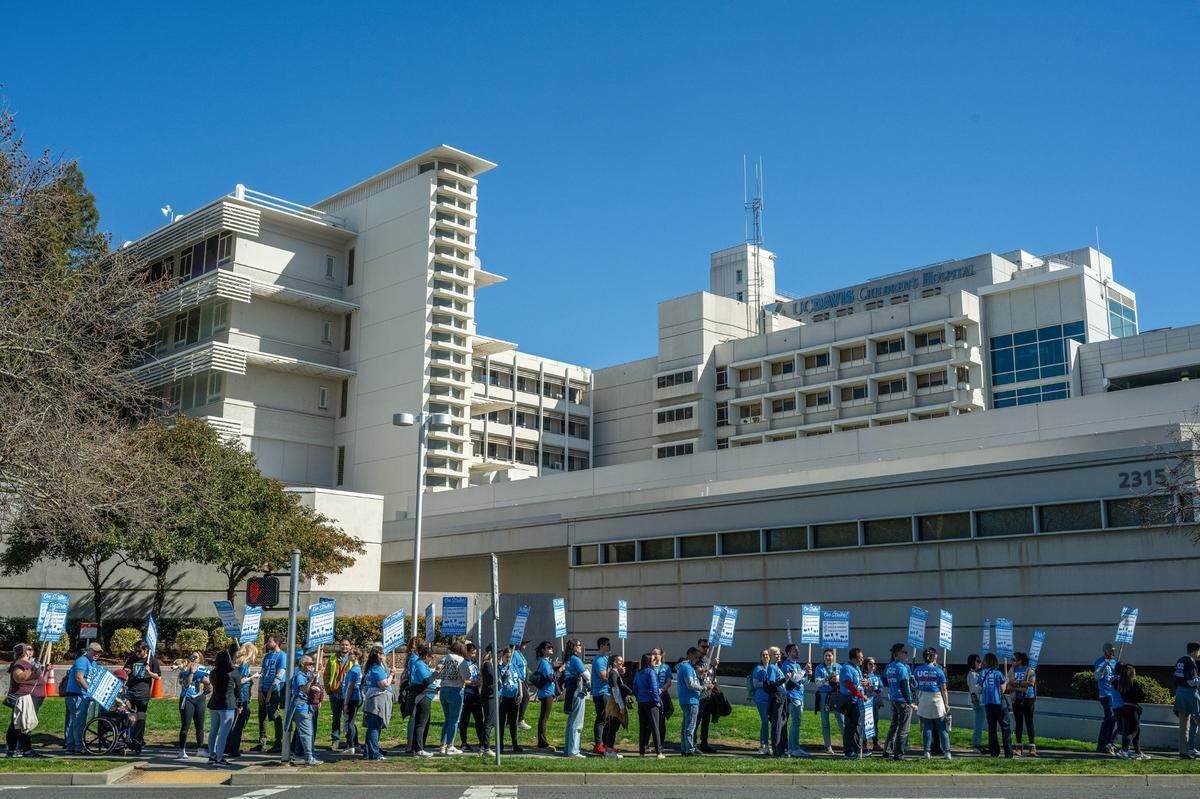
The UPTE represents physician assistants, mental health clinicians, clinical lab scientists, staff research associates and others. AFSCME represents service and patient care workers at UC facilities across California.
The university system said there is no staffing crisis. Heather Hansen, a spokesperson for the UC Office of the President, said in a statement that the headcount for members represented by both members is increasing. The university said it was disappointed in the unions’ decision to strike and would mitigate impacts on patients, students, faculty and staff.
“Both unions have chosen to focus their energy on strike preparation and amplifying misinformation rather than negotiating in good faith,” said a university statement released ahead of the strike. “We have offered each union meaningful wage increases, health care premium reductions and other offers to directly address the issues they’ve indicated are important to their members.”
‘The overtime is just constant’
Joshua Hutchison, an AFSCME member and occupational therapist assistant who has worked for UC Davis for roughly three years, said staffing issues in some departments were such that employees are being asked to come in on their days off to meet the university’s staffing needs.
“The overtime is just constant,” Hutchison said. “And it’s one of the things that is showing that we’re not keeping up with filling our open positions.”
Both UPTE and AFSCME have filed unfair labor practices with the California Public Employment Relations Board over UC rules around where employees can picket and rally. The unions assert these limits on employees’ speech run afoul of state and federal laws.
The university said that it has the authority to set rules about when, where and how people express themselves on UC property.
“These rules are not about silencing anyone or targeting unions,” Hansen said in a statement.
The university has offered UPTE a 5% salary increase across the board and a 3% salary increase for the second and third years of the contract beginning July 2025. It has also offered to increase the minimum wage to $25 an hour for all UPTE-represented employees, starting in July.
Bad faith bargaining
Both sides have accused the other of bargaining in bad faith. The university said UPTE walked away from negotiations last month and AFSCME has not responded to UC’s proposals or counter proposals since May 2024.
Union members said the university representatives have regularly arrived late to bargaining sessions, taken excessively long lunches during negotiations and failed to provide information requested by the bargaining team.
Additionally, Mogilner said the university unlawfully increased health care costs in January, while the union was out of contract, since UPTE’s agreement expired in October 2024.
Sudev Namboodiri, a UPTE member and clinical research coordinator, said the university was bargaining in bad faith by not acknowledging the staffing issues present in university facilities.
Namboodiri said the staffing issues in the university’s neurology department resulted in delays to the whole research process.
“Patients who qualified for certain experimental therapies — because of staffing issues, the backlog was so long — it was just taking forever for them to get the treatment they needed,” Namboodiri said.
This story was originally published February 26, 2025 at 3:35 PM.
CORRECTION: A previous version of this story misidentified the color of shirts UPTE members were wearing.