Get The State Worker Bee newsletter in your inbox
This is a preview of our weekly newsletter. Sign up here to receive exclusive tidbits like this one, as well as a weekly roundup of all our state worker coverage. Email tips to wmelhado@sacbee.com.
Just days before bargaining representatives for the state attorneys’ union were set to sit down with the California Department of Human Resources to negotiate a new contract, the state’s top boss threw a wrench in the gears.
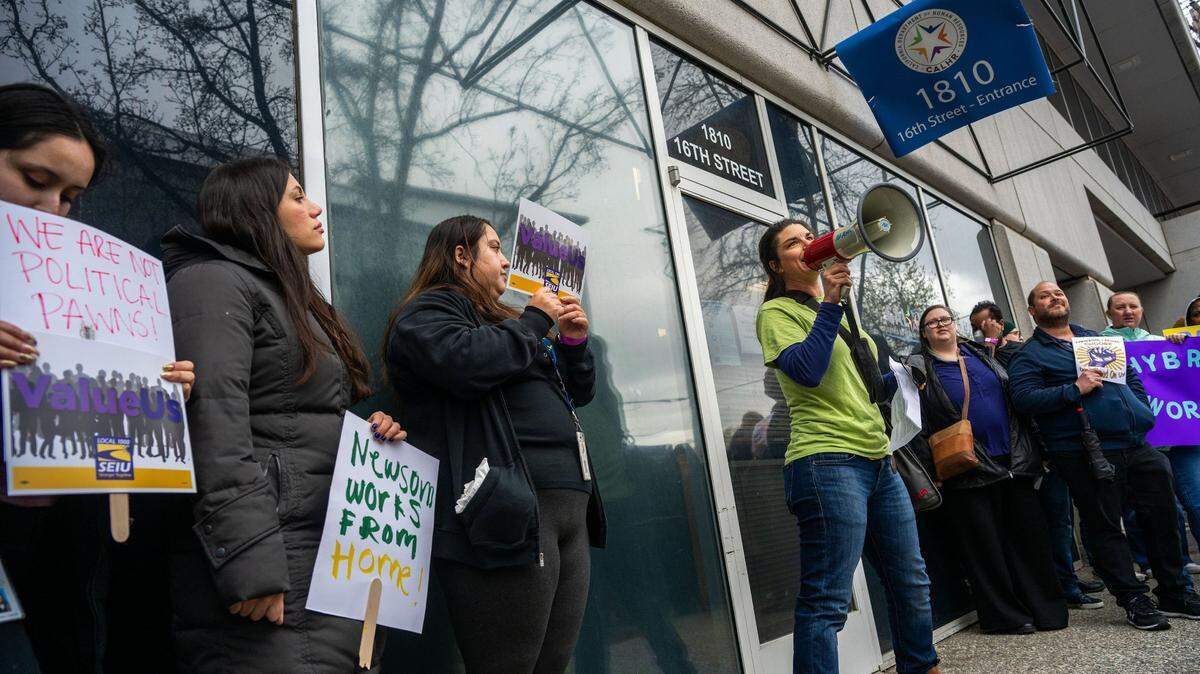
The issue of telework policies, which several unions negotiating new contracts this year planned to bargain over, was being set unilaterally by Gov. Gavin Newsom, labor groups argued.
The order directed departments under Newsom’s administration to bring eligible state employees back to offices four-days a week, leaving little room for negotiation.
Tim O’Connor, the president of the state attorney union, said the unexpected news “definitely altered the course of bargaining.”
Now, one month into negotiations, unions prioritizing telework have to walk a fine line between members frustrated with the revocation of remote work privileges and the Newsom administration’s hardline stance on the issue.
On top of that, unions still have to negotiate sufficient salary increases such that members will ratify the contract when the parties reach a tentative agreement.
O’Connor said the administration’s abrupt policy change around hybrid work has heightened the sensitivity of other issues the union is negotiating with the state, such as salaries.
“Even though it is a telework mandate, you can’t help but have it spill over to other areas,” the union president said.
Despite the directive, O’Connor said telework remains a major topic in bargaining for state attorneys, administrative law judges and hearing officers. He anticipates both sides will put forward a number of proposals in an effort to reach some sort of agreement on the issue.
The state engineers union is one of the other seven bargaining units for which telework is a priority. So much so, the labor group filed an unfair labor charge over the issue one day after Newsom issued his directive.
In filings with the state employment board, the engineers union asserted that the executive order has hobbled the labor group’s leverage in negotiations related to hybrid work and telework stipends. Unless the board blocks the return-to-office order, the union said the issue of hybrid work was “effectively removed from the bargaining table.”
Last month, the labor board declined to pause the four-day directive.
Despite that, the engineering union hopes to expedite the usually lengthy process to rule on unfair labor practices and get a decision from the board before July.
Citing the litigation, CalHR declined to comment.
William Melhado
The Sacramento Bee
William Melhado is the State Worker reporter for The Sacramento Bee’s Capitol Bureau. Previously, he reported from Texas and New Mexico. Before that, he taught high school chemistry in New York and Tanzania.