
UC Davis veterinary staff protest staffing shortage, wage disparities
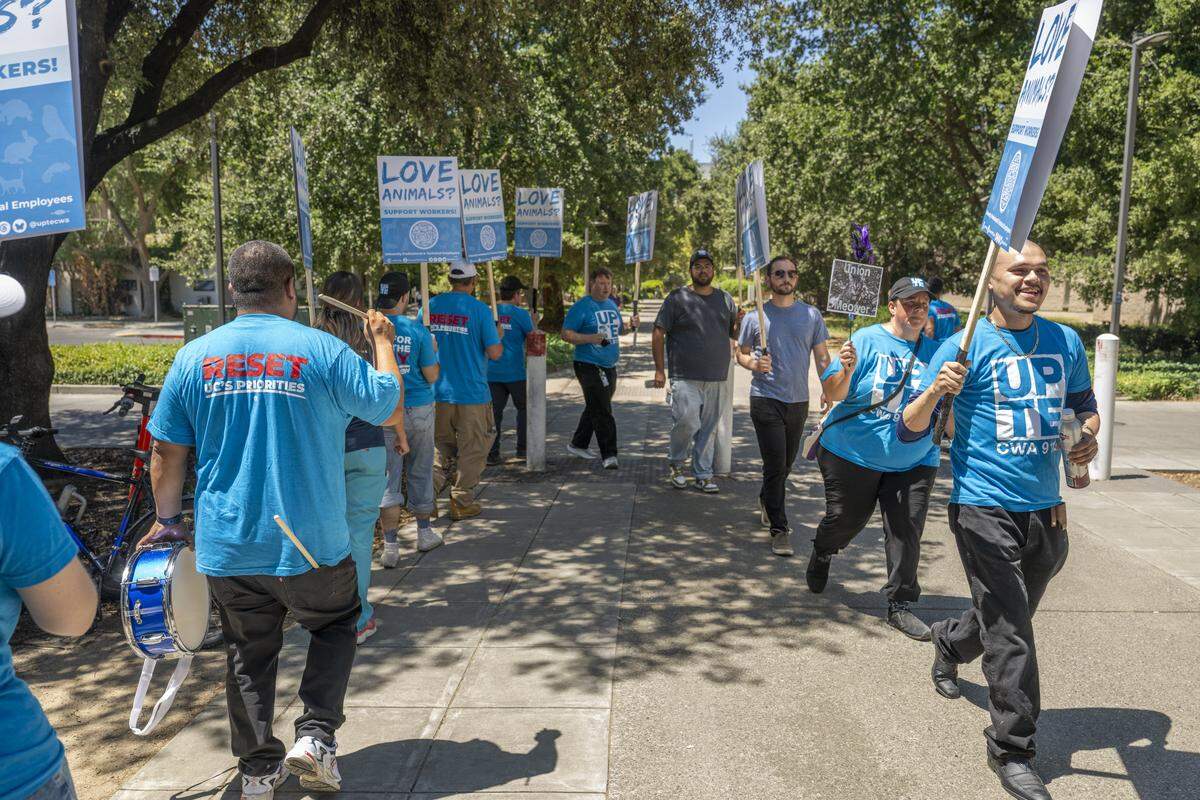
Twenty veterinary technicians rallied in front of the nation’s top veterinary hospital Tuesday, citing concerns about the quality of patient care due to understaffing.
Despite the UC Davis Veterinary Medicine Teaching Hospital’s national reputation, animal health technicians represented by the University Professional and Technical Employees Communication Workers of America Local 9119 said on Tuesday afternoon that the low staffing levels are jeopardizing animal care and causing widespread burnout among the frontline workers.
LaShell Alpaugh, a registered veterinary technician with the small animal intensive care unit who joined the demonstration Tuesday, said in the intermediate wards there are days when 60 patients are under the care of two technicians.
Alpaugh has worked as a veterinary technician for the past 12 years. She takes care of patients in critical condition, requiring minute-on-minute observation to keep them alive.
While they are capable of taking care of that many animals at once, the extra minutes can be the difference between encouraging a dog to eat or tending to another patient in critical condition.
“I can’t tell you how many times we’ve gone home and thinking, ‘if we were just fully staffed, I could have maybe got that dog to eat’ or ‘I could have caught this catheter blowing before the leg was swollen,’” she said.
Alpaugh observed a significant loss of technicians and students at the hospital in 2020, and she said they had not been replaced since.
However, UC Davis spokesperson Bill Kisliuk wrote in an emailed statement that the veterinary hospital has increased staff by 31% over the last seven years, outpacing the growth of patients coming in.
“We at the veterinary hospital are devoted to offering the highest level of care to our patients and their families,” he wrote. “At no time have our staffing levels put our patients at risk.”
While Tuesday’s rally focused on the veterinary hospital at UC Davis, Amy Fletcher, a researcher at UC Davis and statewide treasurer for UPTE, said the issue is connected to the UC system in a “crisis of recruitment and retention.”
Technicians also protested wage disparities, and said local clinic wages are up to $15 per hour higher than what the hospital offers. The concern for employee retention is compounded by new hospitals slated to open in Folsom and Roseville this month, potentially increasing competition for skilled staff.
Even though the UC system and UPTE union began contract negotiations in June 2024, Kisliuk added that the UPTE has not responded to negotiations since September 2024.
This month, the UPTE rejected a UC proposal that included a wage increase up to 20% over a three-year contract.
“UPTE’s rejection and refusal to come to negotiations with economic proposals is a continued pattern, as UPTE has failed to provide a response to UC’s economic proposal since September 2024,” a July press release from the UC system read. “UPTE also declined the University’s invitation to schedule additional bargaining dates.”
But for Alpaugh, the rally wasn’t primarily about the money. What brings her to the hospital from her home with her three cats, three dogs, kittens, lizards and fish, are the animals.
“We all love animals,” she said. “We went into this field because of the animals and we want to be able to provide the number one care we can to each and every patient that walks through our door.”