CA tried to rein in traffic schools, but the DMV hasn’t inspected one this year
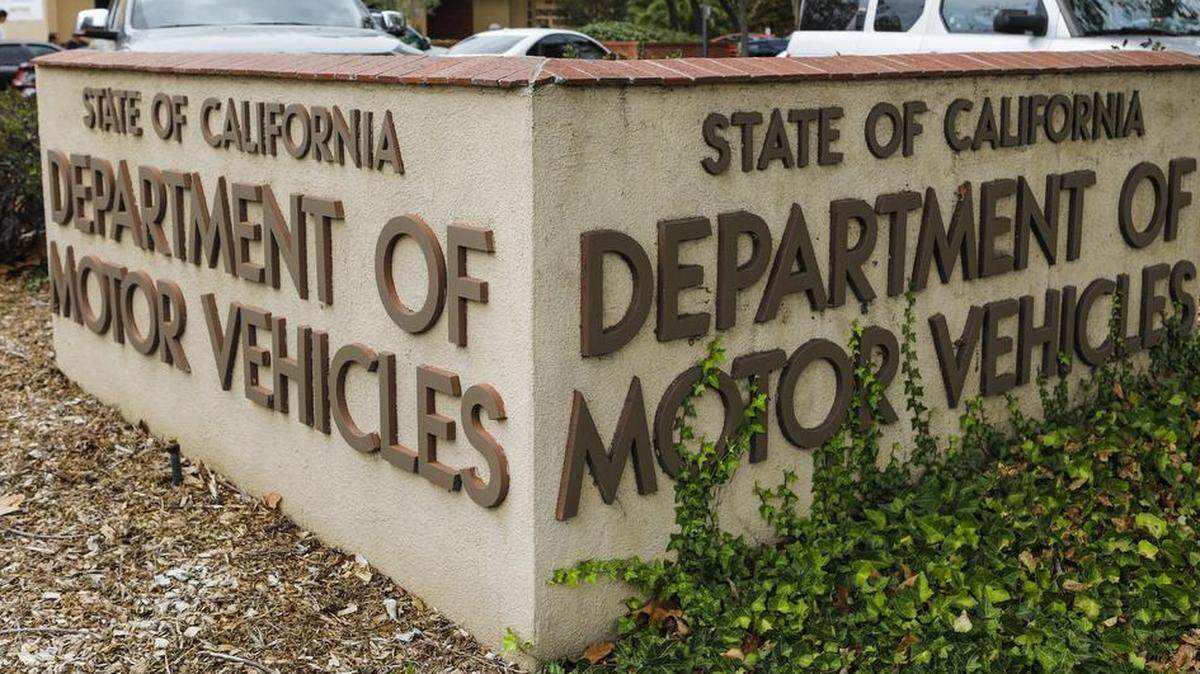
Inspections of California’s more than 400 traffic violator schools have effectively ceased in recent months, since the state Department of Motor Vehicles declined to renew its contract with a private monitoring agency tasked with regulating a long-troubled industry.
Since the contract expired in February, the California DMV has not conducted a single on-site inspection of businesses that allow drivers to hide speeding tickets from insurance companies. Those on-site inspections help ensure traffic schools are following strict requirements the Legislature passed in 2019 in an effort to clean up the once loosely-regulated and troubled industry.
Since 2011, the state has paid California Traffic Safety Institute to inspect traffic schools. During the first two months of 2025, CTSI conducted 268 inspections in-person, online and over the phone. Monitors reported that several schools failed to cover all the required material meant to instill safe driving habits. At least 8 schools were found to be in violation of state laws, including operating without a license.
But since the DMV decided in February not to renew CTSI’s contract, those regular inspections stopped.
The lack of routine monitoring of an industry designed to re-educate drivers poses traffic safety threats, puts Californian’s personal information at risk and creates an unfair business environment that the Legislature previously sought to rein in, several owners of traffic schools said.
In the absence of CTSI, those traffic school owners said, it’s not clear if some courses are following state rules, such as providing sufficient instruction time or safeguarding confidential student records — two areas of concern that CTSI identified on multiple occasions in inspections earlier this year.
“The problem is when you have entities in the traffic school industry that are taking shortcuts and doing things that they shouldn’t be doing to attract business, they’re not making an effort to educate,” said Robert Stahl, the owner of Dollar Driving School, “and that ultimately impacts traffic safety.”
In response to questions from the Sacramento Bee, the DMV acknowledged that it has not conducted inspections since February — but disputed the assertion made by several owners of traffic schools that the department was not properly monitoring the industry.
“Effective oversight of the Traffic Violator School (TVS) program remains a top priority for the DMV,” department spokesperson Jonathan Groveman said in a statement.
Attempts to clean up the industry
Speeding tickets in California come with fines and points, which the DMV adds to individuals’ driving records to monitor for negligent drivers. If an individual racks up too many points in a certain timeframe, their license can be suspended.
Drivers who receive a one-point moving violation have the option of attending traffic violator school to hide that infraction from insurance companies, though they can only do so once every 18 months. Over 600,000 drivers completed a traffic violator school course between July 2024 and June 2025, the DMV reported.
Traffic schools use the promise of low prices or quick and easy courses to stand out from a list of providers the DMV licenses. One option on the list: “4 Dollar EZ Traffic School.” Another, “Comedy Traffic School,” attracts potential customers with jokes and funny videos interspersed with lessons on driving safety.
Traffic schools are different from driving schools, where teenagers and other new drivers go to learn the rules of the road. Traffic schools are for already licensed drivers who have been caught going over the speed limit. While some companies, like Stahl’s, operate both traffic and driving schools, the DMV oversees and licenses the two types of schools separately.
Currently, the DMV has over 400 active online, classroom and home study schools on its lists of traffic schools. That number is down significantly from 2019, when lawmakers passed new industry regulations to tamp down on the proliferation of redundant schools that had cropped up, as companies attempted to capture larger shares of traffic violators by creating similarly named schools on the DMV’s list.
Before the legislation passed, California was home to more than 2,900 traffic schools. In contrast, New York had only 15, a legislative analysis reported at the time.
Among the new regulations in California was the requirement that each school have a physical office and staff it with an employee during regular business hours.
To ensure compliance with these rules, the DMV collects a $3 fee from all drivers who enroll in these courses — money which goes toward routine monitoring of traffic schools. During the last fiscal year, the DMV collected $1.7 million in monitoring fees.
The department is still collecting those fees — though monitoring appears to have stopped altogether.
The DMV said the fees are used to help defray administrative costs and for monitoring and maintenance purposes, despite the halting absence of on-site inspections.
Moving forward, fewer inspections
For over a decade California has contracted CTSI to provide oversight over the traffic school industry. Several school owners said the department, with CTSI’s help, successfully monitored traffic schools and weeded out those not following the rules.
Inspections conducted by CTSI in January and February revealed that schools were noncompliant with state rules for a number of issues. Some were related to the school’s physical location, such as one company that did not notify the DMV before appearing to abandon its primary office. Others were related to the actual content of the courses, such as a school that used a curriculum that included inaccurate information about permissible blood-alcohol levels for drivers and another school that provided students with answers to final exam questions in advance.
In 2023, CTSI and the state signed a new contract which promised the vendor a maximum of $2.3 million for two years of monitoring services, which included curriculum review, course monitoring and business office inspections.
Groveman said the DMV decided to not renew CTSI’s contract while the department reconsiders the methods used to monitor traffic schools.
“The goal of the department is to more effectively utilize the money it receives for these purposes,” Groveman said. CTSI did not respond to requests for comment.
Groveman said the department is in the process of creating a new “statement of work” for its contract to provide oversight of the traffic school industry. He said the DMV has not yet decided when that language might be ready, and would not say when a new contract for traffic school monitoring might be in place.
When CTSI was conducting oversight, it inspected each traffic school twice a year. In the first two months of 2025, monitors conducted 61 on-site inspections and 207 inspections over the phone and online, according to DMV records.
Moving forward, if a new contract is signed, the DMV will only require one inspection per year of all traffic schools and follow-up inspections if needed, Groveman said.
Groveman said that two inspections of each school per year doesn’t necessarily correlate with effective oversight.
He added the DMV plans to use a public survey to evaluate traffic schools performance by asking students about the quality of instruction, curriculum, cost, and any extra fees.
An unanswered complaint
The reason the DMV has not conducted any on-site inspections since CTSI’s contract expired, Groveman said, is because the department has not received any complaints to investigate.
But one traffic school owner, who closely watches the industry, said that’s not true.
Steve Soldis, the owner of Distance Learning Company, has been on the DMV’s case for years. A traffic school gadfly, Soldis has fought to enact stricter regulations around the industry, with the hope of making business more fair for himself and others.
In June, Soldis submitted a detailed written complaint to the DMV, alleging one of his competitors’ courses violated several state regulations. Soldis shared the complaint and evidence of those alleged violations with the Bee.
Groveman said Soldis’ complaint was “considered feedback and not a complaint of fraudulent activity,” noting that the DMV has a portal where anyone can submit a request for investigation. But Soldis said that he submitted his complaint by email and through that portal, and followed up to confirm the DMV received it. He said he never heard back.
The DMV did not respond to further questions about whether it received Soldis’ formal complaint.
Among the allegations Soldis made was that the name of one Bakersfield-based traffic school, “1 Hour Course,” was in violation of department naming standards, which state that the name of traffic schools cannot “advertise a statement that is untrue or misleading by any manner or means.” Traffic schools in California taught in classrooms are required to teach over five hours of materials and online courses are required to cover over 40,000 words of material. “1 Hour Course” did not respond to a request for comment.
Soldis also has concerns about the security of Californian’s personal information. He alleged that some traffic schools, which are required by state law to have an office with a locked door, are sharing a space with tire shops and roofing companies. That could put customers’ personal information at risk because computers storing that data are not in a secure location, Soldis said.
“What happens if all that is stolen by some unscrupulous person?” Soldis asked. “That’s the purpose of having an enclosed office that isn’t shared by another business.”
Inspection records provided by the DMV indicate those concerns are not unfounded. On Feb. 26, CTSI inspected the Bay Hill Traffic School in Fremont and found that “the school failed to safeguard and secure confidential student records,” according to documents provided by the DMV. But though the school was found to be in violation of California’s vehicle code, Bay Hill Traffic School is still listed as an active traffic school on the DMV as of Thursday.
Soldis and Stahl both said the poor oversight makes it difficult for traffic schools that operate within the laws to compete with those that are skirting regulations.
“What happens is those who play by the rules and follow the rules are basically punished because they have to compete with people who are breaking the law,” said Stahl, whose driving and traffic schools are based in Woodland Hills.
What really suffers from the minimal oversight, Stahl said, is traffic safety.
“If you’re going to cut corners and not educate people when they’re supposed to get some kind of education, then the end result is it’ll be out on the road in one form or another,” he said.
Insurance industry opposes ‘ticket masking’
Despite the improvements in the traffic school industry since 2019, car insurers are not pleased that California allows drivers to hide tarnished driving records, said Bob Passmore, a department vice president at American Property Casualty Insurance Association, a trade group.
Passmore said California requires insurers to consider three primary factors when setting rates: the number of years of experience a driver has, the number of miles someone drives and their driving history.
By hiding which drivers have received tickets for speeding, a practice known as “ticket masking,” Passmore said, insurance companies have less information to determine accurate rates. Ticket masking effectively means that good drivers in California are “probably subsidizing those who have had tickets and then went to traffic school,” he said
If California is going to use traffic schools, those courses should be taught effectively, Passmore added. Otherwise, the state is “just creating a check-the-box exercise where someone can basically avoid the consequences of their actions.”
This story was originally published September 26, 2025 at 9:53 AM.