Since 2020, CA state worker retirements have been down. 2025 may prove different
More public employees in California are set to retire in 2025 compared to previous years, new data shows, but overall retirement trends remain consistent with those observed over the last eight years.
Since peaking in 2020, when the COVID-19 pandemic upended workplaces across the county, the number of state workers who retire each year has generally decreased, according to numbers from the California Public Employees’ Retirement System. In 2020, 12,499 state workers and California State University employees retired.
Last year, CalPERS reported that only 9,904 state workers retired — the lowest number in the last seven years of reported data. (CalPERS’ count of state worker retirements includes CSU employee retirements.)
New retirement data from CalPERS shows that 2025 is reversing the recent downward trend. Between January and August, more than 5,700 state workers retired, 8% higher than the same period last year.
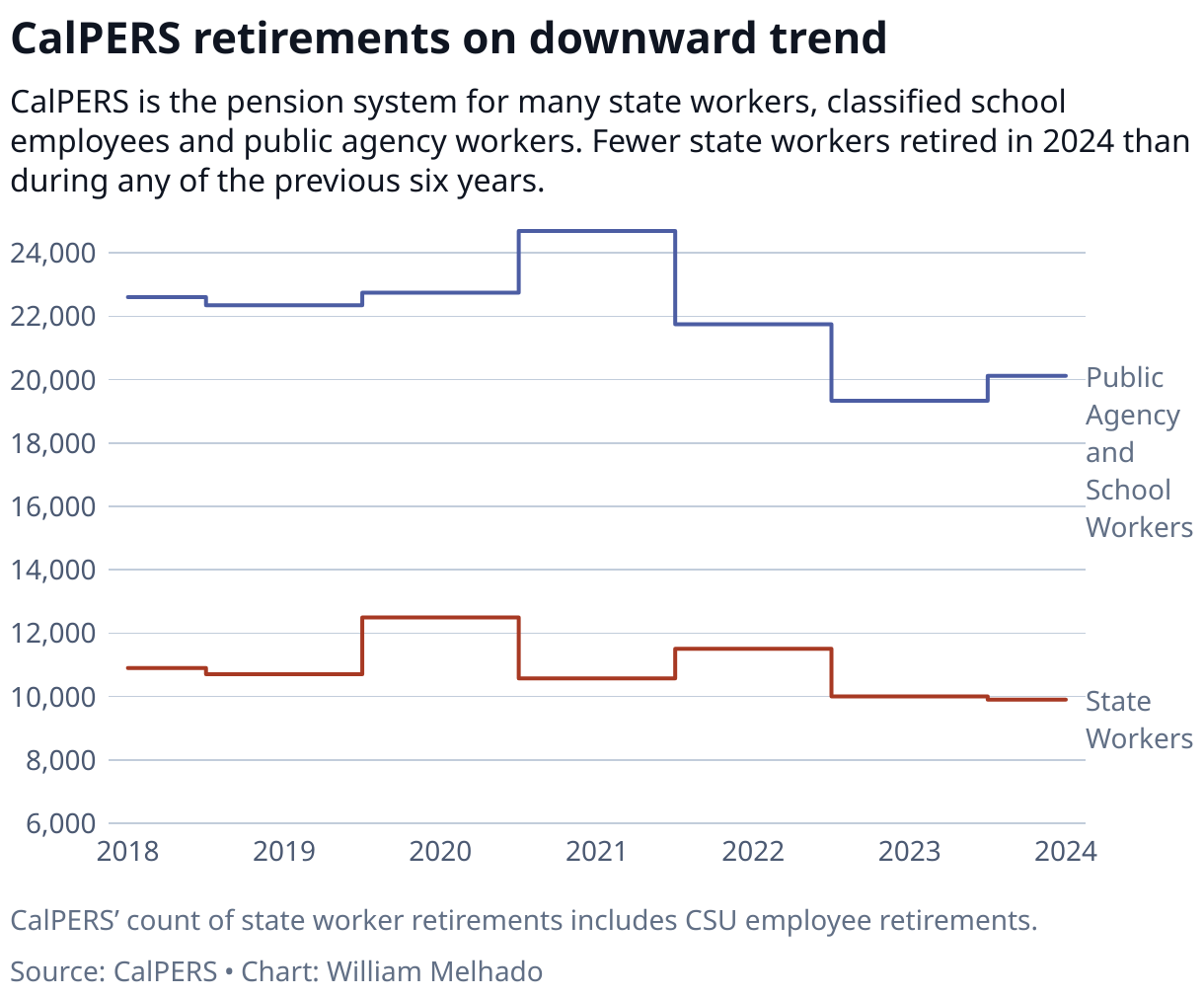
The downward trend of the last five years has a number of possible explanations. The COVID-19 pandemic dramatically shifted how much of the state’s workforce performed their jobs by transitioning to remote work, which coincided with a record number of state employees retiring.
A significant portion of workers belonging to the Baby Boomer generation have already retired from the state and thus there are fewer older workers in the state’s workforce, CalPERS previously reported.
Additionally, the Public Employees’ Pension Reform Act increased the age to which employees needed to work in order to get certain retirement benefits., which means state workers have to stay in their jobs longer to get the same benefits employees received prior to the pension reform, which was enacted in 2011.
The impact of telework policies on retirement
Earlier this year, as state employees and their labor representatives were fighting Gov. Gavin Newsom’s return-to-office order, a common refrain was that reducing telework benefits could cause more employees to leave public service, including through retirement.
An audit of California’s telework policies published earlier this year by the California State Auditor appeared to provide support for that claim. In a survey of over 100 state departments, 45% reported it was more difficult to retain and recruit employees due to the requirement that employees work periodically in the office.
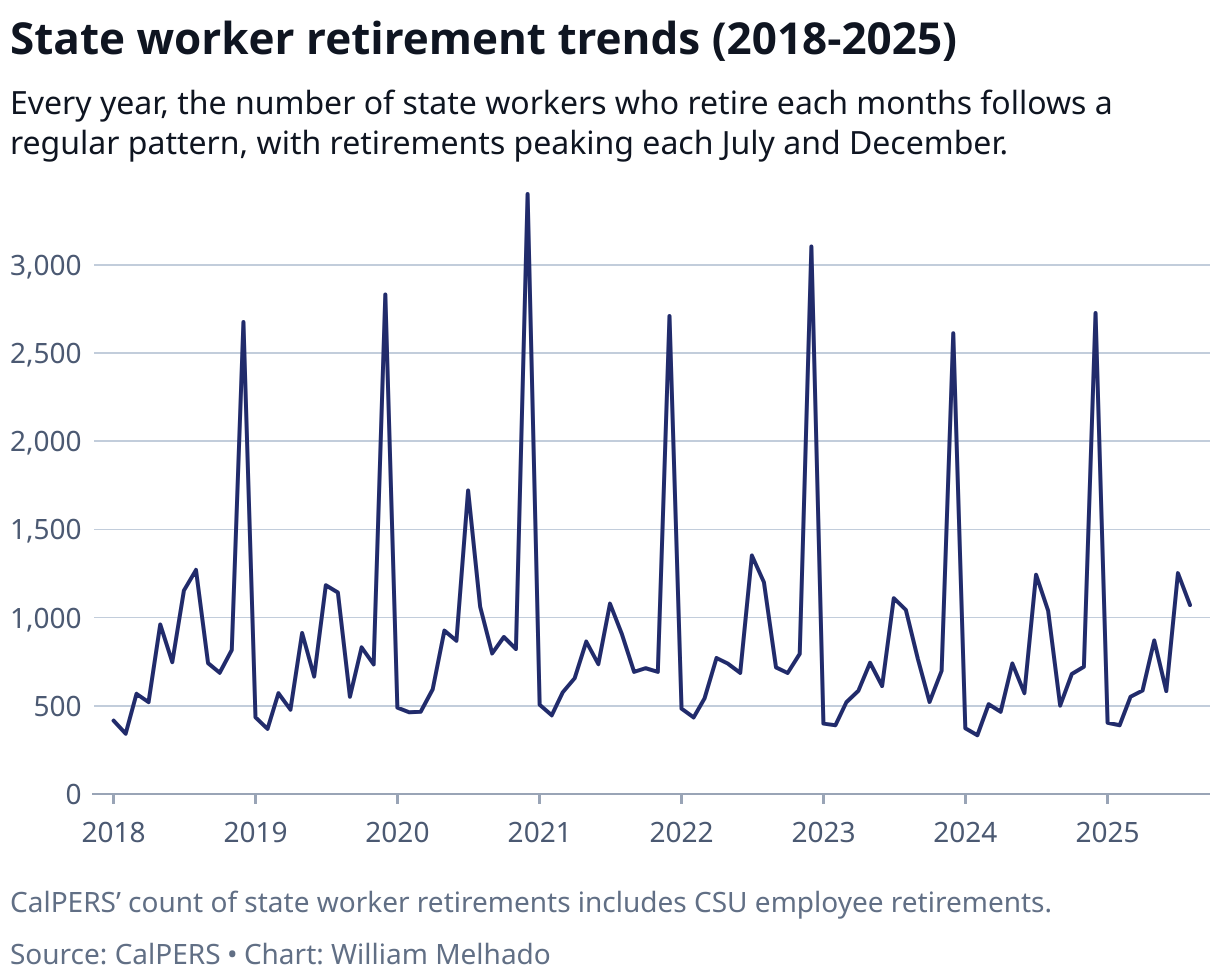
A review of the retirement numbers, month by month, over the last eight years reveals a regular pattern of when people choose to retire. The trend suggests that the return-to-office directives did little to impact retirement.
The month of July 2024 — when Newsom’s two-day, in-office telework policy took effect — did not coincide with a major uptick in retirement.
This July was initially set as the start date for the governor’s requirement for state workers to be in offices four days a week, but that deadline was pushed back until 2026 at the last minute. Despite the delay, July 2025 also did not coincide with a major increase in retirements.
When asked if the state’s return-to-office policies contributed to changes in retirement trends, a representative for the California Department of Human Resources said no.
“Nothing in the data would suggest anything different than normal, and we can’t attribute a trend or any changes to these figures to any one factor,” Anthony Crawford, CalHR’s deputy director of fiscal and data management, said in a statement.
Most state employees retire in December, which CalPERS has indicated can be financially advantageous for retirees. For December retirees, the cost-of-living adjustment is calculated and granted using data from the year after they retire. For those who retire in January, that COLA calculation is pushed back one year and eligibility for that additional payment is delayed.