What were the top 10 California state worker stories of 2025?
The past year was a turbulent one for many government workers.
In Washington, the first few months of President Donald Trump’s second term were characterized by the chaotic effort to dismantle federal agencies and fire employees.
Meanwhile in Sacramento, the governor’s unexpected announcement in March that employees would only be allowed to work remotely one day a week led to angry protests and legal actions from labor groups.
The Trump administration’s economic policies resulted in a downturn in the stock market, which contributed to California’s precarious budget situation. Those conditions later required unions to return to the bargaining table to draft new labor agreements that helped save the state money in the short term. In exchange, Gov. Gavin Newsom agreed to pause his return-to-office order until 2026.
Throughout the year, Sacramento Bee readers closely followed our return-to-office coverage. Other stories stood out to our state work audience, including an investigation into the flawed design of a new 911 system and a deep dive into correctional officers’ opposition to prison reforms.
Here are the top 10 most-read state worker stories of the year.
10. Two-thirds of Caltrans maintenance yard staff on leave after raucous party
Back in July, a group of Caltrans employees decided to throw their soon-to-be retired coworker a wild party at a Monterey maintenance station that involved drinking on the job and an exotic dancer.
After a tipster alerted state officials and the media about the event, Caltrans served termination notices to 10 staff members working at the maintenance station, which only had 15 employees total.
With only one third of the staff remaining at the maintenance station, Caltrans said, “Caltrans crews from neighboring maintenance yards are helping to provide coverage for maintenance duties in Monterey.”
9. Rallying CA state workers have a message for Gavin Newsom on return-to-office
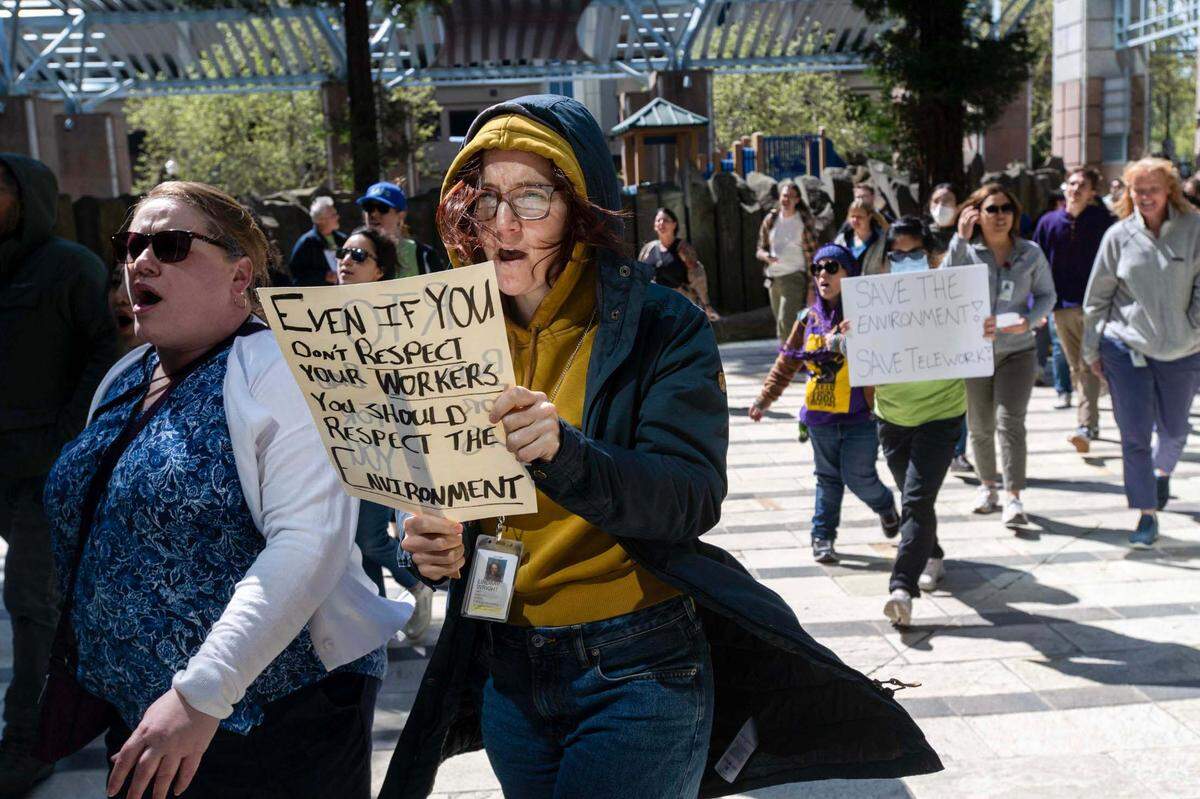
Newsom’s unpopular return-to-office order inspired recurring protests outside state government buildings, where angry state workers expressed their discontent with their boss.
“Gov. Newsom needs to see how unpopular this is,” Steven Gonzales, a State Water Resources Control Board employee, said outside the CalEPA headquarters in March.
In addition to protests, state workers petitioned Sacramento-area lawmakers to push back against the governor’s directive. Assemblymember Maggie Krell, D-Sacramento, wrote a letter to Newsom in March that discussed the dozens of calls her office received about the “stress, hardship and financial strain” the return-to-office order would cause public employees.
8. CA spent over $450 million on a new 911 system. It’s now scrapping the flawed design
Late last year California prepared to launch a modern 911 system that would allow first-responders to better locate callers and finally replace the state’s legacy system that dated back to the 1970s.
But when the time came to turn that system on, it didn’t work.
The project encountered disruptions and delays over the five years it was built out by several contractors who were paid over $450 million for the technology. The agency overseeing the project’s roll-out decided to scrap the flawed design and adopt a 911 system similar to what other states have built.
7. State worker payroll freezes in Gov. Gavin Newsom’s revised California budget
Gloomy economic forecasts in May prompted Newsom to float the idea of pausing state workers’ salary raises to help save money. The governor proposed cutting roughly $767 million from the state’s payroll expenses in public employees’ salaries to help fill the state’s $12 billion deficit.
The idea prompted protests from public employees and public opposition from lawmakers.
Unions and the Newsom administration eventually agreed to revised labor agreements that help the state save money through leave programs that involve pay reductions and suspending retirement contributions for state employees.
6. California pension beneficiaries send billions in economic ripples across the state
Over the course of one year, former state and local government employees contributed $28 billion to Californian’s wages and salaries through their pension spending, economic researchers found.
Those receiving benefits from CalPERS and other California pension plans in 2022 supported nearly 400,000 jobs in various industries such as health care and restaurants, according to researchers with the National Institute on Retirement Security, a Washington, D.C.-based retirement research nonprofit.
From casual eateries to sit-down restaurants, the service industry was the largest beneficiary of pension spending. Hospitals were a close second. Every dollar paid to pension recipients in California yielded $1.27 in economic benefits for the state, NIRS researchers found.
5. These California state workers make over $1 million — and the list of millionaires is growing
In 2019, only three state workers earned the equivalent of at least $1 million, after adjusting for inflation. But last year, the number of civil servants who earned over $1 million climbed to nine.
Salary data from the State Controller’s Office revealed that the number of million-dollar-earning state workers increased in recent years. Nearly all those high-dollar earners worked for one of two California public pension funds: CalPERS and CalSTRS.
While these state employees’ compensation levels are high compared to their fellow civil servants, the salaries for similar positions on Wall Street “are much, much higher,” said one management professor.
4. CA prison staff didn’t stop murder, posted grisly footage online, lawsuit claims
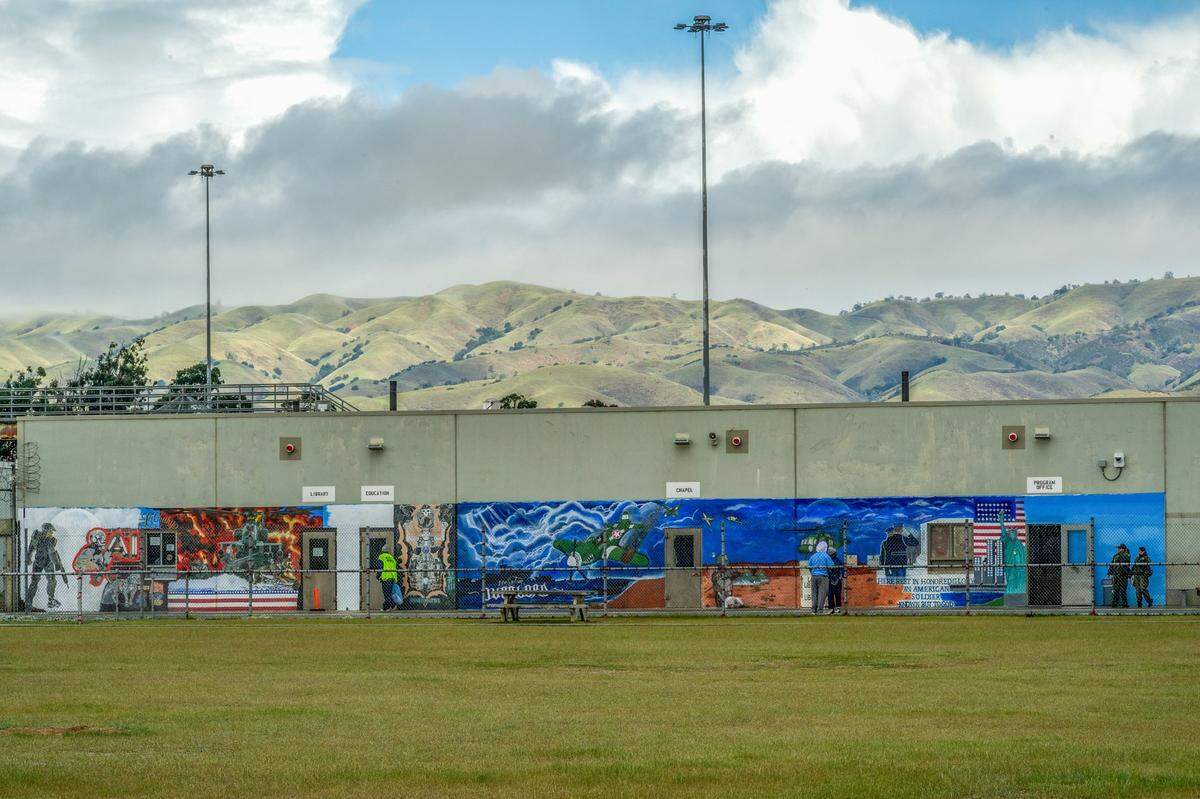
After Joseph Mendoza was brutally killed in Salinas Valley State Prison in April, security camera footage of his death was posted online.
The footage haunted Mendoza’s family and several months after his death the family from Merced filed a federal lawsuit against the state’s corrections department, alleging that officers failed to protect the 36-year-old man from the violent assault while he was in the state’s custody.
Additionally, lawyers representing the victim’s family said correctional staff invaded Mendoza’s privacy by sharing footage of his killing. They argued staff violated a California law passed in 2020 following the death of basketball legend Kobe Bryant, which bars first responders from sharing footage of deceased victims.
3. California state workers react to Newsom’s return-to-office order: ‘How does this help us?’
State workers’ immediate reaction to Newsom’s sudden change to the state’s telework policy ranged from frustration to confusion.
In the aftermath of the March order, state workers lamented how the return to in-person work would squeeze them financially and reduce the amount of time they would get to spend with their families.
David Haug, a Fish and Wildlife Commission employee, expressed confusion over the telework decision when considering Newsom’s previous stance on government operations. In Newsom’s 2013 book “Citizenville,” the then-lieutenant governor made the case that governments aren’t using modern technology to its full potential.
“It perplexes me why he is going back on such a premise now,” Haug said, “especially when the benefits of remote-centered hybrid work clearly outweigh the costs.”
2. California retirees violated post-employment pension laws, a state appeals court decides
Nearly a decade after an accounting professional took a part-time job helping various cities complete their budgets, Tarlochan Sandhu was presented with a nearly $660,000 bill from CalPERS after courts determined he ran afoul of state post-employment rules.
A federal district court ruled in February that Sandhu should not have received pension benefits from the California Public Employees’ Retirement System while he worked as a finance and accounting professional for several California municipalities.
Sandhu is one of five retirees who courts have deemed crossed retirement employment rules, which prohibit receiving pension benefits from CalPERS while working for another government entity that feeds into the pension system.
1. Gavin Newsom orders California state workers back to offices in person four days a week
In his March 3 executive order, Newsom explained why state workers should be back in government offices four days a week.
“In-person work makes us all stronger — period. When we work together, collaboration improves, innovation thrives, and accountability increases. That means better service, better solutions, and better results for Californians, while still allowing flexibility,” Newsom wrote.
While the governor maintained that the benefits of in-person collaboration was the reason for the policy change, he did later acknowledge that the concerns of struggling businesses in downtown Sacramento also played into his decision.
This story was originally published December 17, 2025 at 5:00 AM.