What should state workers do if California messes up their paycheck?
Discovering California accidentally overpaid you might initially seem like a good thing, but government employees should know that one way or the other the state always comes looking for that money.
That’s the advice of certified financial planner Ekenna Anya-Gafu, who has experience working with state workers who received paychecks that were either too large or too small as a result of payroll issues.
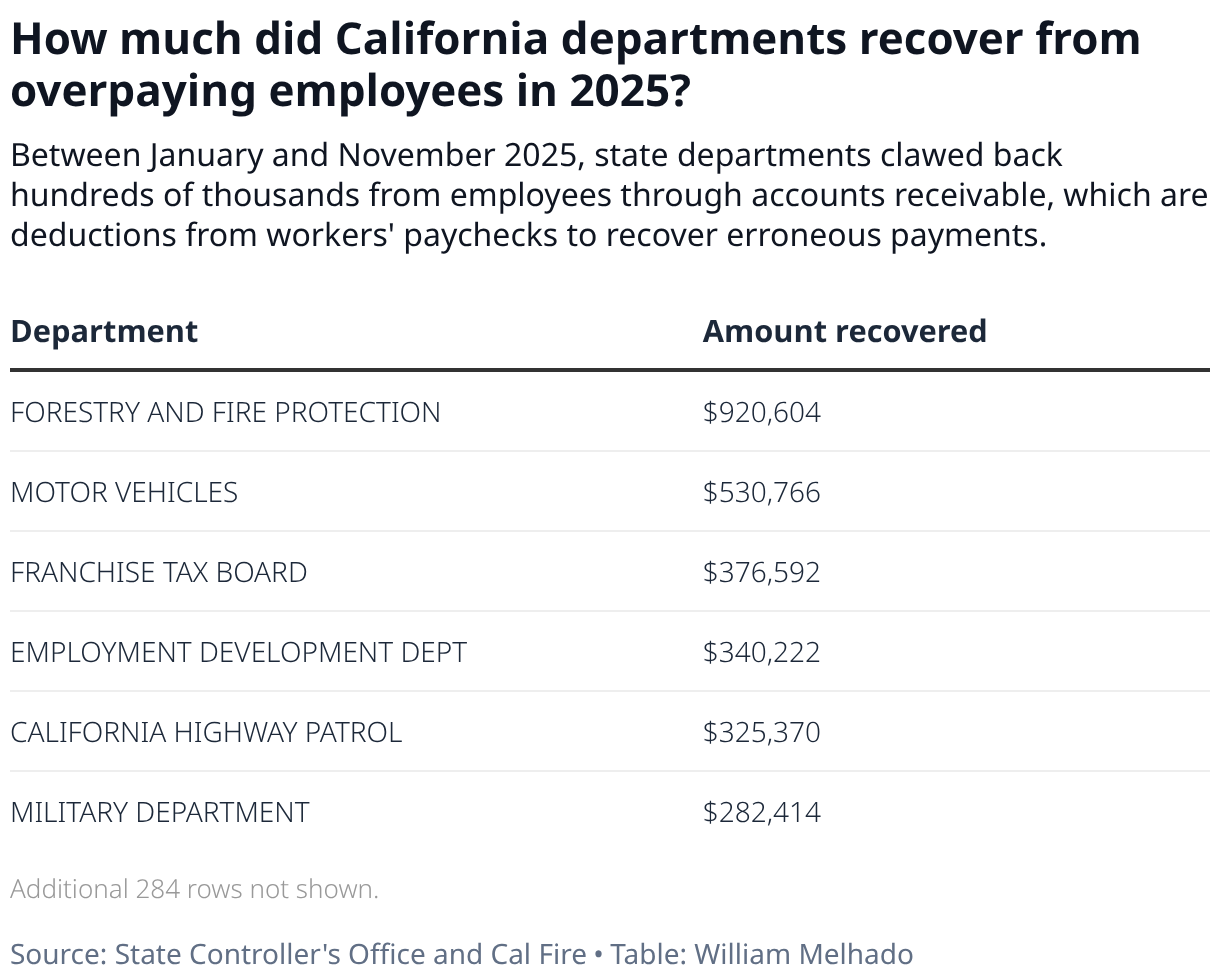
It’s not clear exactly how much California overpaid state government employees in total last year, but California recovered $8.5 million from workers through payroll deductions in 2025, according to records from the State Controller’s Office.
These payment errors stem from California’s legacy payroll system, which dates back to the 1970s. The decades-old technology struggles to account for last-minute payroll changes and that can create all sorts of headaches for employees and departments alike.
The Sacramento Bee spoke with Anya-Gafu about what steps state workers should take if California messes up their paychecks. The founder of the financial services firm Pacific Canyon Investments, Anya-Gafu grew up in Sacramento and has several family members who work for the state in the region.
Anya-Gafu said he offered similar advice to his relatives when they ran into payment errors with the state.
How can state employees monitor their paychecks for discrepancies?
State workers often learn they’ve been overpaid, or underpaid, through a letter or email sent by their agency. In the instances when the state has accidentally paid an employee too much money, departments offer ways to pay it back via cash or check, payroll deductions or offsetting the overpayment with leave credits.
Anya-Gafu recommended state workers monitor their monthly paychecks for potential overpayments or underpayments.
He recommended keeping a close eye on the deductions for health and dental premiums or union dues, which should be consistent for every paycheck, and looking for inconsistencies. If there’s an overpayment or underpayment, it’s going to show up there, he said.
“Those numbers really should be static, unless you’re in a position with overtime or you just receive your yearly step up,” he said.
While an incorrect amount may not seem significant, it can add up if the error isn’t corrected for several months. That can take a big chunk of a worker’s paycheck if all that money is recovered at once, Anya-Gafu said.
State government code allows for those payroll deductions to be made as installments over the same number of pay periods that the error occurred.
What should employees do if they see the state has overpaid them?
Sometimes clients are eager to share that their employer accidentally overpaid them, Anya-Gafu said, but he warned anyone who receives an overpayment should not plan on keeping it.
“It’s not like a casino where it’s like, ‘You get black, you just won,’” Anya-Gafu said. Legally, it’s the state’s money.
And California, though it relies on an arcane payroll system that moves slowly, will eventually find out, he said. Anya-Gafu said he’s not sure how the state tracks these errors, but in his experience, the state will ask for that money back, even if it’s months later.
When overpayments do occur, Anya-Gafu gives the same advice: Find a high-yield savings account, put it away and earn the interest until the state comes looking for the money.
What if they are underpaid?
If the state shortchanges employees, he said, employees should reach out to administrators as soon as possible.
If paychecks are directly deposited into an account, Anya-Gafu recommended taking screenshots or downloading a pay stub to keep records of the errors. If an employee receives a paycheck by mail, make a copy of that document. You want to make sure you are keeping records, he said.
Then email a human resources representative at the department, he advised. Ensure the issue is documented in writing, and ask about the pay disparity.
Make sure they provide you with a recovery plan, such as how the repayment will occur and when you can expect to receive the missing pay, he said.
Are there tax implications of payroll errors?
The issue can impact someone’s tax filings if, say, the overpayment occurred in October, but isn’t discovered and corrected until January, Anya-Gafu said.
“That does actually require some special tax piece if it’s an overpaid payment, because they’re essentially going to have to report to the IRS,” he said.
If that situation does occur, Anya-Gafu recommended state workers ask their department’s human resources: How are you going to resolve this on the tax side?
“Leave that open-ended and just make sure that they have an answer for that,” he said.
This story was originally published January 9, 2026 at 9:44 AM.