Not your average lobbyists. State workers petition lawmakers to protect telework
If you didn’t know better, the groups milling around the Capitol Swing Space on Wednesday could have passed for any other cadre of suited lobbyists hoping for a minute of California lawmakers’ time.
But those weren’t paid advocates. They were state workers who had taken a day off to petition their elected officials to protect their ability to work remotely.
The new lobbying effort by state employees is a different approach toward resisting Gov. Gavin Newsom’s return-to-office order. Compared to last year’s widely attended protests and the lawsuits challenging the governor’s executive order, these groups of state workers hoped to secure better telework conditions through the policymaking process.
Last week, Assemblymember Alex Lee, D-San Jose, introduced a bill that would allow individual agencies to develop plans that offer remote work to the fullest extent possible, instead of mandating state employees return to government offices four days a week in July — as is currently the plan under the governor’s executive order.
The Professional Engineers in California Government union organized a day of lobbying Wednesday to allow lawmakers an opportunity to hear directly from state employees about an important issue for its members. The state engineers union said dozens of its members met with over 100 lawmakers or staff trying to garner support for Lee’s bill that would also require state departments to provide detailed accounts for why in-person work was necessary if it is being required.
In rural areas, telework is more efficient, engineers union says
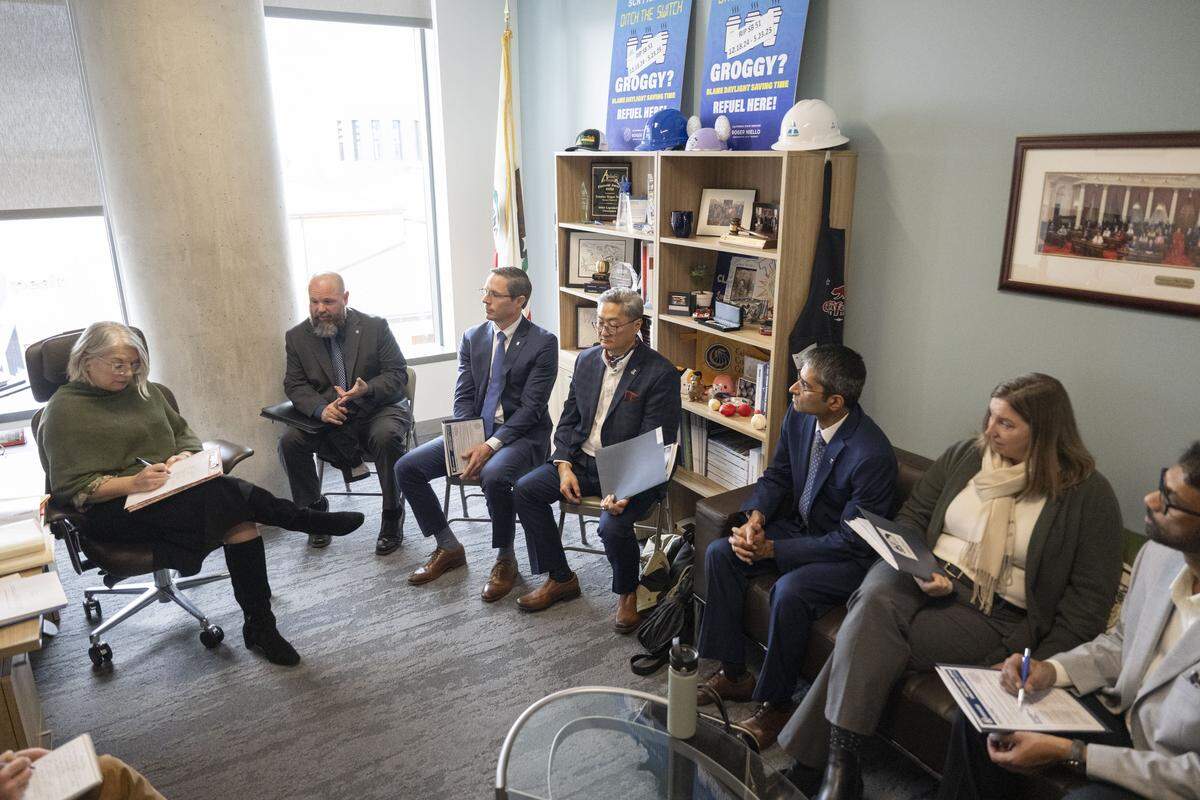
Packed into a small office, Assemblymember Chris Rogers chitchatted with a group of state employees about infrastructure projects they had worked on in the Santa Rosa Democrat’s sprawling Northern California district before the amateur lobbyists jumped into their pitch.
Larry Bettes, a California Department of Transportation engineer, told Rogers that in his role he supports other Caltrans engineers across Northern California. That work can be done much more efficiently when he can work from his home in Redding, where he was born and raised.
Bettes’ colleagues spoke about how telework enabled people from rural areas to work for state government.
“Telework should be applied to the fullest extent possible,” Bettes said. How many days workers need to spend in offices should be based on operational needs and determined by managers, not dictated by the Governor’s Office in Sacramento, he said.
Rogers appeared amenable to state workers’ concerns, asking questions about how much the return-to-office order might cost California and noting the benefit telework has on reducing traffic.
At one point, Rogers wondered aloud why the governor had taken such a hard-line stance on his return-to-office directive considering his past positions.
“You literally have written a book about government being more nimble,” Rogers said, referring to Newsom and the book he co-wrote while he was the lieutenant governor that explores how to use technology to make government more efficient.
Sen. Roger Niello’s constituents ask for his support
Before another group of PECG members filed into state Sen. Roger Niello’s office, they divided their talking points amongst themselves. In addition to advocating for telework, the union members had come to lobby on two other issues important to the union: opposition to public-private partnership and outsourcing state engineering work.
Steve Lee, a senior transportation engineer with Caltrans, volunteered to do the introduction just before the group learned that Niello had unexpectedly been tapped to chair a budget committee. The Fair Oaks Republican wouldn’t be able to meet with the state employees, several of whom were constituents and at least one was a customer of the senator’s car dealership. Niello’s chief of staff, Julie Sauls, listened in his stead.
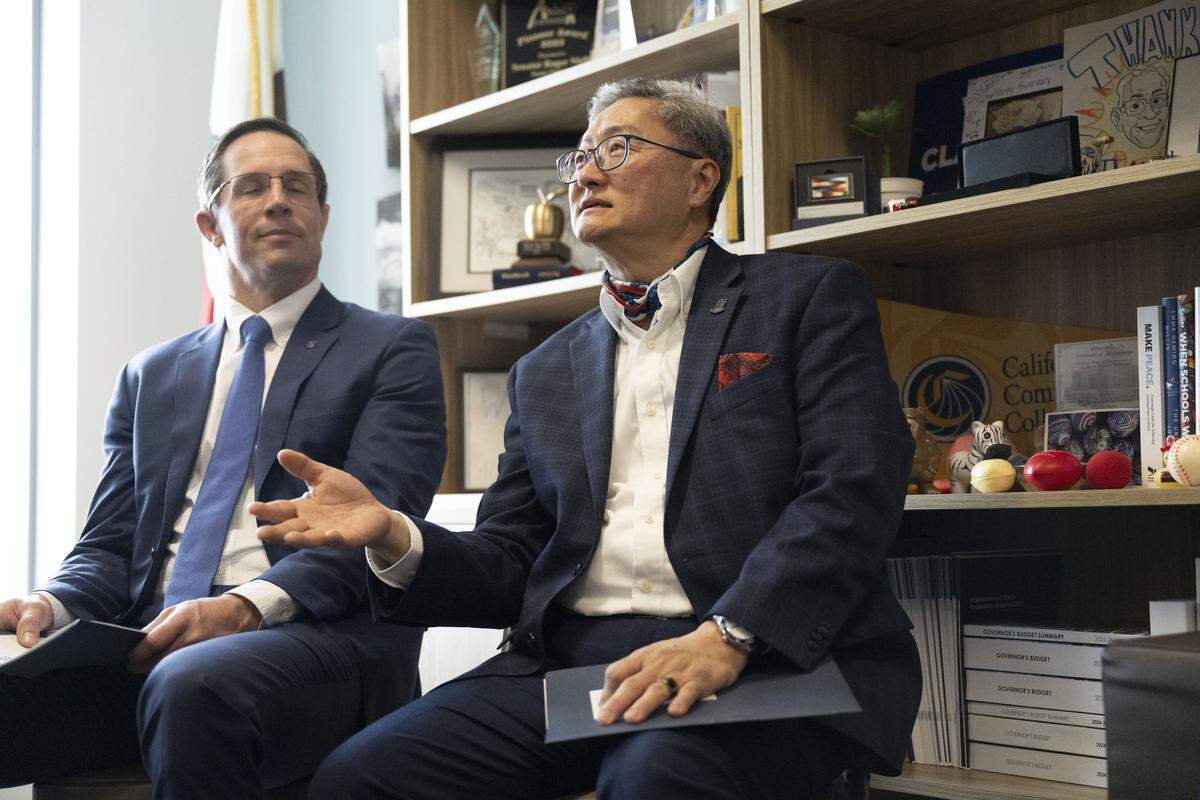
Joe Mello, a recently retired supervisor with the State Water Resources Control Board, said that several of his employees had resisted telework when it was first mandated at the onset of the COVID-19 pandemic. But they soon realized they were more productive when working from home, he said.
Revoking those benefits was going to cause experienced engineers to leave for other jobs that offered better hybrid work conditions, Mello said.
“As a supervisor, I love to be able to allow flexibility,” he said.
When Sauls asked if anyone in the room knew what that governor’s position on the legislation was, a knowing silence fell briefly in the room — a quiet acknowledgement that Newsom is unlikely to support the bill.
The Governor’s Office previously said it does not comment on pending litigation, but Newsom’s public stance on the issue hasn’t wavered since he directed employees back to the office last March.
Lawmakers hope Newsom will embrace new way of doing things
State workers from SEIU Local 1000 were also spotted in the Swing Space advocating to protect telework.
One of those members was Schuyler Waldeck-Myers, a fiscal analyst with the California Department of Corrections and Rehabilitation. He said the return-to-office order creates additional headaches for him around childcare and how much time he gets to spend with his family.
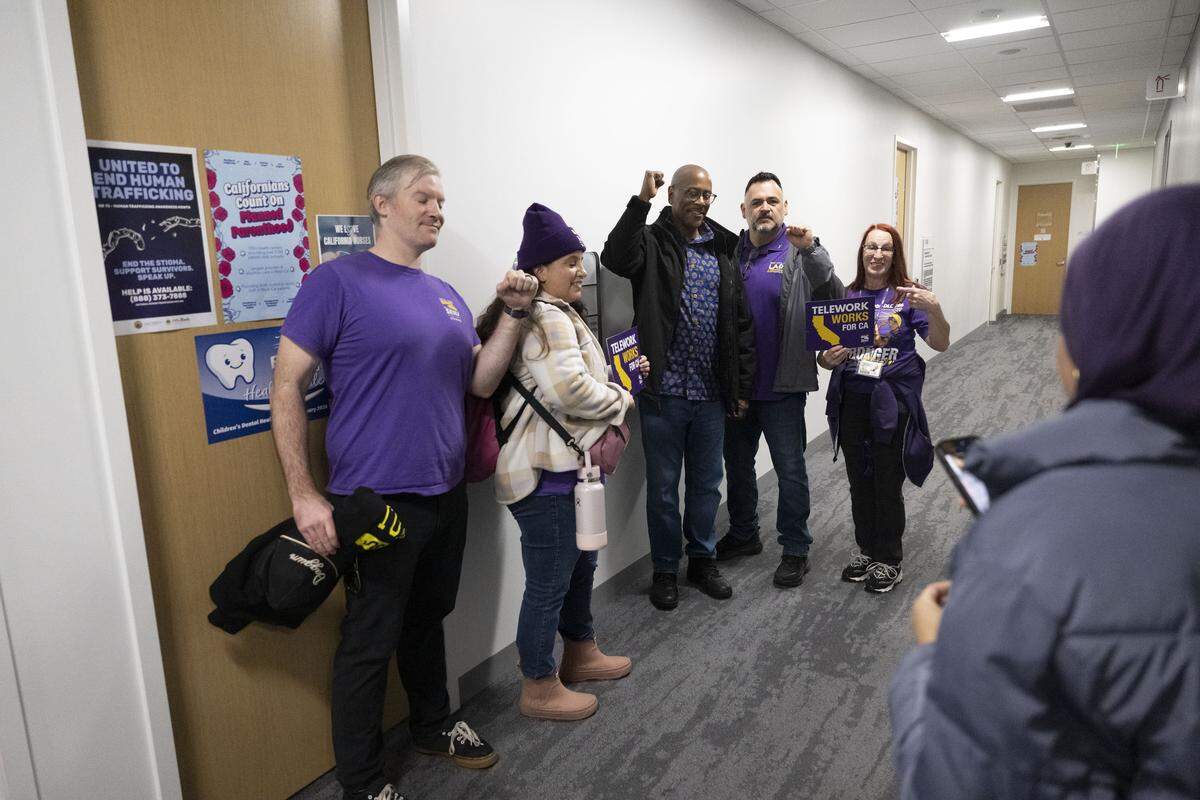
“The days that I telework, I can get up at a reasonable time and see my kids off to school,” Waldeck-Myers said. “But when it’s a day that I’m in office, I’m usually gone before they’re awake.”
Assemblymember Lee said in an interview that he worked with a coalition of unions to design his legislation. It doesn’t require the state to adopt a specific policy around telework but leaves that decision up to individual departments. Lee said he hopes the governor will come to embrace the “new, modern way of doing things.”
“Trying to force an old model into a new reality is going to be difficult,” Lee said. “And if it’s not properly prepared for, I think the employees and the legislators have a cause for a lot of concerns.”