CA lawmakers push for more accountability around delayed, over-budget 911 project
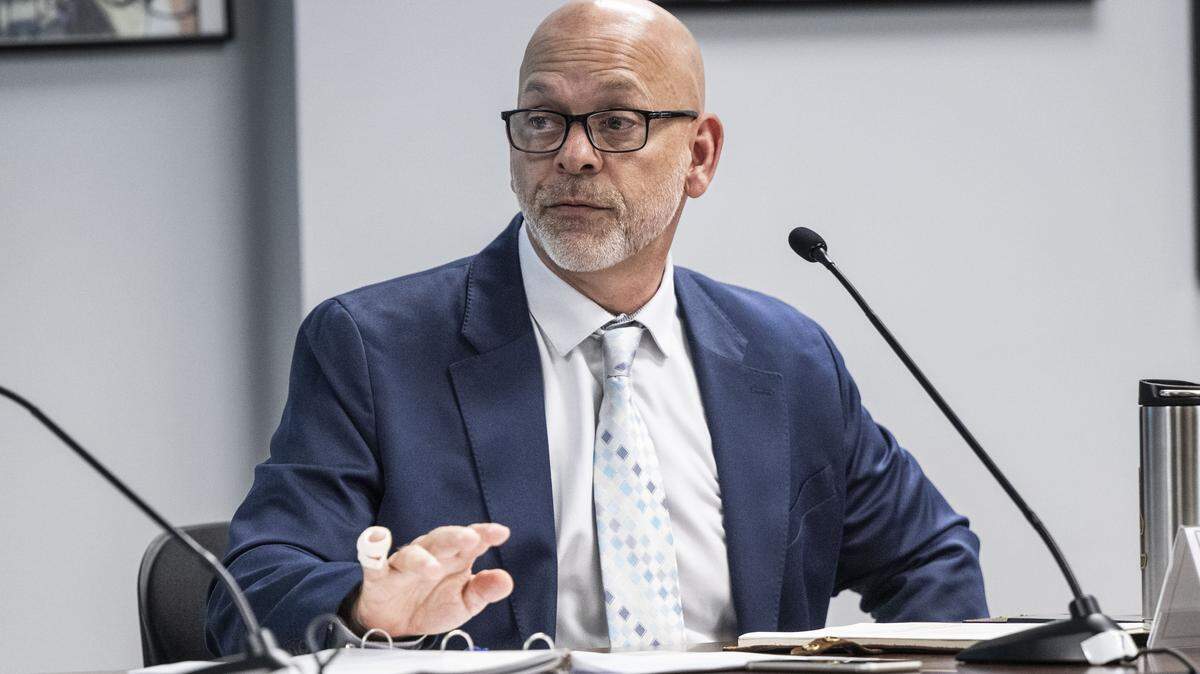
A California agency and the providers contracted to build out the state’s Next Generation 911 system have very different ideas on how to proceed with the over-budget and delayed project.
Those disparate visions were on full display during a Tuesday oversight hearing in which agency leaders, company executives and advisory board members answered lawmakers’ questions about how California managed to spend $450 million on a regional 911 system, only to scrap the design.
California Governor’s Office of Emergency Services leaders admitted that the agency was responsible for some of the project’s delays, but attempted to reassure skeptical lawmakers that the statewide design was the better approach than the now-discarded regional one.
Meanwhile, the executives from several of the vendors that built out the state’s four-region 911 system encouraged the Assembly Committee on Emergency Management to reject Cal OES’ decision to transition to the statewide design.
Either way, it appears more oversight of the project is imminent.
The committee chair, Assemblymember Rhodesia Ransom, D-Tracy, organized the hearing because she said the project is too big to move forward without more oversight.
“We didn’t just want to hear from the vendors who obviously have a vested interest. We didn’t want to hear from just the state who, honestly, have suffered some embarrassments that they were trying to recover from,” Ransom said. “We also wanted to hear from the advisors and the end users, because it’s going to really take us sorting through and finding the transparent answer in order for us to move forward.”
Ransom said as the chair of the committee, “We want more accountability and we want more oversight for this project.”
Lawmakers said Next Generation 911 needs more oversight
At least one lawmaker present on Tuesday thinks that the state should not move forward with the statewide design.
A former deputy director of the Office of Emergency Services of the Modoc County Sheriff’s Office, Assemblymember Heather Hadwick, R-Alturas, said she found Tuesday’s testimony “disappointing and frustrating.”
“We cannot afford to spend hundreds of millions more on a system that doesn’t deliver when lives are on the line,” Hadwick said in a statement shared after the hearing. “Based on my experience, a regional approach makes far more sense than a one-size-fits-all system that may work in urban areas but not in the North State.”
Hadwick said she is supportive of a proposal in front of the Joint Legislative Audit Committee to direct the state auditor to look into the project.
Earlier on Tuesday, the Senate Budget Committee approved a bill by state Sen. Tony Strickland, R-Huntington Beach, that would give the Legislature more oversight of the project. The nonpartisan Legislative Analyst’s Office has recommended that state leaders should pause the transition to the statewide design until an oversight authority can audit the project.
Assemblymember Steve Bennett, D-Ventura, expressed skepticism that Cal OES would not run into similar issues with the project, particularly related to contract language. Bennett noted Cal OES is not the only state agency that faced challenges with technology projects.
“If you look at the state’s history of implementing new technologies, it is cost overrun, timing delays and failure over and over and over again,” Bennett said.
Yarbrough said Cal OES did not previously have a deputy director over this aspect of the agency’s work. He acknowledged that many of Cal OES’ leaders who previously spearheaded the project were no longer working at the agency. Budge Currier, a former Cal OES official who oversaw Next Generation 911, left when the project was paused in 2024.
Yarbrough said that as the deputy director now overseeing this project, “I tend to see that we do manage our engagements and our deployments to a much higher standard.”
Bennett concluded that he would only be supportive of moving forward with independent oversight and more frequent reports on the project.
Companies testify that Cal OES went ‘dark’
Leaders of the companies that Cal OES contracted to build the Next Generation 911 system described how they worked with the state to resolve issues that cropped up as they were installing and testing the technology.
Don Ferguson, the CEO of NGA, acknowledged that his company had contributed to some of the delays the project faced. He said all those issues were eventually resolved, but in 2024 the agency stopped communicating with NGA.
“Cal OES essentially went dark about 18 months ago,” Ferguson said. “We were in the middle of the testing that would turn-up the (dispatch centers).”
He said NGA was happy to have an open discussion with the lawmakers and dig into the issues. Ferguson and other leaders of vendors said it is important to get clarity on a complex project.
“Fair questions are being asked, and they need to be answered, and there’s a lack of confidence that makes it difficult to move forward,” said James Carlson, senior sales director with Lumen Technologies, one of the four contractors.
Ferguson said the path forward was very clear: The state should revert to the regional design it has already spent money building out.
“While we are concerned about the dollars we’ve spent at this point, we want to make sure that any additional dollars deliver a useful system for California,” Ransom said.
‘Not a reflection of vendor performance’
During his testimony, Jeff Schlueter, the chief operating officer of Synergem Technologies, said he was “shocked” when Cal OES leaders made the sudden decision to move away from the regional design and effectively end the state’s contact with the three regional vendors, including his company.
When Synergem, Lumen and NGA received notice that Cal OES was transitioning to a statewide approach last June, the agency noted that the change was “not a reflection of vendor performance.”
But in recent weeks, Cal OES published on its website a series of problem notice letters to several providers, most of which were sent to NGA, spanning 2021 to 2025. The agency also published a timeline of challenges faced by the regional approach and specific issues with NGA.
Additionally, Cal OES cancelled an NGA contract last week related to the equipment installed in dispatch centers months before it was set to expire.
Ferguson noted that the recently posted letters were primarily related to customer premise equipment, which is distinct from the core Next Generation 911 network architecture, which was the focus of the other contract NGA had with the state. He added that NGA worked with Cal OES to fix those issues as they arose.
“These issues do not mean the entire regional system, and taxpayer investment, need to be thrown away,” Ferguson said in a statement.
Asked why the agency is releasing information about these issues now, after the companies were told that the transition was not a result of vendor performance, Cal OES spokesperson Anita Gore said, “Our ongoing evaluation has provided us with more information since then, including the fact that significant technical issues continue to plague one vendor more than the others,” Gore said. NGA was the vendor with the most issues identified on Cal OES’ website.
Gore said in a statement that because the project has encountered issues, the department has been making efforts to improve transparency and accountability.
Now the agency has determined it plans to move forward with the statewide design, Cal OES is “highlighting the major contributing factors leading to the change to a statewide approach.”