State worker unions, lawmaker push for transparency around CA prison contractors
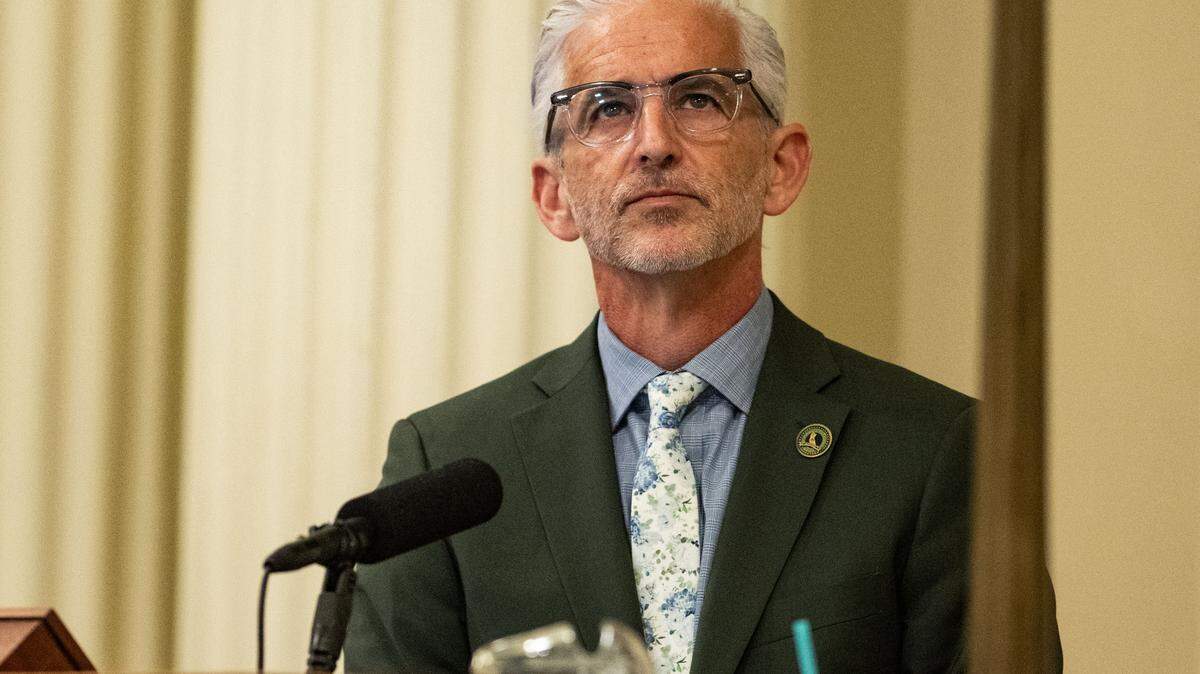
A California lawmaker wants more transparency around how state prisons use contract workers instead of civil service employees after an audit found that several facilities have increasingly relied on private contractors, who often cost the state more in hourly wages, to meet required staffing levels.
Speaker pro Tem Josh Lowenthal, D-Long Beach, said Assembly Bill 2223 is a “good governance bill” that aims to establish regular reporting around the state’s spending on contracts to hire physicians, nurses and other medical staff who are not employed by the state.
Unions representing state employees who work in California prisons are sponsoring the legislation, which would require the California Department of Corrections and Rehabilitation to report how many contract employees work in its facilities and how much the state pays for those services.
“Despite this growing reliance on contractors, the Legislature currently lacks consistent and standardized information about the number of contract workers, the classifications they perform, and the total cost of these contracts,” Lowenthal said in a statement.
Due to court orders, CDCR is required to maintain certain health care staffing levels. While the department is successfully meeting those requirements for some job classifications, CDCR has historically failed to achieve the 90% statewide staffing threshold for some positions, according to documents from a recent legislative oversight hearing.
The bill would require CDCR to provide an annual report to the Legislature on the scope of its reliance on contract labor. That would include the number of contract employees working in state facilities, the hourly rates those workers receive, any labor law violations contractors have been found liable for in the past five years and the total value of those contracts.
A CDCR spokesperson said the department does not comment on pending legislation.
Contract workers often make more than civil service counterparts
Lowenthal’s bill is a response to a December report from the California State Auditor that found state hospitals and prisons have increased the use of contract workers as vacancy rates at several facilities increased.
California has struggled to fill vacant medical positions in state facilities for decades and the COVID-19 pandemic added to departments recruitment and retention challenges, the audit found.
Privately-employed workers generally cost more than state employees working in the same job classification. For example, at one state prison the hourly pay for a psychiatrist who is a state employee is $246, while a contract worker performing the same work is $359. The hourly wage of a contract psychologist was double that of their civil service counterparts, according to the state auditor.
In addition to the pay discrepancy, the auditor noted that this situation creates difficulties for state prisons and hospitals because contract workers need training to provide adequate care to the patient populations, but their tenure at those facilities is typically shorter than those of state employees.
The issue of contract employees was identified during a recent oversight hearing of CDCR’s spending. Despite the state’s prison population declining by almost 50% over the past two decades, CDCR’s operational spending has only decreased by roughly one tenth, when adjusted for inflation, over the same time period.
Flexibility of contract workers comes with a cost, unions say
Labor groups representing state workers want these positions filled by employees eligible for union membership, rather than private contractors.
In a support letter for Lowenthal’s bill, Al Austin, the political and legislative director of AFSCME Council 57, wrote that personal service contracts are intended to enable the state to hire outside expertise when departments lack “in-house capacity.”
“Unfortunately, this practice has been grossly abused as a standard operating solution, which has compromised state civil service staffing and created extreme budgetary impacts,” Austin wrote on behalf of AFSCME Local 2620, which represents over 6,000 state employees that work in CDCR and Department of State Hospitals facilities.
The bill is sponsored by several other unions that represent state employees including the California Association of Psychiatric Technicians and SEIU Local 1000, Lowenthal said.
Several of the unions that support the legislation, including SEIU and the Union of American Physicians and Dentists, have made campaign contributions to Lowenthal in the last year.
Dr. Stuart Bussey, the UAPD president, said his group has long advocated for more transparency around how state departments employ contract workers. At one point, he suggested that departments like CDCR upload some of the information related to contract workers to a public-facing website.
Bussey said Lowenthal’s bill is an important step to account for how California is spending money on medical staff in state prisons and hospitals, which he said prefer to employ contract workers because it allows them to more easily control staffing levels.
“Flexibility is what they like, but it comes at a very high cost,” Bussey said.