State workers have returned to offices. What’s next in the fight for telework?
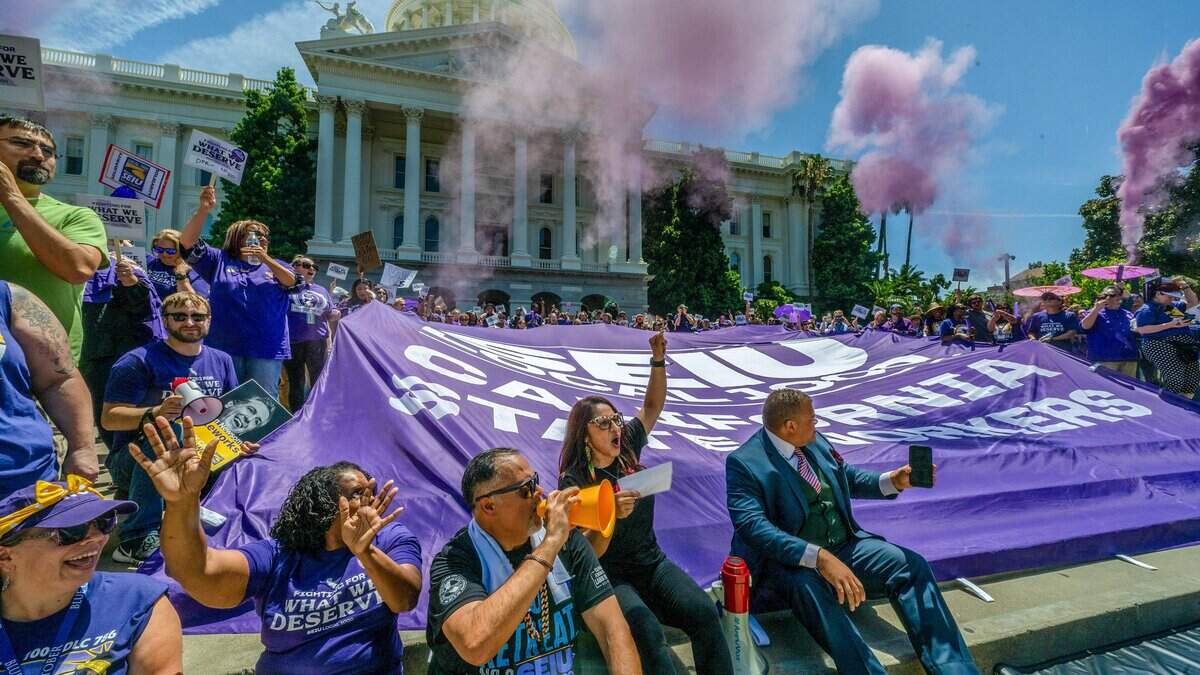
California state workers and Gov. Gavin Newsom have been at odds over telework for well over a year, during which time unions have fiercely opposed the governor’s effort to bring employees back to offices.
Newsom won the battle after his return-to-office order went into effect earlier this month, and negotiations between unions and the state failed to result in protections for remote work.
But state workers and their unions maintain that they haven’t lost the war over telework.
“The return to office July 1 implementation is a setback, but our fight continues,” said Ted Toppin, executive director of the Professional Engineers in California Government.
While labor groups have little immediate recourse to reverse the return-to-office order, there is still the faint hope that legislation introduced this year will provide state workers with some telework protections — if it can avoid a Newsom veto.
Toppin said that Newsom was not swayed by the unions’ argument against the return-to-office order, but he maintained that a flexible telework policy benefits all Californians because it saves taxpayers money, while cutting down on congestion and emissions.
“We’re going to continue to fight for telework because it modernizes the way we do our work,” SEIU Local 1000 President Anica Walls said about the ongoing debate over remote work.
Walls added that the union, which represents nearly 100,000 state workers, hopes to have a better relationship with the next governor and their administration in relation to this issue.
“We endorsed and are hopeful with Xavier Becerra, because I think he’ll bring a different approach,” Walls said, referring to the Democratic candidate. “I think he’ll listen to his workers.”
State workers’ next boss
Newsom wanted his workforce back in offices four days a week, and despite the lawsuits and protests he was able to implement his mandate because this aspect of state employees’ working conditions falls under the governor’s purview.
Considering this, state workers’ best bet for improved remote work conditions may be petitioning their next boss — after Newsom leaves office in January — to take a different approach towards telework.
Neither Becerra nor his Republican opponent, Steve Hilton, have outlined exactly what their telework policy would be, but unions have petitioned the candidates to adopt more generous rules for state employees’ remote work.
Hilton’s campaign did not respond to a request for comment. In a previous interview the Republican candidate said that he would want to hear more from both sides of the telework debate before making a decision.
Becerra’s previous comments on the topic appeared more open to allowing state employees to work from home.
“Telework is an important element of the 21st century workplace. What should drive state policy on Return to Office is the goal of ensuring the highest performance, productivity and resilience of our state workers,” Becerra said in an earlier statement.
He said the state must “strive to retain the talent and experience of the people who make our state government work, rather than allow them to be poached by other employers after they have acquired valuable skills, training and experience through public service.” A campaign spokesperson said Becerra’s position has not changed.
A majority of SEIU Local 1000 workers are not eligible for telework and the union has been focused on securing a new contract that, ideally, includes remote work protections in addition to pay increases and better health benefits.
The union’s current contract with the state expired at the end of June and negotiations are ongoing.
Telework bill’s future
Another potential avenue for telework protections could come in the form of legislation. California lawmakers have so far supported Assembly Bill 1729, which would require state departments to establish telework policies that articulate to employees why they are needed for in-person work
That bill, which has bipartisan support, is before the Senate Appropriations Committee. If the bill gets the green light there and is also approved by the full Senate, it will go to the governor’s desk. Newsom hasn’t publicly commented on the legislation, but he was very clear that he thought one day of telework was enough.
Assemblymember Josh Hoover, R-Folsom, who has been one of the leading voices in the Legislature to advocate for telework, said earlier this month that state workers are going to be in a “period of limbo” until the next governor takes office.
“No matter what happens, this conversation is going to continue into 2027, and it’s something we’re going to have to keep talking about because of this change in leadership,” Hoover said.
Toppin said that the telework bill has served as a useful advocacy tool for the administration and the Legislature. He added, “It shines a bright light on what has been a successful policy for some time.”
He said it was “safe to say” that the union would sponsor similar legislation in future years if Newsom vetoes this year’s telework bill.
The state engineers union has been at the forefront of the fight for telework over the last two years. The roughly 14,000-person union was the first bargaining unit to file a lawsuit against the Newsom administration over the return-to-office order and was the first to secure a one-year delay last year.
“The fight for telework is not unlike every great labor battle in our history,” Toppin said. “We didn’t get prevailing wages overnight. It came in fits and spurts.”
He said unions and workers will continue to put “blood, sweat and tears” into this labor fight, and at some point employers, including the state of California, will recognize its value.