
More Californians died on the road during COVID. Can Biden’s plan reduce traffic accidents?
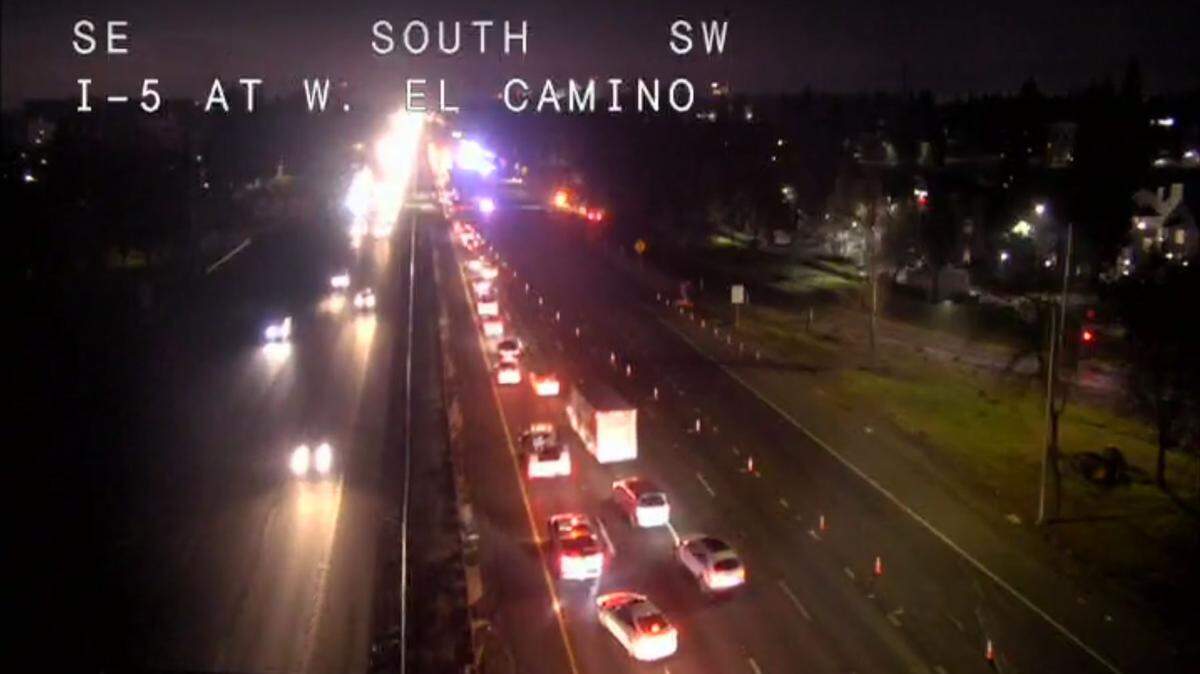
Pedestrian deaths were up in California last year, preliminary figures show. Traffic deaths were up, too, yet people drove much less during the coronavirus pandemic.
The problem: People who did drive went faster on the more open roads. And more people drove impaired.
President Biden’s massive infrastructure plan would devote $20 billion nationwide to safety programs, a sum many safety advocates are celebrating.
“It’s a major step forward. It would probably more than double what we’re spending on safety,” said Russ Martin, senior director of policy and government relations at the nonpartisan Governors Highway Safety Association.
That a president is making safety a spending priority is a big deal, added Nathan Smith, vice president of engagement at the American Traffic Safety Services Association.
In last year’s presidential campaign, both Biden and Pete Buttigieg, then a presidential candidate and now federal transportation secretary, promised more help for safety programs.
“Infrastructure is always popular but usually candidates don’t get into those details,” Smith said.
In California, the additional money could be used for programs such as those that emphasize pedestrian safety, in addition to “more efforts to address speeding and getting drivers to slow down,” said Timothy Weisberg, spokesman for the state’s Office of Traffic Safety.
Not all safety advocates were enthusiastic. Transportation for America, which promotes safety measures, wants to see more specifics.
“We accept nothing less than design standards that ensure that safety is prioritized over vehicle speed. Because street design that ensures high speed driving over all else is to blame for the skyrocketing number of people killed on our roadways,” the group said in a blog post.
So far, there have been no such specifics.
Traffic deaths are up
The numbers are grim.
Nationally, traffic fatalities last year were up 8% from 2019 to 40,060, according to preliminary estimates by the National Safety Council.
California had 3,723 traffic deaths last year, up 5% from 2019.
The state had 485 pedestrian deaths in the first six months of the year, also up 5% from the same period a year earlier, according to the Governors Highway Safety Association.
Measured another way, Transportation for America computes a “Pedestrian Danger Index” that gauges the threat to pedestrians in any area. Bakersfield was the second most dangerous metropolitan area in the country. The Stockton-Lodi area was 15th, Fresno was 21st and the Sacramento-Roseville-Arden-Arcade area was 36th.
Yet the roads were emptier last year. Travel on California roads plunged 14.4% in December from December 2019, the Federal Highway Administration found.
Riskier drivers
Speed and impairment appear to be behind the trend of rising fatal accidents in a year when fewer cars were on the road.
“People are a bit more reckless. They took the open road, that visual cue, as the time to go and be reckless,” said Mark Chung, vice president of the roadway practice area at the National Safety Council.
“Anecdotal experience suggests many of the drivers on the road are riskier drivers,” said Martin.
Add to that how many more people are walking or biking, and the need for safer infrastructure grows.
Several initiatives are already underway, and the prospect of more funding could accelerate their progress.
California’s Weisberg envisioned more “education and prevention of bad driving behaviors that put pedestrians and cyclists at risk.”
The Safety Council’s Chung saw a need for emphasizing help for people of color, who tend to be more at risk.
Data from 2015-2019 show that while Blacks were 13% of the population, they accounted for 20% of pedestrian deaths. Hispanics were 18% of the population but accounted for 20% of the pedestrian fatalities.
Chung also listed improvements to vehicles: More driver assistance systems, such as automatic emergency braking, where the car sees someone in its path and brakes. Or more use of alcohol detection systems.
Speed and red light cameras can help. So can pedestrian “refuge islands” on heavily traveled streets. “There are significantly lower pedestrian crash rates on multilane roads with raised medians than on those without such medians,” the governors said.
Smith wants to see a number of potential innovations. Pavement markings, now usually four inches, could be six inches. That would make it easier for the lane detection devices now on many vehicles to read them. Or, he said, on concrete bridges, make the markings contrasted with black so they’re easier to see.
“These are simple things we can do tomorrow,” he said.
Not everything can be done quickly. It took years for people to accept seat belts, for instance.
The new money will help a lot, Smith said, with the next generation of safety strategies, with the answer to a key question: “How do we build a road that can accommodate a drivers’ mistake?”
This story was originally published April 9, 2021 at 5:00 AM.
.jpg)