Is rain done in 2019? Is California in a drought? What to know as weather stays dry
It’s been warmer than normal. It’s been drier than normal. For most of the region, it hasn’t rained more than a sprinkle or a brief thunderstorm here or there in about six months.
Northern California weather has done a relatively quick 180 in 2019. Heavy rain coming via “atmospheric river” systems drenched the Sacramento Valley, created some flood concerns and filled reservoirs to healthy levels this January through March.
But what spring 2019 had plenty of, fall 2019 has had nearly zilch.
Two rainy September days in Sacramento have accounted for the 0.12 inches of measurable precipitation falling in the capital since May. If Sacramento goes without rain the rest of this month, that figure for September through November will represent about 4 percent of the historic normal. The city gets an average total of 2.76 inches in those three months, dating back to 1941.
What does all of this mean for the near future, in a state less than three years removed from the official end of its last drought? Here’s what to make of the ongoing dry spell.
Light rain, light snow, but plenty of wind
A chance of snow and rain showers will reach parts of the Sierra Nevada range, south of Interstate 80, this week. Precipitation would start around Tuesday evening and could last through Wednesday night. The National Weather Service predicts less than a quarter-inch will fall near South Lake Tahoe and Yosemite, and less than one-tenth of an inch near Sonora.
Meanwhile, neither the Sacramento Valley nor the Bay Area is expected to get wet during the midweek low-pressure system, which could bring gusts ranging from 20-40 mph.
Outside the midweek Sierra showers, there’s currently no rain in the forecast for at least a week, and perhaps longer, across Northern California.
Long-range precipitation forecast models released by the NWS Climate Prediction Center for the week of Nov. 25 to Dec. 1 suggest a slightly better chance of rain for the central and southern Sacramento Valley than the region has seen to start the month.
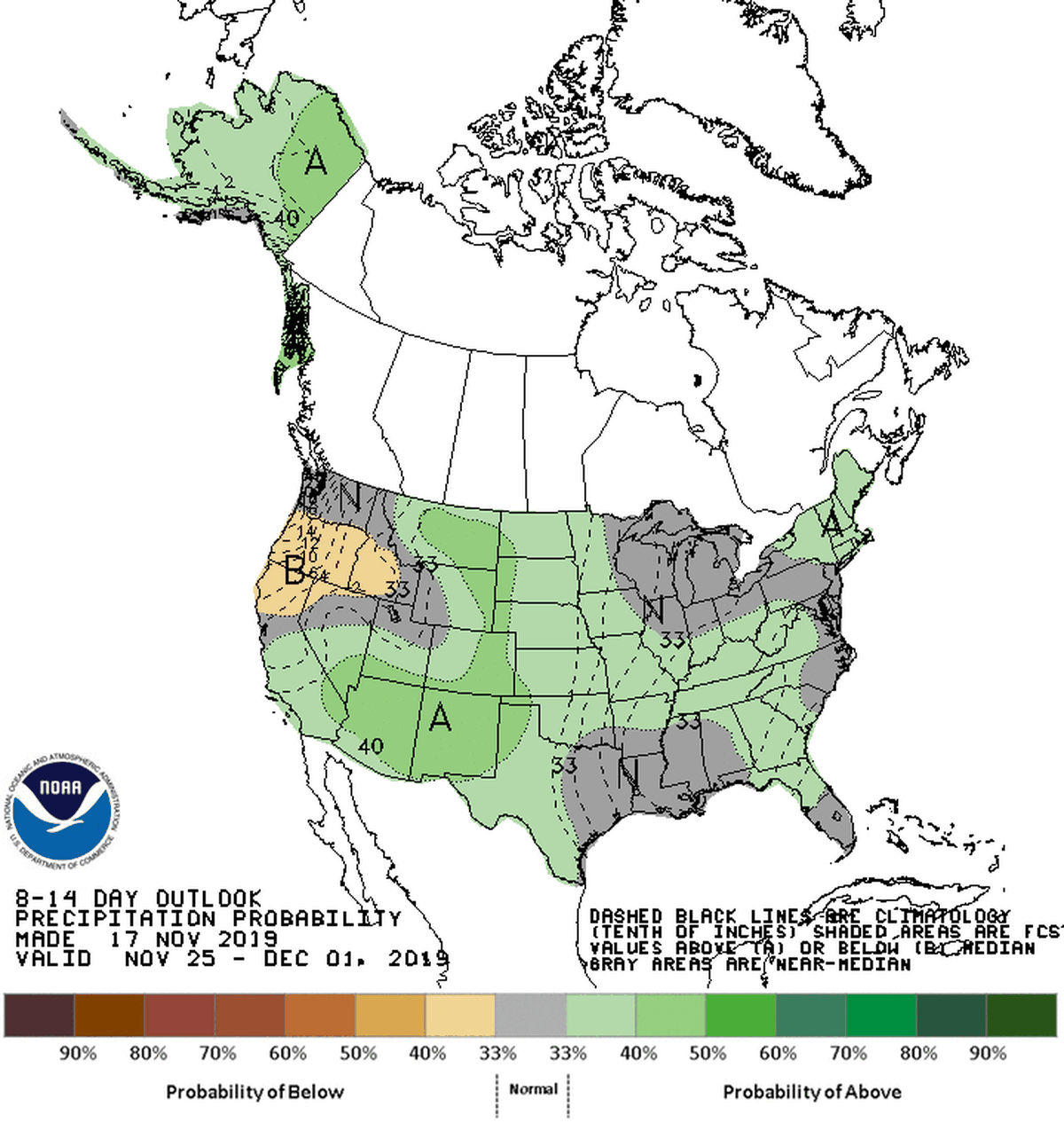
While the northern third of the state will continue to see a roughly 40 percent chance of “below” normal precipitation amounts, a stretch from approximately the Bay Area through the Tahoe area, including Sacramento, will be in the “normal” range (33 percent chance of below, 33 percent chance of above and 33 percent chance of near-average). These models are very rough estimates, and do not distinguish, for instance, how much of the precipitation in that area would fall near Tahoe vs. near the capital.
More than halfway through November, the Sacramento Valley has seen essentially no significant rainfall, aside from a few scattered and isolated thunderstorms, for a period of almost six months.
Outside of two days in September that combined for just over one-tenth of an inch, Sacramento hasn’t had measurable precipitation since May.
Are we in a drought?
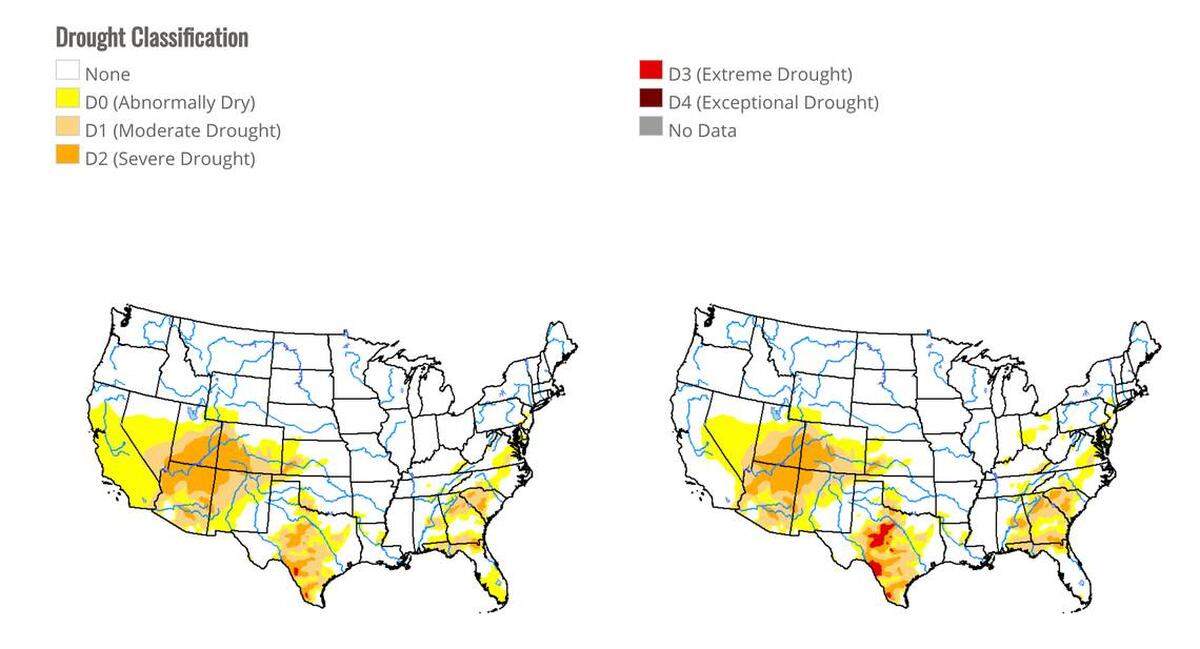
A map released by the U.S. Drought Monitor last week showed a rapid turnaround for most of the state: more than 80 percent of California - essentially all but the far north - was in a state considered “abnormally dry” or in the case of nearly 4 percent of the state, “moderate drought.”
That contrasted quite a bit from the map released two weeks prior, in which only about 18 percent of California had the yellow shading denoting “dry conditions.”
So, does any of that mean California is now in a drought?
No. Technically speaking, a drought is a state of emergency that only the governor can declare. Former Gov. Jerry Brown did so in January 2014, declaring the drought over in April 2017 while keeping some water practices that were viewed as wasteful in place.
Of course, drier-than-normal conditions are the first step in that declaration becoming necessary.
As recently as this March, strong rain totals helped get rid of drought-level conditions anywhere in the state for the first time since 2011. The U.S. Drought Monitor map for mid-March had less than 7 percent of California “abnormally dry,” but 0 percent of the state was at any level of drought.
Are any water restrictions in place?
Sacramento-area water districts and providers do not appear to have placed any water restrictions or additional mandates on usage in response to the recent lack of precipitation. Some current restrictions, such as the city of Sacramento allowing watering just one day a week between November and February, are long-term conservation measures that stayed in place after the official end of the drought.
During the first of four large-scale planned blackouts instituted by PG&E last month due to severe wind conditions, several local water authorities in Northern California urged customers to limit non-essential water usage.
The city of Fairfield reported problems at a treatment plant that may have been caused by the blackout, and urged citizens to only use water when absolutely necessary. But other water providers, including the El Dorado Irrigation District, Sonoma County Water Agency, East Bay Municipal Utility District and the city of Vacaville, urged customers to limit water usage because they were forced to run on backup power sources.
Ski resorts
A handful of Lake Tahoe-area ski resorts have already opened, and a few more will have their slopes ready by this weekend.
Mt. Rose, Squaw Valley and Alpine Meadows each started their ski season earlier this month. Northstar and Heavenly will open Nov. 22, followed by Kirkwood Nov. 27 and Sugar Bowl on Nov. 29, and Kirkwood starts things off November 27. Boreal and Sierra-at-Tahoe have yet to list opening dates for the season.
A lack of snowfall doesn’t matter much for sister resorts Squaw Valley and Alpine Meadows, which use more than 300 “snowmaking guns” to closely control snow levels, according to a news release.
Snow could fall near South Lake Tahoe on Tuesday and Wednesday nights, but accumulation will likely be very light.
Temperatures, at least, are starting to approach ski-friendly levels. After topping out near the high 70s in the middle of last week and lingering with a high of 61 degrees Monday, the latest NWS forecasts show the Tahoe area dipping to the low 40s or high 30s this Wednesday through Sunday.
This story was originally published November 18, 2019 at 12:57 PM.