Six down, three to go: Storm dangers (and drought) persist in Northern California
Round six of this epic weather brought more wind and rain. And there’s still more to come.
Another in a relentless parade of atmospheric rivers struck Northern California late Sunday and early Monday, forcing the evacuation of Wilton in rural Sacramento County, closing a major school district and leading to yet another day of power outages for storm-battered communities. Three more storms over the Pacific Ocean are headed this way before the weather is finally expected to ease next week, state water officials said.
The extreme weather has brought into clear focus the severe dichotomy of California’s climate. Even as rivers crest above levees and mudslides rage, the state’s largest reservoirs remain well below where they normally stand this time of year.
“This really is, I want to say, extraordinary,” said Karla Nemeth, the director of the state’s Department of Water Resources, “but I actually think it’s more focused on yet another climate signal in that California is experiencing coincidentally both a drought emergency and a flood emergency.”
Fierce wind gusts uprooted trees in Sacramento’s central city late Saturday into early Sunday, damaging vehicles and cutting power to nearly 350,000 Sacramento Municipal Utility District customers across the county.
The National Weather Service recorded peak gusts of 72 mph early Sunday morning and 52 mph early Monday, both at Sacramento International Airport. Between an inch and 1½ inches of rain fell between 10 a.m. Sunday and 10 a.m. Monday at numerous locations in Sacramento County, including at the airport, downtown, in Citrus Heights and in Rancho Cordova.
Sacramento County emergency officials on Sunday ordered the mandatory evacuation of Wilton, along with some parts of Elk Grove, due to flood risk along the Cosumnes River.
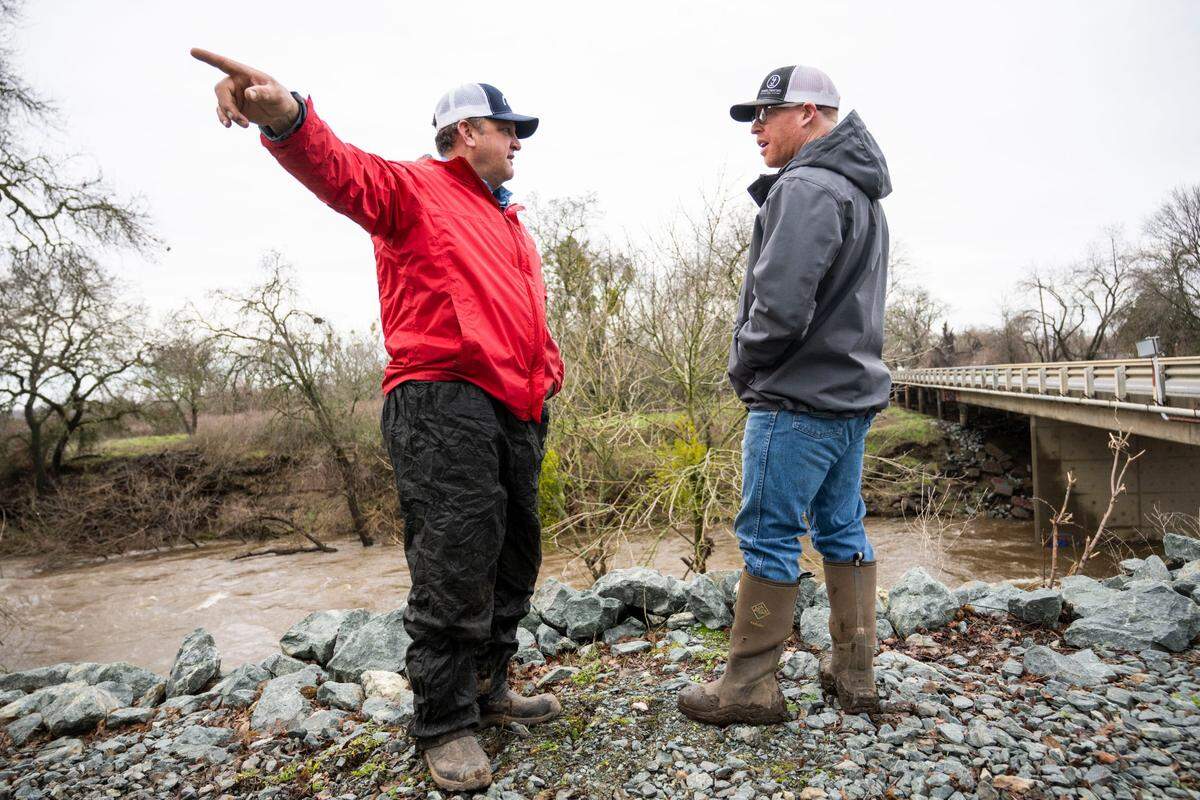
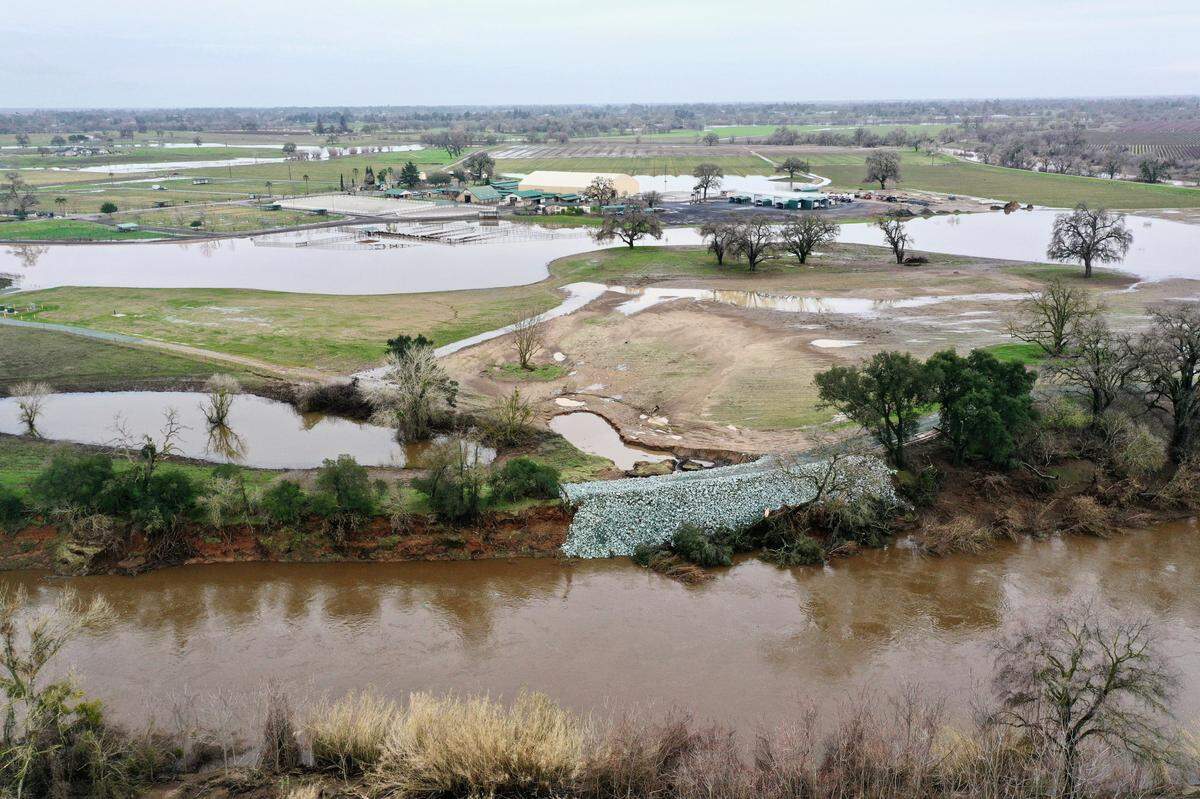
In Wilton, levee crews continued to patch trouble spots ahead of high water expected late Monday and were urging residents to heed evacuation orders and road closures.
Flows on the Cosumnes River at Michigan Bar were expected to hit 12 feet by midnight or 1 a.m. Tuesday, officials said at a midday news conference at Wilton Bridge on the Cosumnes River. Although the levels are less than the 16-foot flows seen on New Year’s Eve, officials say steady rains and saturated ground remain a major concern.
“These levees are saturated. We’re saturated. We’re wet out here,” Reclamation District 800 board member Leland Schneider told reporters beside a rushing Cosumnes. Levee officials are most concerned about the Bradley Ranch breach at the end of Bradley Ranch Road as crews continue to work to shore the trouble spot before waters again rise, Schneider said.
Those crews are working now with the state Department of Water Resources and Sacramento County to reinforce levees and watch hot spots. Meantime, Wilton Fire Protection District officials say California National Guard personnel and high-clearance vehicles are on call for potential rescue duty.
Weather service forecasts predicted “extreme” impacts from the storm to continue through Tuesday, which could include up to 4 inches of rain in the Sacramento Valley. Forecasts showed isolated thunderstorms possible late Monday through Tuesday evening in the valley. Heavy snow was also expected in the Sierra Nevada mountains.
At least two people were killed in the weekend storm: a woman and a man, both homeless, who had trees fall atop their tents in separate incidents.
The Sacramento County Coroner’s Office identified the two victims as Rebekah Ann Rohde, 40, who died Saturday at a hospital after being injured by a tree in the city’s River District; and Steven Sorenson, 61, who died Sunday after a tree fell on his tent in North Highlands.
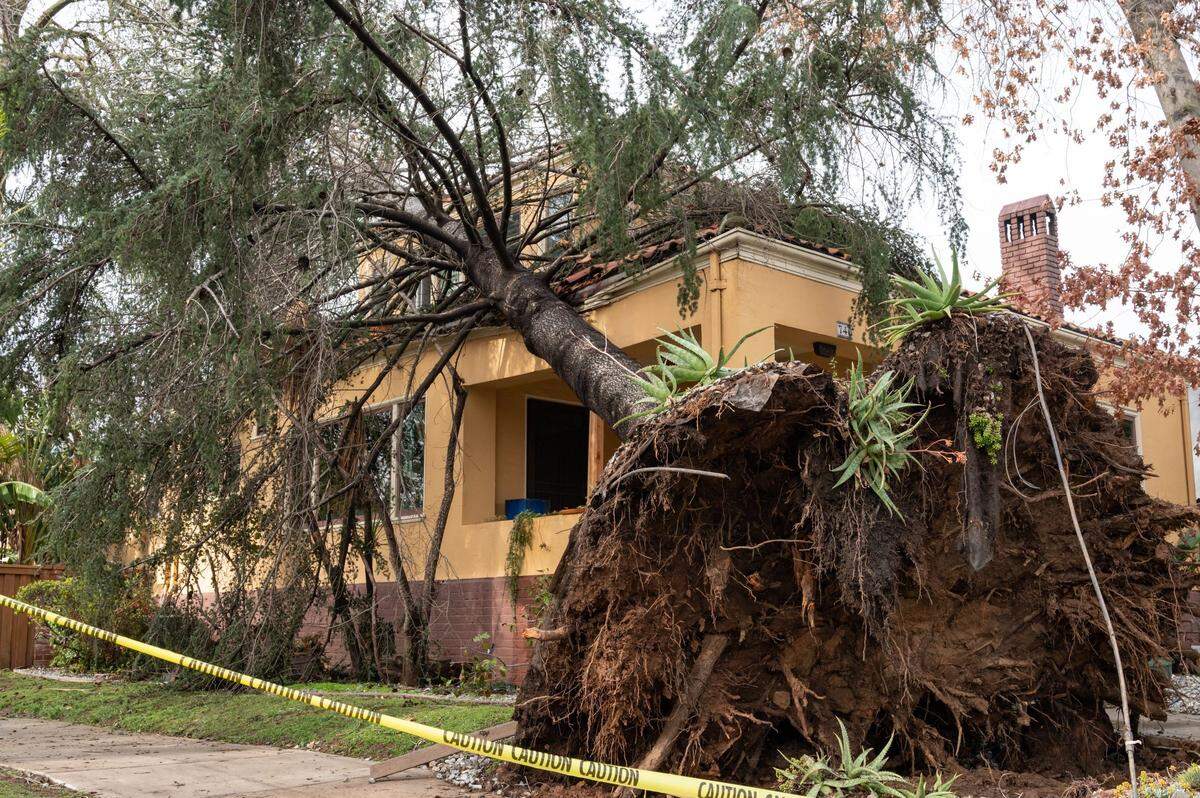
The deaths marked the fourth and fifth reported in Sacramento County storms since New Year’s Eve. Three people were recovered in the days following New Year’s Eve, all found in or near vehicles that had been swept away in south Sacramento County floodwaters.
While nine flood monitors around the state showed rivers and creeks were in danger of flooding, state water officials said the vast flood management system in the Sacramento and San Joaquin rivers was handling the deluge and was “doing what we need it to be doing,” Nemeth said. Five weirs north of Sacramento — release valves of sorts that divert away from the Sacramento River — had overtopped or were expected to in the days ahead. But the Sacramento Weir, which diverts water into the Yolo bypass, had not been activated.
There is also plenty of capacity in the state’s reservoir system. Shasta and Oroville, by far California’s two largest reservoirs, were less than 50% full and well below the seasonal averages. Folsom Lake was 43% full Monday.
“We still have a lot of room in our reservoirs to take in this inflow and to take in the inflows that we’re seeing on the horizon,” said John Yarbrough, assistant Deputy Director of the State Water Project at DWR.
President Joe Biden early Monday morning approved an emergency declaration for California “due to the emergency conditions resulting from successive and severe winter storms, flooding, and mudslides.” The declaration allows the Federal Emergency Management Agency to coordinate disaster relief efforts.
California Gov. Gavin Newsom last Wednesday declared a statewide emergency due to the storms and flooding.
All Sacramento City Unified School District campuses were closed Monday, with classes canceled on the scheduled first day back from winter break, due to widespread power outages and severe weather.
Five Elk Grove Unified campuses – C.W. Dillard Elementary, Cosumnes River Elementary, Joseph Sims Elementary, Las Flores High and William Daylor High – were also closed Monday, as well as Sci-Tech Academy in Knights Landing, part of Woodland Joint Unified.
Following weekend power outages, Davis Joint Unified opened all of its schools Monday, as did Natomas Unified. San Juan Unified schools plan to return from winter break on Tuesday. The Sacramento State and UC Davis campuses also remained open Monday.
Flooded lanes on major Sacramento-area highways, including Interstate 80 and the Capital City Freeway, snarled Monday morning commuter traffic, according to Caltrans and the California Highway Patrol. Both agencies have urged drivers to avoid nonessential travel amid this week’s storms.
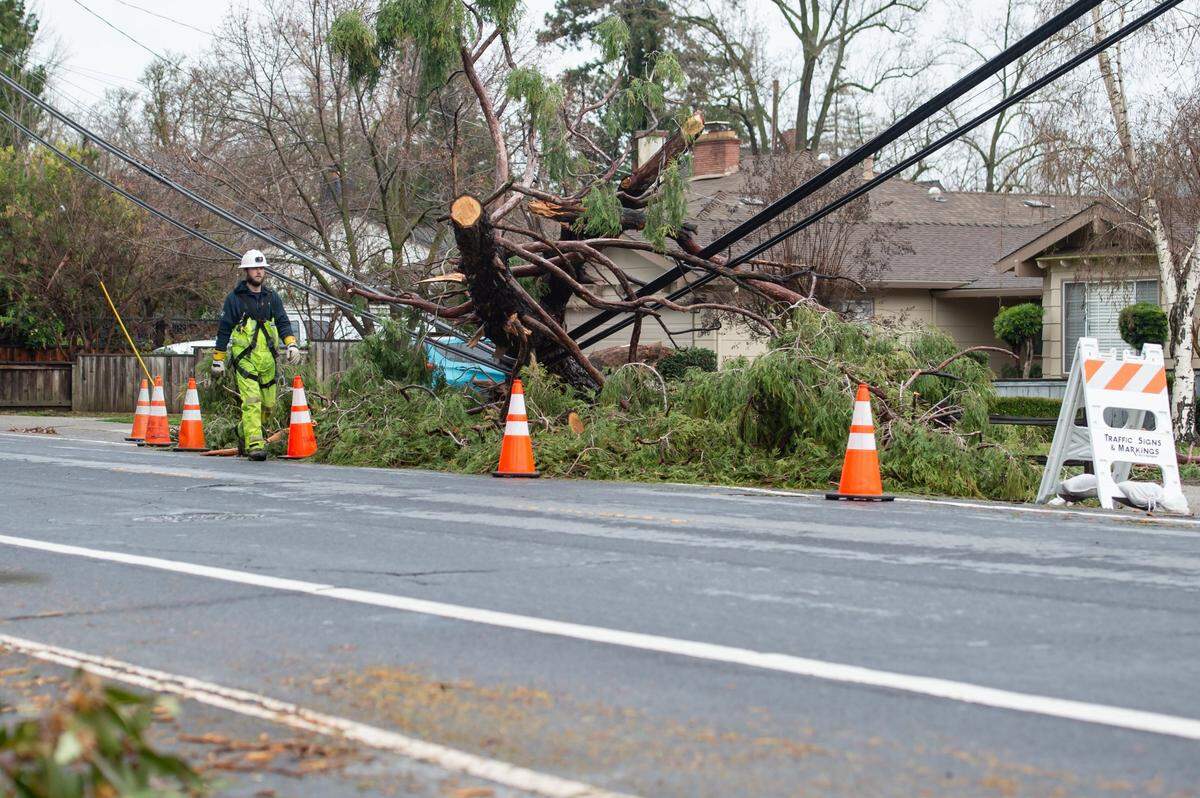
More than 30,000 SMUD customers were still in outages as of Monday afternoon, many of them after losing power Saturday evening or Sunday morning, according to the SMUD website.
Pacific Gas and Electric Co. officials, during a Monday news conference, said the utility giant is in the midst of the largest power outage response it has ever deployed for a winter storm. More than 5,800 total employees and contractors were working toward power restoration efforts, said Adam Wright, PG&E’s chief operating officer.
“We will continue to put safety first,” Wright said Monday afternoon, as some 87,000 PG&E customers were without power statewide, with the biggest outages in the south Bay Area and much of the Central Coast. “We will not take any shortcuts when working to restore service.”
Wet weather is expected to continue all of this week, with rain likely through at least Saturday. Precipitation amounts for later in the week are not yet settled.
Yet another atmospheric river is expected to hit California by the middle of this week, but the brunt of that storm will fall farther north. “Overall the impacts are going to be pretty minor (near Sacramento),” Chelsea Peters, a weather service meteorologist, said over the weekend.
This story was originally published January 9, 2023 at 3:22 PM.