
Spring storm blankets Sierra Nevada, stops traffic. What are new snowfall totals?
Rather than rain, April showers brought icy roads and heavy snowfall to the greater Lake Tahoe area.
Parts of the Sierra Nevada received more than 2 feet of snow in about three days, according to the National Weather Service, with flurries falling from Sunday through Tuesday.
Travel on Interstate 80 was “slow going” at times during the storm, said Mark Deutschendorf, a meteorologist with the weather service’s Reno office.
The California Department of Transportation held traffic on parts of the interstate Tuesday and took to social media to urge drivers to slow down in snowy conditions.
As of Wednesday, year-to-date snowfall amounts had reached normal levels, according to the UC Berkeley Central Sierra Snow Laboratory.
Here’s how the storm impacted the area:
.jpg "Burden_2301_ab_truckee_woods_86-Edit (1).jpg")
How much snow did Sierra Nevada get during storm?
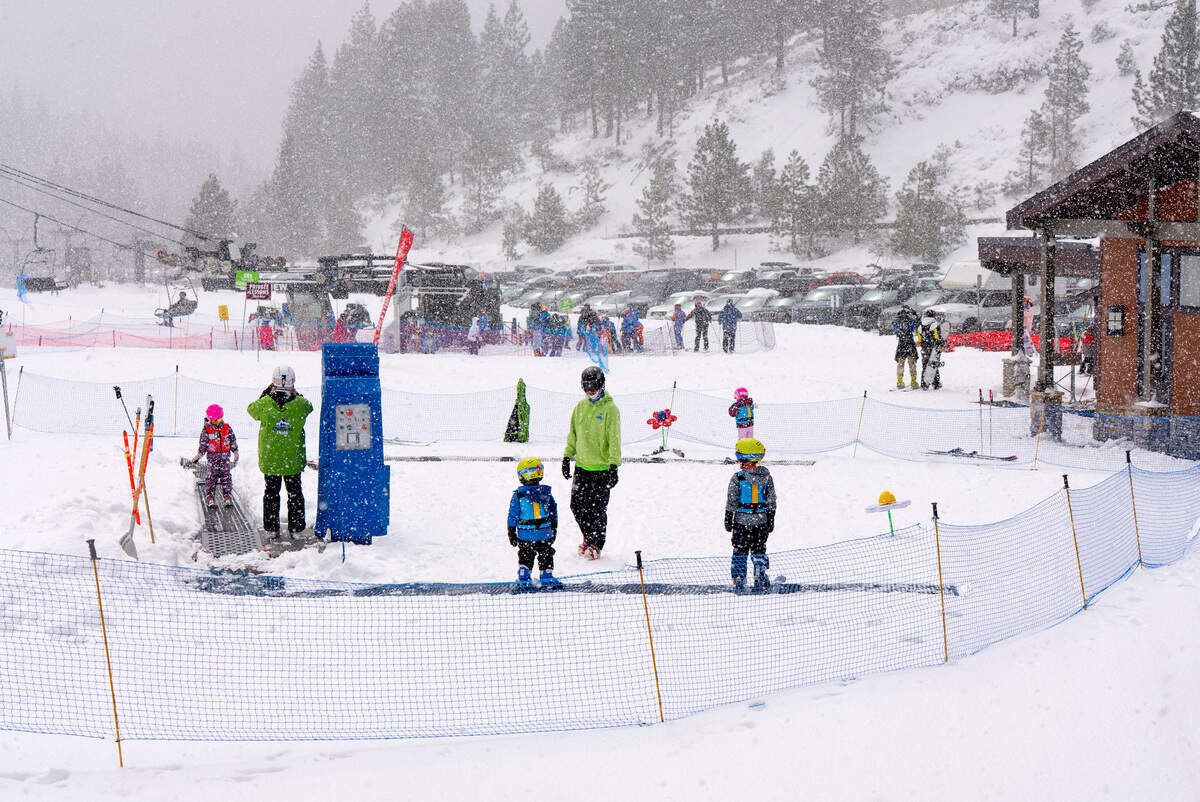
Areas of the Sierra Nevada above 7,000 feet elevation received 2 to 3 feet of snow between Sunday and Tuesday, Deutschendorf said, with even more snowfall at mountain crests.
“The highest three-day total I saw was 44 inches,” he said. “That’s west of the crest, so they were exposed to snow even longer than the Tahoe basin itself.”
Near lake level, storm totals were closer to 1 to 2 feet of snowfall, according to Deutschendorf.
How do April snowpack levels compare to normal?
According to the Central Sierra Snow Lab, snowpack levels on Tuesday, April 1, were above the year-to-date median.
The snow lab at Donner Pass reported receiving 340.9 inches of snow since Oct. 1, roughly 3% more than the April 1 median snowfall of 329.72 inches.
Since Oct. 1, the year-to-date snowfall level has fluctuated above and below the median amount, the snow lab reported.
Tuesday was the first time since mid-February that snowfall levels were above normal, according to data from the snow lab.
As of Thursday, the accumulated snowfall at the lab, which is at roughly 6,800 feet of elevation, totaled 354.1 inches, 9% higher than the year-to-date median.
However, snow lab data showed the total snowfall was still about 6 inches below the median season total of 360.2 inches.
Deutschendorf said some smaller snow storms could hit the Tahoe area later in April, but they likely won’t bring as much snow as the most recent storm.
“What we got now is probably gonna be pretty close to the overall seasonal total,” he said. “The chance of getting a storm as strong as we had the past few days does drop off quite a bit (throughout April).”
California water officials were ”feeling positive” about the state of the Sierra Nevada snowpack at the end of March, before the storm hit, The Sacramento Bee previously reported.
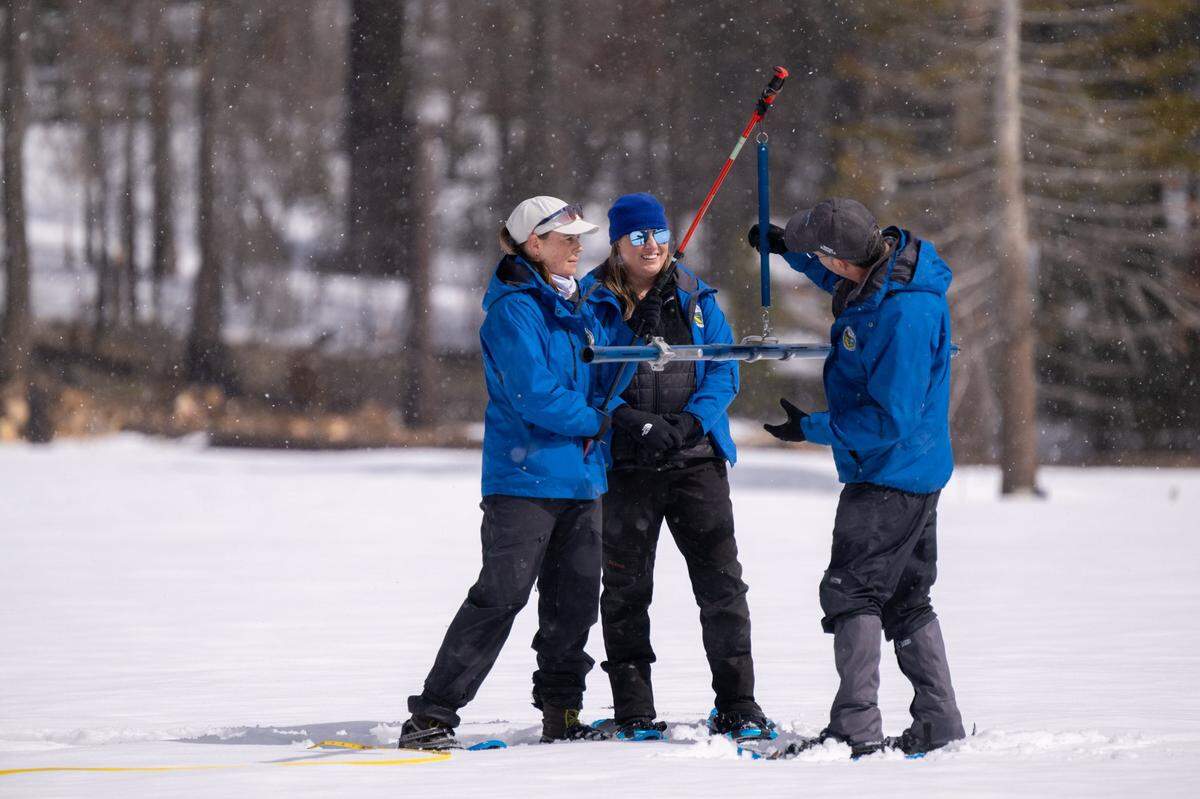
On March 28, the California Department of Water Resources conducted its final manual survey of the season at Phillips Station near Sierra-at-Tahoe in El Dorado County, measuring the mountain snow bank that feeds much of California’s water supply.
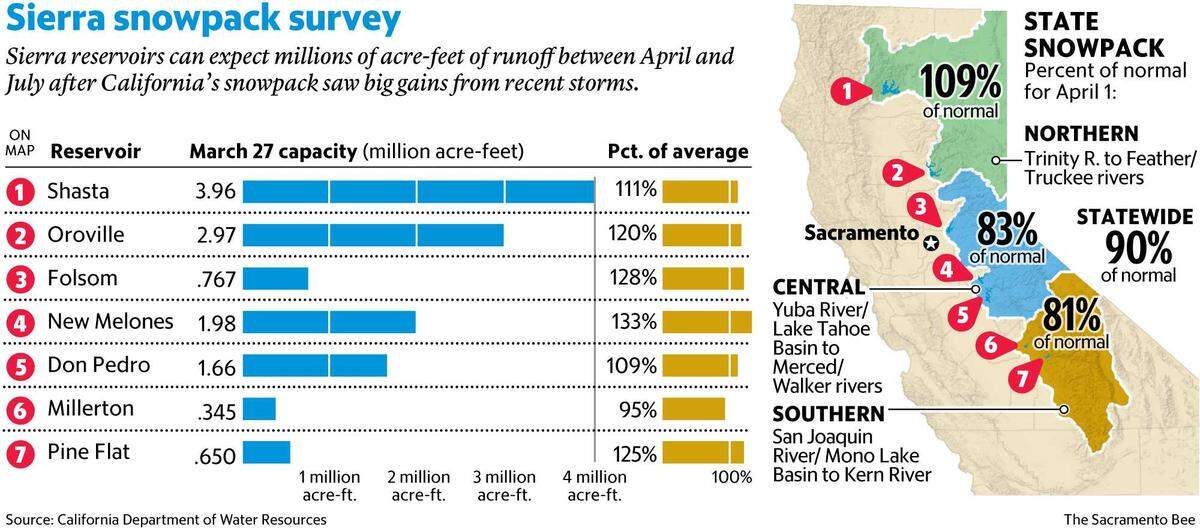
At that point, the average snow-water equivalent across California was at 23.5 inches, or, 90% of the April 1 average. That refers to the water content in snow.
As of Thursday afternoon, the northern Sierra Nevada measured an average of 31.2 inches of snow water, more than 120% of the expected amount, according to data from the the state Department of Water Resources.
The central Sierra Nevada had 26.5 inches of snow-water equivalent on Thursday, or, 96% of the average for April 3, according to the state water resources department.
How did storm affect traffic on I-80, Highway 50?
Chain controls were in effect on Interstate 80 and Highway 50 on Tuesday into Wednesday, according to the California Department of Transportation.
On Tuesday, Caltrans stopped Interstate 80 traffic at Alta in Placer County for eastbound vehicles and at Truckee for westbound travelers, after “multiple spinouts over Donner Summit,” the agency said in an X post.
The roadway was reopened later on Tuesday.
There were no Interstate 80 or Highway 50 closures reported on the Caltrans website as of Thursday afternoon.
According to Deutschendorf, overcast conditions on Tuesday contributed to the difficult driving conditions.
“In April, usually we have higher sun angles ... help melt (the snow),” the meteorologist said. “There was so much cloud cover and snow activity that there wasn’t any chance for the snow to melt off the road.”
What’s in the weather forecast for Lake Tahoe area?
According to the weather service, the greater Lake Tahoe area can expect a warmer weather pattern typical for the spring in time for the weekend.
On Thursday, South Lake Tahoe had a 20% chance of snow showers, along with a high temperature around 40 degrees and a low temperature of 23 degrees, according to the weather service’s most latest seven-day forecast.
Snowfall was expected to end by overnight Thursday.
Friday is predicted to be a sunny day with light winds. The high was expected to hit 44, and an overnight low of 28 was forecast.
Saturday and Sunday will be mostly sunny, the weather service said, with highs in the low to mid-50s and lows in the 30s.
There is a slight chance of snow showers overnight Sunday, with snow levels expected to reach 7,800 feet to 8,400 feet in elevation.
The chance of showers is forecast to last through 11 a.m. Monday, with snow expected to fall at elevations of 7,700 feet and higher.
The high on Monday is expected to reach around 50, and the low could be about 37, the weather service predicted in its forecast.
This story was originally published April 3, 2025 at 3:32 PM.
.jpg)